
01 · Watch the episode
The full conversation
Watch on YouTube ↗ — if the embed above says restricted, it's a block on your network/Google Workspace account, not this page.
Or listen on:SpotifyApple Podcasts
02 · The guest
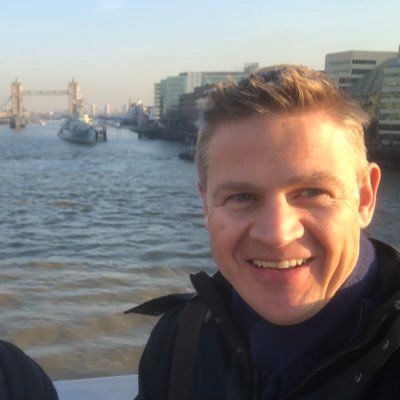
Nigel Eccles
Co-founder & former CEO, FanDuel
Nigel is a 25 year veteran of the online gaming space. He was an early employee at Flutter Entertainment and co-founded FanDuel Inc. He is an active advisor to a global network of entrepreneurs.
Follow Nigel on LinkedIn →03 · Inside this episode
Moments worth queuing up
In their own words
“Entrepreneurs aren't more risk-seeking... they are just very bad at assessing risk.”
“Startups aren't like big companies in miniature. Startups are really like a science experiment.”
“It's very, very hard at that first point to know, am I a visionary or am I just deluded?”
“By this point you're like, anything that's below like a federal agency suing me is not worth getting out of bed for.”
“If you have a co-founder, your chance of being successful increases dramatically... You own 100% of zero without one.”
Full transcript
Read the full transcriptHide full transcript
I've always thought entrepreneurs were risk-taking. [music] And they actually did this research and they discovered that that wasn't the case. Actually, entrepreneurs are just very bad at assessing risk. [music] They just sort of look at it and they over-assess their ability, like the risk isn't that big and I can figure it out. I just find that experience to be just exceptional, just so much fun to be able to come up with an idea of a product, to work with engineers building it, launch it, get feedback [music] from customers. Okay, that doesn't work, let's iterate. I also worked in large companies. I've worked [music] as consultant, and
none of them really ever had that intensity and excitement that startups had. When I started my first company, it was an incredible gamble. We had this incredibly ambitious product. We were focused on [music] the US market. None of us were American. We didn't live in America. We didn't really know the market. We'd never started a company before. Chances of this thing being successful are remote. The chances of it even raising money are incredibly remote. And the funny thing was, we did raise money. We raised money from one of the two VCs at the time in Scotland. In normal jobs, if you're smart and you work
really hard at it, you'll generally be successful or at worst, you'll be recognized or you'll be promoted and you'll have a good career. Startups aren't like that. You go in, you assume you're smart, you work super hard, you hire really good people, and they might still not work. Startups are really like a science experiment [music] and your job as an entrepreneur is focus on the one thing that really matters, do customers want the product you're selling? [music] It takes an incredible effort and focus and attention to make that work and it's very unforgiving. It's very, very hard at that first point to know, am [music] I
a visionary or am I just deluded, right? Every day we were getting sued. Every day it was bad news. A patent dispute suit is a rite of passage [music] as a US startup. When you first get it, you're terrified. You're like, "Oh my god, they're going to sue me for infringing their patent." And And realize it, you get these all the time. By this point, you're like, anything that's below like a federal agency saying to me is not worth getting [music] out of bed for. You just have to take each day as it comes and go, "Okay, well, we're going to figure it and we'll
get through this and then we'll get through the next thing." Welcome to the iGaming Leader Podcast. I'm your host Leo Judkins, founder of iGaming Leader Mastermind. And on this show, I sit down with some of the most inspirational and forward-thinking leaders in our industry. Diving into the real challenges, high-stakes decisions, lessons that shape our industry. If you're a VP, director, or an executive in iGaming, this podcast is built for you. Before we dive in, a quick thank you to our sponsor Sumsub, the full-cycle verification platform trusted by top iGaming operators worldwide. Sumsub helps onboard players quickly, stay compliant, and prevent fraud, all without [music] slowing
growth. More information in the description. Hey everybody, welcome to the iGaming Leader Podcast. Today, I'm joined by Nigel Eccles, co-founder and former CEO of FanDuel, now co-founder and CEO of Bed Hog and Sentient Studios. 25 years in online gaming and one of the most interesting seconds in the industry. Nigel, welcome to the podcast. Well, thanks. Just before we started recording, we actually talking about background and where you from and how you ended up in New York. Can we talk a little bit about that? Can we just talk about kind of the beginning years of your career and how you, you know, went from being on
a farm to now being in New York? >> So, I was brought up in North Maryland. A dairy farm. I left when I was 18 to go to the college in Scotland. And so, I think I've sort of gone from small very the smallest you can possibly imagine, which is a farm, to like St. Andrews, which isn't a big town. Then moved to there and London and to like ultimately to there and New York. So, I've sort of gone bigger and bigger. Was it that originally kind of pulled you out of an environment like that, Nigel? Was it I feel quite similar with kind of
coming from a really small place and I've always had this feeling that it's just a place I had to escape, you know? Was it the same for you or how did it naturally happen? I think there was sort of no question from very early age and I wasn't a farmer. Uh my brothers would concur with that that I wasn't really cut out for it. Like I at school the area that I was strongest at is like mathematics. I studied pure mathematics at university and so I'd always sort of hoped to go into a career that would challenge me in that way. So, that probably is
what drew me to go and do something that seemed like my strength. One of the things that we were talking about is how you you know, how you see other founders on podcasts sometimes talk about challenges, maybe kind of gloss over it. You've You've run businesses for for many, many years, founded businesses, can we first maybe talk a little bit about what drew you to entrepreneurship on founding businesses? Yeah, so the first startup that I joined but I didn't co-found was flutter.com. That's People who don't know was actually the parent company or the original company behind Flutter Entertainment. So, in 2001 Flutter com merged with
Betfair. And through a whole process of mergers became Flutter Entertainment. It was a venture backed company based in London. The original idea was to kind of be an eBay of betting. It wasn't quite an exchange and like Betfair uh the original idea didn't work and then I as a product manager my job was to sort of relaunch it as an exchange, which we did in early 2001 and then ultimately merged with Betfair. And I just find that experience to be just exceptional, just so much fun to be able to like come up with an idea of a product to work with engineers to building it, launch
it, get feedback from customers sort of say, "Okay, that doesn't work. Let's iterate." And and and just sort of, you know, that intensity and excitement, you know, I had also worked in large companies. I've worked as consultant. And none of them really ever had that intensity and excitement that startups had. And so, a few years later, 2007, is when I started my first company. And that was a prediction market. And really, the reason I went and did that was because I just find the excitement of being in a startup huge. And I wanted to go and dip myself. And so, it was just a real
driver to go and do it. The founding business, any founder will know, isn't just uh you know, you have an idea, you kick it off, and then you get you get paid out of whatever the income comes in, right? Do we We talk about So, the case is about runway or about funding. Like, what were some of the early challenges that you ran into founding that business? Day one, even before you start, is the challenge of, you know, I was in a pretty well-paid job at the time. And going in and residing, I remember I still remember to this day how terrifying it was. You
know, I had a mortgage, a very big mortgage. I had two kids. And my wife was working at the time. And so, we didn't have a lot of savings. It was kind of like, "Hey, we could probably go a year without taking a salary." But And I was just 100% convinced that we could go and do this, and it would work. And, you know, it's interesting. In retrospect, I think I I actually remember seeing research once. So, they always sort of thought that entrepreneurs were more risk-seeking. And I've always thought entrepreneurs are more risk-seeking. And they actually did this research, and they discovered that that
wasn't the case. Actually, entrepreneurs are just very bad at assessing risk. So, like, they they just sort of look at it, and they sort of over-assess their ability. Like, the risk isn't that big, and I can figure it out. And I think that was actually true at the time. It was like an incredible gamble that, in retrospect, you looked at it, you know, we were starting a company in Scotland. There's only two VCs in Scotland at the time. I think there's one today. We had this incredibly ambitious product which was a prediction market. We were focused on the US market. None of us were American. We
didn't live in America. We didn't really know the market. We'd never started a company before. And so yeah, you'd look at that and go, "Chances of this thing being successful are remote. The chances of it even raising money are incredibly remote." And you know, the funny thing was we did raise money. We raised money from one of the two VCs at the time in Scotland. So, the very first thing was an incredible hurdle which was, you know, going in having the conference quit my job. And then after that, it's just a series of like, can you build a product? Can you launch? Can you get
a market? Can you show traction? Can you use that traction to raise money? Yeah, it's just a series of like, massive hurdles one after the other. You said that moment of resigning was terrifying. Take me back to that moment. What was it like? What was the Do you remember the day of actually doing it? Uh yeah, I do. I do indeed. I remember my old boss. So, I was working for a regional newspaper publisher called Johnson Press. And my boss is CEO of that company. It's a public company. I'd been there less than a year. So, it was kind of a bit of a surprise
for him. But I was just bored out of my mind. And and I kind of had been hired to shake things up and I came in and I did. And then the CEO was like, "Don't do that as much. Just So, I I stopped." And and it just meant that I had nothing to do. Like it was literally I'd go in and I'd just have the most medial stuff and it just I was going crazy. So, I remember going in and telling him like I wanted to go and do this thing and he was very shocked. And I was absolutely terrified. I did it 5
years ago. And uh I remember just counting down in my head to shake my boss's hand and uh Did you have doubts? In the moments leading up to it? >> I never sort of thought for a moment that it was a mistake. And I never thought afterwards it was a mistake even when things were really really tough. You know, you if you look at the kind of you add everything up, it was like it was incredible like an incredible gamble. It was such a long shot that this would be successful. It's true for any startup, isn't it? Like it's almost like backing yourself more than
anything, isn't it? >> And I often find that talking to people it's that moment of finding the courage to back yourself. That's the moment where people are finally brave enough to take the resignation and to start their own business. It is sensible to weigh up the pros and cons, have your own personal runway and safety net. But I think most I certainly I didn't do that. Like we kind of went for a and you know, maybe the sort of person who does weigh all of that stuff up maybe they don't make a decision and they don't maybe they back out 6 months in. Um I
think you kind of have to you know, burn your boats. It's a metaphor. You know, you really have to because what you can't have is someone when it gets really tough, you're 6 9 months in going, you know what? There's a really good job here. You know, I should really go back and do that. I should go back to school. I should go, you know, back to what my high-paying job was. That's that's really tough. How were your mates and your environment around that decision-making point? Was that tough? Were you encouraged? Were people saying, "Hey, you're nuts. What are you doing?" What did that look
like? Yeah, um trying to think what they thought about the time. I thought my family thought it was a bit crazy, but my family are not sort of massively sort of careerist. They're like, "Oh my god, you're throwing away a great job." So, I think they thought it was it was sort of unusual, but not out of character for me. Yeah, my friends similarly. Like I don't think they thought it was really that out of character for something for me to do. And now that you've now, you know, many many businesses later, many many battle scars later as well that we'll cover cover in a
bit. What was some of the things that surprised you the most about founding businesses? You know, it's funny. I've heard this a couple of times people just saying how how hard it is. And I think it's actually really interesting cuz when you measure you say, "Well, what does that mean?" And I think what you sort of see in normal jobs is if something's really hard, if you work really you know, if if you're smart and you work really hard at it, you'll generally be successful or at worst, you'll be recognized. This guy puts in the hours and so even if if that project isn't successful, you'll
be promoted and you'll have a good career. Startups aren't like that. Startups you go in and and you know, you assume you're smart, you work super hard, you hire really good people, and they might still not work. The other thing that I think surprised me and surprised a lot of people is startups aren't like big companies in miniature. I've seen this people make this mistake all the time. And they sort of think, "Okay, well, big company has, I don't know, HR department and they have, you know, all these different things sort of sensible grown-up." They think of a startup as a small version of that. And
what you discover is that startups aren't any of that. Startups are really like a science experiment and your job as an entrepreneur is to cut out all of that other crap. All of that stuff doesn't matter. Try and push that aside so you can focus on the one thing that really matters, which in an early stage startup is like product market fit. Do you customers can you show the customers want the product you're selling? And a lot of people get distracted by the other stuff. They go, "Oh, I you know, I've got the insurance sorted. I've got the payroll, you know, all these different things." But
they don't focus on the one thing that really matters. And the thing about that one thing is that it takes an incredible effort and focus and attention to make that work and it's very unforgiving because you have to kind of start with a vision of what you think customers want and then you build it and almost invariably for some reason it doesn't work and then you have to figure out, okay, does it not work because it the product is not good enough? Often your first product is not that good. Or does it not work because even if it was great people still wouldn't want it
for some reason. And it's really hard assessing that every day and staying motivated and committed. Like you come in, no one's used your product. You pay people to use your product, they still don't use your product. Like for example, FanDuel when we launched it, we launched it in June of 2009, and and no one used it. We even paid people to use our product and and no one used it. And it wasn't until about, I think it was October of that year that we made some changes and some pretty big changes. And then it really clicked. We had product market fit. It's hard to spend. Now, that
was four months and four months of just grinding, but I've had other products that we've worked on for two years and at the end of the two years we admitted defeat. It was like people did not want this product. And it's really hard, very very hard at that first point to know, like, am I a visionary or am I just deluded? Right? Do people really want this? That is a really hard thing at this early stage and we're, you know, the people that get through are the people who manage to just keep focusing on that one thing. And nothing else matters. If I can get
this one thing to work, people really want this product, then everything's kind of easy. What I see a lot of times people sort of do the easy things and don't focus on the one really hard thing. It's something I see all the time, right? Where because the hard things are hard, many entrepreneurs also get sidetracked by this kind of shiny object syndrome, right? Feeling that the grass is always greener somewhere else. Yeah. Have you kind of dealt with that throughout your career with that difference like you described between kind of backing yourself for the singular vision versus am I actually a maniac that has some
crazy idea? How did you learn to find that balance and what were some of the lessons you've learned there? Nobody bats a hundred unless one, right? Some of the best entrepreneurs in the world, if you look at Steve Jobs, Steve Jobs launched the Apple Newton, which was a terrible product. And he's launched other products that did, you know, just weren't And And you could say actually they were ahead of their time and I think he was right on that. Smartphones probably the best product ever invented or one of the best products ever invented and the Newton was like an earlier version of that. We launched
Hubdub in 2008. It was a prediction market. And we shut it down about two years later. We pivoted to become FanDuel. And it was a product that had traction but no real business model. And you know, the funny thing is um we shut it down It must be 2011. And for the next 10 to 13 years, I had to explain to people what a prediction market was. I don't have to tell anybody now, right? I When I look at Polymarket, every time I look at Polymarket, I'm like, "Oh my god, it's just like Hubdub. It's incredible the similarities between the two." And all of the
different arguments that they make about why this is important and useful and valuable were exactly the same things that we made back then. And again, that one, I guess in a way we were right. There was something there. But there's no part of me goes we shouldn't have pivoted to become FanDuel, which we did in 2009. So, it's kind of weird. Like for example, with Hubdub, payments, we just couldn't do payments and there wasn't a framework or legal framework, we could have run that as a product. I don't think the market was ready for it. So, a lot of times it's like, okay, it's great. It
feels good that we were right, you know, that that was a real product, but right is great, but what you want to do is be kind of right right now. And what we found with Fundall was this was a product that we knew we could build that within of I four months we got the product market fit with a and so that was a product that worked. And there's another product I mentioned that I worked on. So, 2022, we launched a product called Vault. But Vault was a new digital music format, and we spent two years on it. And the idea was we created a
digital format that allowed artists sell limited edition versions of their music. So, they could create an album, and they would put it in this format, and they could sell it. And there might be only a hundred copies of this album. Lots of things are really cool about it. We could not get it to work. We could get it work technically, but we just couldn't get the market excited about it. I still think there's something there. I know it will not be me that will do that. I'd love to think that I would never do anything like that again, but I can't say that I'm 100% confident, because
I think if you're willing to make a bet that you're going to create something that doesn't exist, always run the risk that it doesn't exist for a reason, that nobody really wants it, you know? Like I I I I'm I'm open to that risk, and something you just you have to accept. Makes sense. A lot of it is timing, like you said, right? The market's got to be ready for it, or >> I'll give you another idea, another concept of a product, which was the original Flutter product, which was a person-to-person betting site. So, it wasn't an exchange. An exchange is much more of like
a financial, like it's all about price. Person-to-person is like, punter A wants to bet, and punter B takes the other side of the bet, and there's like a social network of it around it. Flutter's original concept was that it in 2000. It didn't work. I have seen that idea maybe two dozen times since then. And it's pretty much exactly the same idea, and it never works. Every couple of years I see it. And people are like, "Yeah, but this is different. This is on a phone, or this is on this." So, sometimes it's timing, sometimes it's too early, but sometimes it's just like not a
great idea. And sometimes people try stuff, and it totally doesn't work. And the person who comes along later tries it. And they have no idea what all of the people who did try it before. So, like I I you know, Shayon who did Polymarket, I'm pretty certain he never heard of Pop Dog, and he probably didn't know about Entrade. Like he he probably didn't know any of those. He just said, "I'm just going to go and build this cuz I think it makes sense." And he and it worked, and he was right. So, yeah, like who's to know? Like maybe the next person who tries
to do this Flutter person-to-person betting site, they do something slightly different. And it works. Yeah, 2001. Maybe number two trial 2001. Yeah, yeah. I'd love to talk a little bit about what you were just saying about Vault Labs freeze. I I mean, you called called your post-manual years a bit of a wander through terrible markets. And And one of the things you said is that music industry was objectively worse than social media. And I I'd love to hear from you what How do you have a kind of a mechanism or a framework on when to decide that a venture is actually dead versus just me? Yeah, a
venture's dead when all of your investors have given up. Yeah. Pretty much. Like that was kind of it for Vault. I remember one of our lead investor said to me said like, "You've been at this for 2 years. You haven't even broken 10,000 a month in revenue." He was like, "I've got startups that do that a month one." He was like, "I'm not putting more money in. In fact, no one should be putting any more money in." And I'm really glad he did that cuz he was right. And I was just sort of too determined and obstinate to make it work. That was about 2
years ago we shot that down and I was like I I if I hadn't have I would still be doing it and it still wouldn't be working. So, sometimes you need other people but like especially when they're paying for it, have a big voice and say, you know what? Yeah, time to call it a day on this one. Yeah, makes sense. One of the things I I was reading up on Nigel that I'd love to talk about is that you were walking into a windowless room PayPal during the FanDuel years. You You said a single meeting where a risk officer was evaluating whether to keep
doing business with you that shaped your decision for BetOnline on on Crypto Rails before well, almost a decade later. What what changed in your head when you walked out of that room? Yeah, like it was here we were at a PayPal. This is in 2016. I remember it was January 2016. It was just before the Super Bowl. PayPal is in San Jose and we I remember we went down and I just remember like it wasn't anybody notable within PayPal. It was a sort of mid-level person who did some risk management and we were just on the list as we walked out and then they approved
us to keep doing business with us and I at the time we were getting sued by 11 or 12 different attorney generals and like DOJ was looking at it. It was just like the sort of pressure that we're seeing on prediction markets. That was happening with uh us with daily fantasy sports. I remember just walking Yeah, I just thinking stroke of the pen, like she could have just said, you know what? I don't think this is worth the risk. And we had already lost numerous bank relationships at this point. I think if we had lost PayPal it'd be pretty grim because that was half of
our payments. It always just stuck with me that we were so reliant on these third parties that you know, whenever I discovered crypto, I was like, wow this is a way now that we can actually transact directly with our customers without this reliance on third-party payment providers. And that to me was like, "Wow, this is a much better way of doing business." Because it wasn't even like we weren't that important to PayPal. So, that just underlined it to us is that they had such power over us and they didn't even really know it. And so, that was just something to me as like, "Wow, to
be able to build a business where I'm not totally reliant on these third parties who don't really care about our business." That That's what crypto brought. How was that for you as an individual having that conversation? That is a huge amount of pressure because that's essentially the end of the business at that stroke of a pen. You know, how how do you take those conversations even? Yeah, it's challenging. Like 2016, we like every day we were getting sued. Every day it was bad news. You know, and you're just you know, it's bad news, but is it terminal news? Like it's sort of like, "Okay, you've
just got sued in Hawaii." You're like, "It's not that big a deal. We can handle that. Okay." And then you're like, "Oh, we've just been sued in New York." Oh, that's really bad. Okay. Uh but like if it's PayPal saying, "Hey, we're not going to process payments for you." That's potentially terminal. So, it's just kind of like, you know, you're you're kind of like the things I remember before that we were worried about, you know, we've just been sued for a patent dispute, right? Like when people get a patent dispute suit is a rite of passage as a US startup. And when you first get
it, you're terrified. You're like, "Oh my god, they're going to sue me for we've infringed their patent." And you don't realize it you get these all the time. When I first got it, I was kind of worried. And by this point, you're like, "Oh my god, anything that's below like a federal agency suing me is not worth getting out of bed for." It's kind of like, you know, so you just have to take each day as it comes and go, "Okay, well, we're going to figure we'll get figured out and we'll get through this and then we'll get through the next thing." Crazy, isn't it? Yeah, right
of passage, I love it. I just I want to talk a little bit about closing the 10 million series A at Sentient Studios. A really a public moment. The private moment, I believe is is before that, right? When you decided you were going to commit BetHog to B2B pivot at the same time the B2B business is, in your own words, way off kind of market share ambition. Talk me through that decision. Yeah, so like we've been building AI dealer since last summer. It's been something that we've been sort of thinking about since earlier last year. Been playing around a lot with AI and sort of
going this is such an incredible technology. Like why isn't everybody using it more? How could we use it more? And so we just sort of started playing with it. We sort of initially thought, "Okay, this would be a really cool product." I play a lot of online blackjack. And I've always kind of stunned at how to be honest, variable and poor quality live dealer is. Like I I played blackjack in casinos all over the world and I've had some amazing dealers and they even losing's fun cuz they're entertaining. And you sort of think about that when you go to live dealer and you think, "Oh, I
wonder if it's like that." And then you just quickly discover it's not, right? It is a very sort of robotic and generally like there's exceptions. I would say maybe one in 20 I get a dealer who's entertaining, he's fun and it sort of makes being at table really engaging. But most of the time it's not. And I sort of like you haven't played a lot, I just sort of thought, "You know, I'm pretty certain using AI where it is today we could build a better experience, consistently better experience than what live dealer is delivering today." And so we started work on that last summer. And
we'd launched our V1. We also took a view that we were going to build very iteratively. So, we weren't going to like lock ourselves away for 12 months and, you know, build what we thought was the best product. We were going to get a product out in 3 months, and we did. We launched the first product in October. It was very basic. It was single player, single hand blackjack. It was a cartoon style avatar, but she was engaging. And you know, it did really well. It's actually our most successful launch ever. Uh it's been one of our top games ever since then. And so, that
told us, "Okay, there's really something here." So, then we started to invest and let's build something that's more photorealistic. Our vision is that within certainly within about 6 months' time that we have a dealer who Like, essentially, the only way you know she's AI is because how good it is. All right? Like, that's the kind of biggest deal. Like, you know, she's super attractive. She's super engaged. She's She's fun. She's funny. That's our mission. And as we started to develop it, what we realized was, "Look, this could be a massive benefit for BetHog, but even if we did an incredible in crypto casino, crypto casino
is probably 10% of the total casino market. And so, it just didn't make any sense to just keep that within BetHog. And so, that's when we decided, 'Like, the opportunity here is B2B. It's really Let's use BetHog as a test ground for this product, but then let's start helping other casinos cuz we want to get this into other casinos and work with them. One of the amazing things with AI dealer is it is so flexible. Some of the simple things, we can go from one table to a thousand tables instantly. We can offer players pre-V. Normally, you can only play pre-V if you're willing to
play a thousand-dollar hand. We can do it from one dollar a hand. Uh she can speak 140 languages. Like, it's incredible. She can speak dialects. She can you know, we can turn her into totally different we can turn her into a male as well into totally different dealers. We can also clone if partner has a streamer or a brand ambassador, we can clone that brand ambassador and so you could have you know, if if Drake is your ambassador, Drake can be dealing Blackjack for you. So the the the first tell you of technology is incredible. And so that's why we were just like wow, it
would be insane to try and just keep this within that hall. We need to go B2B with it. One of the things I've noticed by the way that Nigel is that you've been building companies essentially with the same three or four co-founders for 16 years. Leslie, Rob, Tom. I can't see him all said to finally getting the band back together. What's tell me a bit more about that. What's the conversation you have with yourself when you decide to call them again for the next one instead of finding fresh blood experience and different viewpoint point of view? Yeah, I think any startup finding really talented hardworking
people who want to you know, bang their head against the wall which is life as a startup. It's hard, right? To get those like really determined people and any hires a huge risk and that like do they work out? Do they really want to be in a startup? And so if you're someone you worked with before who was really good, they want to do it again, like absolutely I would jump at that chance to hire someone I've worked with before. So like that's one of I think it's a huge advantage of being like a second, third entrepreneur is that you do have a network. The
other thing that I'm sort of very fortunate is like some of the people I built companies with before are just like you know, Rob, my co-founder is I would say like one of the best product people in the entire gaming industry and I've worked with quite a lot of people and there's other people that I have massive respect for but I just think Rob is just an incredible eye for product and what is a good product. My CTO Ryan, who actually I worked with in my last startup, is easily CTOs can be quite challenging. They can be very technically strong, but not great managers, or
they can be great managers, but they're just kind of VP engineering. They're not like they're not that deep technical person you need. And Ryan is both of those and almost unique of the CTOs I've worked with. He's sort of like great guy, incredible manager, but very deeply technical and the team really respect him. And so, you know, it's easy. And then with Cameron, who just joined me, like Cameron was one of the first hires at Fanduel. You know, it's huge responsibility. So, Fanduel's marketing team was off the charts good. Nearly everybody there was just exceptional. And so, Cameron was leader in that team and so, chance
to work with him again is just incredible. So, I'm really, really excited to have him back working together again. Talking about earlier today with one of our Iron Man Leader Mastermind members was how I feel there's three different types of CEOs typically. One is the kind of the cash cow CEO, optimizes costs, goes for longevity. You have the turnaround CEO, business failing, turns it around. You have startup CEO. Maybe there's more, but that's kind of how I think about it. And we And we ended up talking about how people within the business also sometimes are in those categories I suppose. You know, like somebody that's
perhaps is inside of a large organization, very used to processes, probably wouldn't thrive in a startup environment, right? Do you see that as well with people that you've worked with? Have you people Have you seen people thrive in multiple environments? How Do you think people fit in in like a box like that? I've seen that repeatedly. In fact, in startups and when I'm advising entrepreneurs, like whenever they're hiring and they you know, they get sort of a find to somebody from like a Google or a Meta, they might be like, "This guy's incredible. He's a star at Facebook." And I'm like, "Okay, he might be, but
he's probably got a 70% chance of failure at a startup, even if he's great. That's just through my own experience is that, you know, people from big companies, it's not that they're bad, they just don't really the startup environment is so different. I've also seen plenty of finder or people in startups do not they're kind of there because it just big companies don't work for them. Again, it's not one's not better than the other. It's just that just a very different environment. So, like some people do make it. I've I've hired people from big companies who have gone on and been very successful in a
startup environment, but it's got a very high failure rate. And when I um work with finders and they're looking to hire, I'm like, "Look, the best person you can hire right now is someone who is out of a failed startup. You want to understand why it failed. Like if it failed through really, really bad decisions, that that's probably not a great person. But if it failed as most startups fail because they worked super hard and it just didn't quite work, and they want to do a startup again, then that's generally a very good hire. And that person's probably got a you know, maybe more like
a 70% success rate as opposed to like a 20 or 30% to somebody's come out of a big company. Makes sense. And And when we flip that around, something, you know, there's many people currently at large organizations where the organization is having to reinvent themselves, you know, wanting to become AI first, having a huge amount of fat needs to be cut out of the business, economical kind of, you know, changes in the industry itself. Well, how does an organization like that reinvent itself with more process-driven people inside of the business and needing to move to more leaner startup type vibe? I've never had to do
that. I've always tried to run my companies as startups even as they've got to real scale. Um when you start to hit that point where you're like heavy in process, it's often because you've hired the wrong people who've, you know, often you've hired managers who then want to hire other people. That sort of just slows it down, and the problem was you as a CEO didn't hire the right people at the start, and so often when I've made the mistake, it's not because we need more process or different processes, we hired the wrong people who built the wrong type of company. And so building company
since then, I've just been very conscious about who I hire and what sort of teams they're building. Are they hungry? Are they the sort of people that will thrive in a startup or desperate to make it work? What I will say for people in companies today there's never been a better time to be an entrepreneur. There used to be a barrier to being an entrepreneur is that you weren't technical. And then often you'd go to events and you'd be with people looking for co-founders, and the people looking for co-founders were always non-technical looking for a technical co-founder. Every technical person wasn't looking for a co-founder, right? And
then and then it was kind of like a it was a sort of a meme for a while. And I was actually at a startup event a couple of months ago, and I met three people who were looking for co-founders, and they were all technical. And it was really interesting because I actually know I I know people who are non-technical that are starting companies, and they're just vibe coding it. They're just like, "I'm just going to vibe code. I'm going to build it." And they had the vision and the noise, and they're just going to do it. And so there's no barrier today to just
going and starting. And I know a number of companies now that are getting the early stages of success, and they're not technical founders, but they have a clear idea of what they want to build, and then they're working night and days to get it done. If you're at a big company and you think you want to be a founder, the best way is to just start. You don't need to quit your job. Or you can actually just start building things. At some point the pool to go and do it is going to be bigger than the sphere. And that's the point at which you're going
to go and do it full-time, but you don't have to quit on day one. I think it's an incredible time opportunity to start companies now. And don't you think it's even a great idea to do that regardless of if you wanted to start a company. I think it's such a play is such a great way of actually getting ahead of that AI curve and being on the forefront of it. Yeah, there was a I saw something on Twitter yesterday and it was the uh Singapore Minister for health and he was videocoding something. Like I mean it's incredible. He was like, "Yeah, I started in my
spare time. I want to keep doubling it." And I'm like, "Could you imagine like a British, you know, Wes Wes Streeting talking about Claude?" Like it's just like and it's so absurd cuz no, of course we can't. But I think it says a lot about the quality of the Singapore government that they actually have people like that. And I just like that to me is like, "This guy is clearly really smart." And this is somebody who is He's not His view on AI is based on hands-on experience, which is available to everyone. And so when you hear people like talking about AI or the idea
they're setting policy about AI and they're not actually using it, that's terrifying to me. Now that's the concern I have, but like it is available to everyone. There's absolutely no reason why people should if they have ideas that they're not trying and building it. That's a huge opportunity. Uh for my final question, Nigel, you um you've done businesses together with others uh usually, right? You You said something about that there's decisions you wish you wouldn't have made alone. What is it and why is that? So I do know some people who are solo founders. I've always advised them. I said like, "If you can get
a really good co-founder, go do it. It's absolutely worth the dilution." Like cuz people start to say, "Well, I own 100% of today." And I'm like, "You own 100% of zero." I said, "If you have a co-founder, your chance of being successful increases dramatically. If it's a good co-founder, right? Solo founder is 100% better than a bad co-founder, right? Like a bad co-founder kills businesses, but being able to convince someone else is really important. This is one of your first sales jobs. I always advise people on it. Every company I've done, I've done with co-founders. And they've been immeasurably better for it. Even just like
psychologically, just sharing the challenge and the the stress is really important. I just wouldn't want to do it on my own because there's just like a lot of decisions, a lot of thought, and a lot of pressure that it's just immeasurably better to have co-founders. Then In that case, I'm going to finish on a different question because there are going to be single founders that are listening. What would you advise them to do dealing with those decisions that they have to make by themselves that they can't discuss with anybody inside the business, people that don't have a co-founder. What would you suggest that they do? Get
a co-founder. And and a co-founder can come in at any stage, right? Like it's co-founder doesn't have to be they joined on day one. They could join in two, three years into the business. They just have to be someone who has ownership and feels ownership and behaves like an owner. Uh you're probably going to need advisors. Uh I have advisors all the way through my journey and they've they've been incredible. And our advisors doesn't mean you're speaking to them every week. That's a therapist. Adviser means someone that you speak to every one to two months and you really reserve the difficult problems. Hey, you know, I'm
really struggling with this. What what do you think? They're also not board members, typically. Board members are often represent capital and they don't really want to hear you coming in going, "Oh my god, they they these guys are going to quit. This is not working." It's a very, very bad board dynamic cuz no board wants to feel you don't know what you're doing. But an advisor can you can absolutely you want someone you can be honest and say look I find this very difficult, what do you think? So that that you know, co-founder one if you can't do that, we certainly want like grown-ups in
your organization and then a third thing would be advisors. >> Love it. Nigel, thank you so much for your time and sharing all of your stories. Been wonderful. That's great. Thanks very much. Thank you for listening to the iGaming Leader podcast. If you're a VP, a director, founder or an executive in [music] iGaming making the biggest decisions alone, that's exactly what I've built >> [music] >> iGaming Leader Mastermind for. Small inner circles of vetted senior [music] executives, weekly hot seats and accountability from people who understand the effects of the decisions that you need to make. Find out more and apply at iGamingLeader.com. And a final
thanks to our sponsor Sumsub, full cycle verification platform for iGaming operators. Player onboarding, AML, fraud prevention, all in [music] one place. More at sumsub.com/gambling. See you next week.
This episode is sponsored by


The AI platform for marketing automation used by leading iGaming operators. Turn player data into real-time engagement to deliver timely, relevant experiences and strengthen retention and loyalty across every touchpoint.
Related episodes