
Membership
Want to join an Inner Circle of 5 with peers like James King?
Next Inner Circles start Thursday 3 December
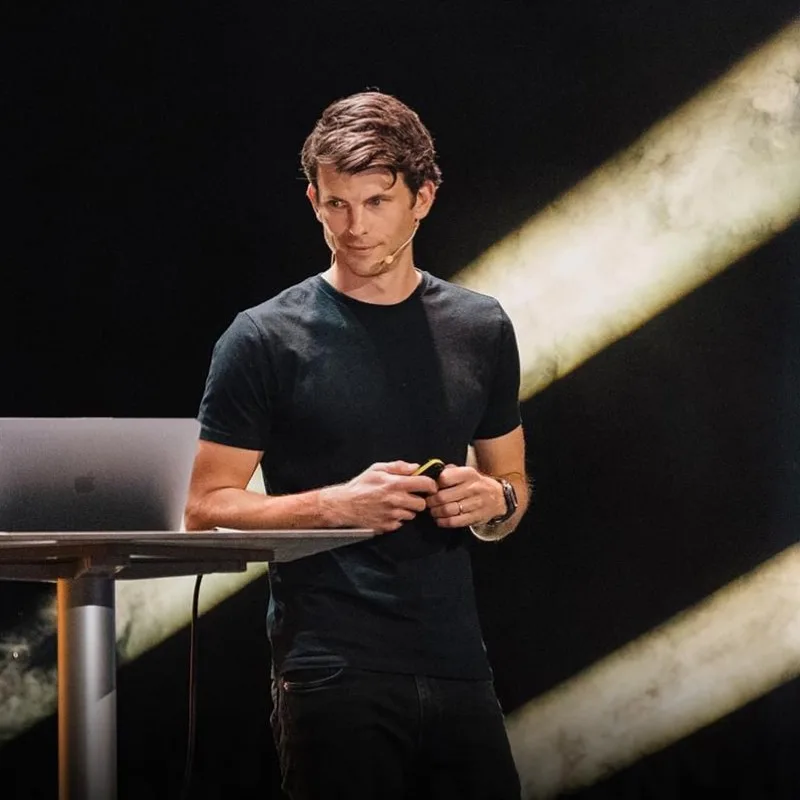
01 · The guest
James King
CEO & Co-founder, Flows
James King is CEO and co-founder of Flows, an iGaming orchestration platform that connects existing systems so operators and suppliers can build and launch features without rebuilding their core technology. Flows says it processes nearly a billion real-time events a day, supporting everything from finance workflows to gamification and jackpots. Its AI assistant, Flo, lets teams build workflows by voice or text. Flows works with companies including Fanatics and Light & Wonder, which is also an investor.
James started his career in PR and events, which brought him into gaming, then moved into sales and spent several years at GiG, ending as a sales director. He co-founded Flows in 2021 with Mike and Andrew, former GiG colleagues, backed by a seed investment from Robin, whom he also knew from GiG.
Connect with James on LinkedIn →02 · In this episode
Moments worth queuing up
In their own words
“You very much take that entirely on your shoulders. You feel very isolated.”
“The business is still funded. Okay, so we’re okay.”
“They were a client before they were an investor.”
“There’s been a thousand positive demos or meetings and we don’t have a thousand clients today, put it that way.”
“The worst thing you can do is spend time getting people set up and they just never use the product.”
Key takeaways
What to take back to your desk
Price the downside before you leap. James left a salaried sales role with two children and a third on the way. What made it possible: a team he rated, seed backing, and the belief that if it failed, someone would still hire him.
The lows are lonely and the highs are shared. A CEO carries setbacks alone, while wins belong to the people who built and sold. That is the job, but it is also why leaders need people at their level to talk to.
A hard category needs a door opener. Orchestration was difficult to explain in one line, so Flows built boxed products such as a jackpot to start the conversation. The engine underneath sells the rest.
More capability means more ways to waste time. Flows needs a client reason before it builds, and has built a feedback loop to stop the team making things nobody uses.
When a deal dies, own it fast and reset to the worst case. James called his seed investor straight away, asked what the worst case really was, and found the business was still funded. A year later Light & Wonder, already a client, invested.
Do not make fundraising the job. James chose clients and revenue over raising every nine months. Flows has been monthly profitable for over a year, and even a conference stand has to show a return before it is repeated.
Positive demos are not customers. Charge something, even a small fee, so trials get used, and agree the first five use cases so the client gets value from day one.
Full transcript
Read the full transcriptHide full transcript
James: Have you got time for a quick call now? I've never in my life had that message and it been really positive news. I thought, well, you might as well kick off the conversation, because it could also lead to a client anyway. So we met, we spoke, and it was: I love the idea. Their tech people all say, this is a great product, we love it. Amazing. Get term sheets done. So suddenly, from not wanting investment, one of the biggest VCs wanted to put quite a bit into us. Then: the big, big bosses have said they're shutting the entirety of this fund. They're closing it overnight. Decision's done.
Leo: How did you feel through that period? Obviously it comes with huge ups and downs, and usually the downs feel a lot worse than the ups do.
James: The downs do, because they're very lonely, whereas the ups are somewhat shared. We got a really good strategic investment with Light & Wonder, which has been publicly reported, and that's great because it came from them being a client as well. They were a client before they were an investor.
Leo: Welcome to The iGaming Leader Podcast. I'm your host, Leo Judkins, founder of the iGaming Leader Mastermind, and on this show I sit down with some of the most inspirational leaders in our industry, diving into real challenges, high-stakes decisions and lessons that shape our industry. If you're a VP, director or C-level executive in iGaming, this podcast is built for you. Before we dive in, a quick thank you to our sponsors, Sumsub and Bloomreach. Sumsub is the full-cycle verification platform trusted by top iGaming operators worldwide. Sumsub helps operators onboard players quickly, stay compliant and prevent fraud, all without slowing growth. And Bloomreach is the AI platform for marketing automation used by leading iGaming operators, turning player data into real-time engagement that strengthens retention and loyalty. More information on both in the show notes and in the description. Let's dive in.
Leo: Hey, everybody. Welcome to the iGaming Leader Podcast. My guest today left a senior sales director position at GiG to become CEO of a startup that hadn't sold anything yet. Four, five years on, that startup, Flows, is the orchestration layer behind operators like Fanatics, and it's backed by Light & Wonder. He started out in PR and events, and has spent a few years arguing that legacy mindset, not legacy systems, is what holds this industry back. James King, welcome to the podcast.
James: Thank you for having me. What an intro.
Leo: I want to start with 2021, if that's okay. You were director of sales at GiG, a senior seat, and then you took the CEO position at a startup. Talk me through that.
James: At the time we started, we had nothing. It was conceptual more than anything. I had a really good few years at GiG. As far as I know it still is a good business. I enjoyed working there, and I had people around me I really liked working with, people like Robin, who then became our seed investor at the start of Flows, and my two co-founders, Mike and Andrew. Mike was CTO then and is now CTO at Flows, and Andrew was running integrations at GiG. Towards the end of both our times at GiG, Mike and I were speaking quite a bit about what more we could do for clients.
James: GiG had been through a lot of transitions, and continues to. We were an affiliate, an operator and a supplier of tech in my final few years, and we had divested quite a bit of that to concentrate on selling platforms: the PAMs behind operators with their own licences. It was doing well at that. But we saw more and more that clients wanted more features, more products, and wanted them faster and faster. That wasn't unique to people on our platform. You could see it across the board. Thinking that through with Mike and Andrew is what led us to what we call Flows. We asked: how could we take work away from the tech teams within a platform or an operator, and make it easier and faster to build simple and complex products and features without big tech lifts? We ideated with Robin, and he said, look, I think you're really onto something, I'll back it. That was the start of our journey, and we've never looked back.
Leo: And it's been easy ever since.
James: At that point it was just free riding. Happy days, said no one ever.
Leo: Tell me a bit more about that decision, James. How did you feel in the moment? Going from a salaried job to founding something is difficult for anyone. Even if you believe in the idea and you've got the backing, it's a huge step. Take me back through those moments, maybe the discussions you had at home.
James: A lot of discussions with my wife about it. We had two children at that point and our third was on his way. So it's a huge decision, going from a salaried role you're doing quite well at, and it was a good time, we were selling a lot, to something massively unsecured. The upside, as when anyone starts a company, could be anything, but the chance of ever getting there is less than a percent. She's always supported me, which is amazing. And I got to the point in my head where I hoped I hadn't been enough of a dick in the industry that, if it all went badly, someone would still give me a job. Not necessarily my past employer, but someone. If I could believe that enough, then why not go for it?
James: Then there were the other positives that gave me a lot of security in my thinking: the team. Mike, Andrew, a couple of other people we'd highlighted that we wanted on the journey. They're brilliant people in their own right. And financially we could get it off the ground, thanks to Robin and what was then called Happy Hours, now Aurora, providing the seed funding. So it got to the point of: let's do it. Let's go.
Leo: How was it in your environment? When I went from a director role to starting my business about five years ago, a lot of my friends didn't get it, because they've been in salaried roles forever and don't understand leaving that security. Did your friend group or your environment change as a result of you starting?
James: No, I don't think it did, to be honest. You have to remember it was a really weird time. We'd just come out of COVID. We hadn't had much in-person socialising, and what we had was very local: local friends, local friends with kids. As a result everyone had become quite supportive of each other. You helped people locally where you could, you jumped at any chance of a distanced drink or a chat over the fence. I don't think anyone was in an overly judgemental position in early to mid 2021. You can certainly see it later, as the salaried jobs keep getting bigger salaries and bigger bonuses and you're still scrapping. But that was always going to be part of it.
Leo: And how did you feel through that period? You're five years in now, and that obviously comes with huge ups and downs. Usually the downs feel a lot worse than the ups do.
James: I've often thought about why that is. I think the downs feel worse because they're very lonely, whereas the ups are somewhat shared. In my capacity at Flows, when something you planned or wanted to happen doesn't happen, I wouldn't say anything major goes wrong, but you very much take that entirely on your shoulders. You feel very isolated. Whereas when something goes well, you sign a big client, you have a great product release, that's a shared celebration, as it should be. I've not gone and coded a single thing. Someone built it. Once we had commercial people, they went and sold it and got the deal. So that's a group celebration. You just take on the shit when it goes bad. But that's the role. If you can't do that, you're not right to sit in that position. As you say, it's a rollercoaster, and when you're at the bottom of it, it is pretty lonely.
Leo: It is.
James: And that's where groups like yours have been successful, right? There are a ton of people in the shadows feeling lonely, and then they go: oh, you feel like that too? I thought it was just me.
Leo: It's super common. And sometimes we make it into this big sad thing, but it's not. It's just the way it is. Musk said it's like eating glass while staring into the abyss. Eating glass, because the worst problems always end up on your desk, since you're the only one who can deal with them. And staring into the abyss, because at any moment it could all be over. In that period, especially pre-revenue, did you have doubts about going back? Or were you the stubborn type of founder: I believe in this thing, it's going to happen, I just need to push through?
James: I think I'm just quite stubborn in general. My wife would tell you I'm very stubborn. I believed in it from the start and that wasn't going to change. What helped is that at every step we did sanity checks. We had good friends in the industry, at operators and other suppliers, and we'd say: this is the vision, this is what we're building, how does it look to you? Nobody turned around and said it was a terrible idea. Something like that would probably have put some doubt in our heads. We made sure there was validation as we went, and we shared parts of the system in its very infant form. That helped build the case along the way. We didn't make the decision off a dream we had one night. We'd been in and around the space long enough to realise that, if done right, there was definitely a need for it. The question was whether we could do it right.
Leo: You connected the proposition to the pain point. And that's one of the biggest challenges. Before the recording you were talking about creating understanding of orchestration as a category, and that being one of the most difficult things you've had to do. Why is that, and what's the before and after of that story?
James: It was always our hardest bit, especially in the early phases: how do you sell Flows in a one-liner? We said things like an innovation engine, an orchestration layer, a real-time wrapper for your platform or tech stack that lets you use the events happening in your system. Triggers: a deposit, a game, a click through the site. Flows picks those up, then speaks to all the other parts of your system, not only the PAM but your CRM, your slot providers, whatever it is, and coordinates between them. By doing that, you can build products that sit in the middle of it all. So in the early days a demo was like opening Pandora's box. It sounds very loose, but Flows could do anything. You want a bonus engine? A loyalty system? We had finance teams building an automation to whitelist certain payment methods, which their system at the time couldn't do.
James: We tried our best to hone the demos to whoever we were pitching, land-based, online, sports or casino. And that birthed the idea we have now, a couple of years in: building a few actual boxed products. We launched a jackpot. We're not a jackpot company, but we have a jackpot, and the beauty of it is that it's powered by Flows in the back end, so you can customise a lot of what you see. It was an enabler to get a conversation started. There was always loads of interest in us. Everyone said: I really want to know what you do, but I just can't work it out. So if we come in on the back of a jackpot, because you've talked about doing one, and we've since launched a ton of other things, that's an opener. They like that, and then they ask, out of interest, what does the rest of the system do? Well, the magic's in the engine. You plug it into your current platform or your other systems and start building a load of cool things.
Leo: Looking from the outside, I see you as a really great storyteller. I don't know if you've been told that before, but that's what I see, from what you put on LinkedIn and from podcasts I've seen you on. As a founder that's super important, because it makes something that might seem boring to some people real. Is that something you've always been good at, or something you've built over time? How have you applied it here?
James: It's probably something you learn coming from a proper commercial background. Interestingly, one of my first jobs, in 2008 or so, was at a company that did quite a bit of PR and events. There were two bosses, one running the PR side and one the events side, and it was the events side that eventually introduced me to the gaming world. But I started on the PR side, so I had to learn to write a lot of PR stories. This was old-school PR, before LinkedIn, when Facebook had just launched. You're calling up a radio station saying: I've got this really basic story to try and sell you, I'm not going to pay for it, but here's the angle as to why it might be interesting for BBC Suffolk to take it. You learn to draw a story out of something that's not much. I think that's where it started, and then you transfer that into proper sales. People like to hear a bit more about something than just: this is Flows, buy it.
Leo: Yes.
James: Even now, having gone from a startup to maybe a scale-up, people like to hear a bit of the why. Okay, Flows does this, but why did you start it? Unless anyone who's bought Flows or had a pitch from us tells me otherwise, I think it's important to spend the first couple of minutes on: we were in the industry, we realised this, that's why we did what we did, and here we are five years later.
Leo: It shows that you understand the pain point the person is experiencing, because you've experienced it and you've developed a solution for it. That's true of almost any business started by a founder. It's usually a huge frustration that somebody's been continuously walking into, until they go: well, I can solve that, and start a business.
James: Yeah. As platform providers we'd get big RFPs and be ticking: we can do this, we can't do this. And we thought, if as a new company we could mitigate the 30 features they don't have, from something as simple as refer-a-friend up to something bigger, then we know there's a need. We know there's space for it.
Leo: I want to dive into that a bit, James. One of the hardest things in running a business is knowing what not to do, rather than knowing what to do, especially when you've got a good number of clients and feature requests all the time. You've got to be smart about what you prioritise so you don't create a Frankenstein's monster of requests. How do you go about that prioritisation, and not chasing what I call the lady in the red dress from The Matrix, the shiny thing?
James: The sudden head turn. We've always iterated with clients in mind and with client feedback, outside of knowing where we want to get to over five years. We're obviously users of our own system and know it well, but as you say, we could go down a path of creating a ton of features that nobody cares about. We were lucky to have a couple of operators very early who went through the pain with us. While we were developing the core system, they showed us the areas we needed to work on, to make them more user-friendly or easier to understand. So it was very customer-led, and that trickles through to today.
James: Funnily enough, I was having this conversation with Andrew, our CPO, this morning. We've got a wonderful product now called Flows Wave, which lets us build and deploy a lot of free-to-play games, and we're seeing new iterations there. For example, we recently released a crash game, an NFL one, and there are a ton of directions we could take it. We have a great team now, outside of Andrew and me leading it, and we're saying: we need a reason to build something. We can go down a path of creating a ton of stuff, but if people don't want it, it's just wasted resource. So we're building a feedback loop on that too. As you get slightly bigger and have more products and capabilities, you open yourself up to doing more things that aren't worth it. Not necessarily wrong, just a waste of time to some extent. We're getting a lot better at making sure there's some level of client support behind the decisions we make, while continuing to future-proof ourselves.
Leo: On the NEXT.io podcast you talked about losing funding and turning it into an opportunity. Can you talk a bit more about what that was like and some of the decisions you made at the time?
James: That happened absolutely by chance. We were definitely under 12 months into the company, and I was going to the US to meet a client. It was very advantageous to have already closed someone in the US at that point. We were going to LA to meet this client around the Super Bowl. I didn't actually get to go to the Super Bowl, it's ridiculously expensive, but I was in the atmosphere of it all. Before going home I thought I should stop in Vegas, try to see a couple of operators and casinos, and then carry on back to the UK. It so happened there was an event on. Early on you wear a lot of hats, and I was also doing commercials, so I reached out to all the speakers at the event saying: I'd love to pitch you this new thing we've got, Flows, let me know a good time and I'll come and find you.
James: Not many replied. One did, and said: look, I'm not the right person for you, I run our fund. I looked them up, and it was the biggest fund in gaming at the time. So I thought, I should turn that round. We weren't looking for a raise at that point. We knew we'd have to at some point, and we'd had wonderful backing from Robin seeding us. But you might as well kick off the conversation, because worst case it could lead to a client anyway. So we met, we spoke, and it was: I love the idea. As with all these investment pieces, you then go through a load of process, meet a load of tech people on their side, they all say it's a great product, they love it. Amazing. Get term sheets done. So suddenly, from not wanting investment, one of the biggest VCs in the space wanted to put quite a bit into us. And as you sign term sheets, you think: it's not a done deal, but it's a done deal. Okay, we can deploy some here, develop this, do all these things. For them we'd had to create a five-year P&L with who we're hiring, all of it planned.
James: And then you get that horrible message I mentioned earlier. It's never a good thing when someone you need more than they need you, like a buyer, sends you a message saying: have you got time for a quick call now? I've never in my life had that message and it been positive news. Whoever it's from, I'm thinking: here are the three negative things this call could be about. I got it from them and thought: what could possibly have happened? We'd signed the intent, our lawyers were going through the main contracts they'd sent us to sign. Nothing had come up. I knew it was negative but I didn't know how or why. And they said: look, we've been fighting this all morning. We said we should just continue and close yours off. However, the big, big bosses have said they're shutting the entirety of this fund. They're not doing it anymore. They're closing it overnight. Decision's done. We fought for it, we fought for you. They're honouring what's already been deployed, but that's it. That is a gut punch. Talking about the lows of the rollercoaster earlier, that was underground. You're deep down.
Leo: So when you heard that, on that quick call, what did you do?
James: I've always run a very transparent business, with stakeholders as well as the team. The first thing I did was call Robin, because he was our only investor at that point, and he'd been on the path with this thing that was about to happen. We were all pretty happy with it. In any situation like this you've got to own it straight away. There's no point kicking it down the road, because it just builds up and gets worse. In the moment I'd kind of forgotten that this is someone who's been through it. He's started companies, he's seen the good and the bad. And he was just: this happens, but it happens for a reason. It's fine. We think it's a great product, we're backing it. It didn't suddenly make me the happiest person in the world, because the other news was still heavily stabbing me. But it made me go: okay. I always try to reset in my head: what's the worst case? The business is still funded. Okay, so we're okay. Yes, we had all these grand plans, so I've got to reset those and go again. But at the base we're okay, and that's where you can build up again.
James: The great long tail of the story is that a year later, through 2023, once we'd established ourselves a bit more, we said: let's go and look for some investment to hyperdrive to the next level, to let us develop things like Wave and some of the other products, and push the AI initiative we were already working on. And we got a really good strategic investment from Light & Wonder, which is great because it came from them being a client as well. They were a client before they were an investor. A massive business. It gave us some gravitas too, especially when we're talking to big, established tier ones in the US and Canada, like the lotteries. They've worked with Light & Wonder a lot, so if Light & Wonder think you're good, that's a bit of a sign-off. So it's true, things do happen for a reason. We knew we had a really good product, and the deal didn't fall through because they suddenly decided overnight that Flows was pants. It was out of everyone's control. It was probably the biggest hit, in terms of how I've felt, through the whole journey.
Leo: I bet. And the frustrating part is that it's external circumstances. There's no one to blame, no one to get angry with, nothing to fix. There's literally no path. It's like running into a wall.
James: Yeah. As you say, there's no workaround, no discount you can offer, nothing you can do. And the people within that fund who wanted to do it with us were amazing. They almost seemed sadder than I was, because we'd built a good rapport. It was a friendship, and it still is. I see them a lot at conferences and we hang out. They've since done well and started another fund. So for all parties involved, things ended on the right side, which is a nice thing to be able to say looking back.
Leo: Do you use that now, James? When you're in the middle of something deeply frustrating, you don't see the sunshine. It all seems terrible. But when we look back at the lows in our businesses, they usually turn into opportunities, or lessons, or something that makes you stronger. Almost like a scar, or a bone that's healed. Now that you've got the battle scars from events like this, do you look at those things differently?
James: Definitely. You'll always reflect on those. When things aren't going as you want, it's always: what's the worst that's going to happen as a result of this? More often than not, and I hope this is true for most people, it's never absolute devastation. You can go: if this is the worst, what impact does it have on me or the business? Okay, how do we move forward from that? Having had that experience a few years back, I know it's true. It's easy to tell someone who's down: don't worry, it'll get better. And they think: oh, bullshit, how would you know? But if you've had lived experiences like that, you know it will. You're not just telling yourself something to make yourself feel better. It's the truth.
Leo: Funnily enough, I was listening to Travis, the founder of Uber, on a podcast last week or the week before. He said that because he's dealt with so much, anything that happens to him now, he just takes it. He said he finds it a bit scary, because big problems suddenly seem mundane to him. Like he's got calluses.
James: That's why there aren't hundreds and hundreds of people doing it, right? You take a few of those hits and you get better for it. I'd hope to think.
Leo: A little bit about the team. You're the commercial CEO, and your co-founders are more the builders. How does that dynamic work when you've promised a client something and engineering can't ship it? When those collide, who wins?
James: Flows is too good, you see. It can build anything. I've learned a lot, and it helped that Mike, our CTO, and I worked quite closely in the last couple of years at GiG. We struck a good balance between commercial expectation and technical reality. We've met in the middle: me knowing there's always a bit more give in what's said, and him knowing how to bring me down a peg or two. As a dynamic of three with Andrew as well, I can get excited about a few things, like a dog chasing balls in the park, and Andrew can bring it down to a better reality for me. We all meet somewhere in the middle. But with all that said, the reason we built Flows is that we're not an old PAM company or an old digital business. We're a modern one. We believe in pushing the envelope as much as we can, and the people we've brought in all have the same mindset. We're still a very lean company.
Leo: How many people have you got?
James: 25, maybe a couple more coming in at the minute. Each person is brilliant, and it means we've not had to go crazy each time we want to build something. It's: what's the most we can get out of the people we have? And if we genuinely need more bums on seats, we bring them in.
James: Even after the investment from Light & Wonder, I applied other lessons, not only from my own lows. There were a few founders who started companies around a similar time to us, a similar cohort, and they got investment before us. It would be harsh to call them mistakes, but you could see decisions made on the back of that which later made it harder for them, or gave them fewer options on what to do next. I've never wanted Flows to be in a position where we're doing a raise every nine months, because then that's basically my entire job. A founder who just goes and gets raise after raise after raise. We've got investment, let's take the biggest stand, hire a hundred people and get three brand new offices. I've seen others spend a ton on marketing, hire a lot of people, get the new office, and you go: but you've not got any new clients. I get it, you want to position yourself for growth. But you can do that in a smart, reasonably lean way. You see a lot of vanity metrics thrown out at times, and you need to be careful, because the winds can change. When we started Flows, from 2020 to probably 2022 or 2023, money was easy to come by if you were a startup. It's never easy in a true sense, but investing was an exciting, sexy thing to do, and you could see it happening a lot. That's thinned out a ton now, especially for earlier-stage investments, where people are looking for half a million to five million. You've always got the big ones deploying proper unicorn-type money.
Leo: It's interesting. I had David McDowell on the podcast a while back, founder of FSB, and he said he felt his job was raising all the time, and then worrying about the dilution, and that he never really got it right. Then the week after, I interviewed Ebbe from EveryMatrix, who said he only took one tiny investment early on and more or less bootstrapped EveryMatrix. His reason was that you trade your crown for a fuel tank. I thought it was a beautiful way to express it. Where do you sit on those things?
James: I think that's absolutely true. It hasn't felt right for us as a business, or for the way I want to run and drive Flows, to spend our entire time raising capital, to the point where it outweighs growing the business in revenue and clients. Perhaps that's from a commercial mind. It's one thing to build the products, the systems, the people and the structure around it. But ultimately, if people aren't buying, you've built a lot of shiny things that nobody wants, and you're going to run out of money. So I've always wanted to build up the clients and take it in those steps. Maybe we'd have got to where we are today two years earlier if I'd spent more. I can't say that. I don't know. All I know is that we're in a good position today. We've been monthly profitable for over a year now, and that's growing. We've just signed a ton of really good clients, the pipeline has good clients coming in, and our current clients are growing. Maybe that would all have happened two years earlier if I'd just started throwing money out.
James: We've also just done our first stand, in Lisbon, our first Flows-only stand. Dipping a toe in the water. It was small compared to the mini towns and villages you see. My thinking, if anyone of a similar size is wondering: the commercial team are great, and they'll always be back to back in meetings they pre-plan for an event. But are we missing walk-ons? Is there value in walk-ons? We advertise on LinkedIn that we're turning up, but you'll only reach out to the people you want to. From what I hear, I was in the US at the time, it was a very busy event with a lot of walk-ons, and in the next couple of months we'll see if any of those convert. If you get one walk-on you wouldn't otherwise have spoken to, and they sign a contract, it pays for itself. We're going to do the same for ICE and then compare the two. Even with all the money in the world, I don't think it's a done deal that you have to have a stand. You want to make sure you see the return.
Leo: Often it's also about meeting space, right? You had a really outspoken view on the Betting Startup podcast with Jesse about how startups should use conferences. Tell me a bit more about the value of conferences for startups.
James: I think conferences are bread and butter for startups. In the early days you've got to go to as many as you can, within the financial sensibility of what you can afford. If you're not getting the business out there, it's going to be harder to grow. Even more so now than when I spoke with Jesse at the end of last year, we're seeing more and more, I can't call them AI slop companies, but everyone's inventing something every day. Today there are another hundred companies that all do, let's say, a jackpot. I don't believe that's an end-to-end jackpot that will survive hundreds of millions of game spins through it, but it doesn't matter, because the noise is enough to make people think. So if you're sheepishly building and hiding away with your startup and not presenting yourself, you'll find it hard. People need to hear about what you're doing, and you need your ideas validated. And in person is so important. We saw over COVID that it didn't work. Everyone was trying digital conferences, and honestly, they were rubbish. I get it, there was no other option. But people forget: humans are humans. They have a deep desire for in-person connection that's built in, whatever technology you throw at it to mitigate the need to talk. You and I could have done this podcast online, but there's something about the need for it to actually be real. I don't think that will ever go away.
Leo: One more question, James, about talking to people and showing your product. You've mentioned a few times the feedback that told you the thing made sense and spurred you on. One thing I hear a lot, and certainly agree with, is that people try to be nice to you. A lot of people have difficulty telling you that what you do is rubbish, because they're polite. So the thing you've got to do, I think, is get somebody to pay for it. That's when the real feedback comes. Have you experienced the same? Do you see a gap between the two?
James: Absolutely. I honestly don't know if we've been on a call or demo where someone said: this is terrible. Not that someone didn't think it and just wouldn't say it. But to your point, there's been a thousand positive demos or meetings and we don't have a thousand clients today, put it that way. So there's a disparity between what people are outwardly willing to give and what happens when it comes to opening the chequebook or moving to the next stage. You've got to get good with your bullshit-ometer. When you meet people in person, you can tell if they really don't like you or what you're saying, even if they're smiling. You can see in the eyes it's not there. Our commercial team have been very good at cutting between the good and the bad. Everyone gets the demo, and we want to show every element of the product to as many people as possible. But when it comes to demo number seven: are you actually going to do anything with us, or are we just going to keep dancing because you can't say no? We'd much rather say: let's leave it for now, come back to it in six or nine months.
James: Our model has been largely B2B, so there's been no need for a freemium model. We're more than happy, especially when supporting startups, to do something close to freemium until they start getting volume. But at the very least we'll charge, say, a hundred euros, just to show that you actually want it. The other thing you don't want is to give free trials, which cost you and your team time, especially while we're still a small company in the scale-up phase, and then they don't really use it. An exchange of money means, mentally, from their side: I need to see some value for this, or I've just wasted a hundred quid or a thousand or whatever. So they'll give it a go. The worst thing you can do is spend time getting people set up and they just never use the product. That's easier said than done. We learned it in the early stages of Flows. There's no better word: you're so desperate for people to want it and take it that you sign up with anyone, do whatever it takes, and listen to everyone. Anyone who says something's good, brilliant, let's go with that. In the early stage you want to turn everything into a positive. You don't want to think: maybe that's not right, maybe they won't use it. Over time you learn to reshape your approach. Our commercial model has definitely changed from day one to today. I think we've now got a really good one. Not that we had a bad one on day one, but as we progressed, and as our client types progressed, those things changed.
Leo: Early on it's anyone with a pulse and a wallet, basically.
James: It's just validation, isn't it? It's like spending a ton of money on some clothes and going out for the evening. If someone says, hey, you're looking good, you take that. Thanks. You need the validation because you put the effort in.
Leo: But it often turns into a terrible relationship on the back end. It doesn't have to, but they might be unhappy, you might have oversold, they might have misinterpreted, or they might be a horrible client who requires a ton of support every time. So getting clear on who you want to work with, and who you don't, has that changed over time?
James: Again, going back to the fact that you can do so many things with our system: in the last couple of years we've been very good at honing in on the first five use cases. What are the first features and products you're going to launch with us, so that from day one you're getting value? Versus one part of the team seeing it, thinking it's the best thing since sliced bread and signing up, and another part of the team going: what was the reason for taking this? And being told: oh, you should just do everything. So where do we start? Instead they come in and say: this is solving this risk problem for us, it's solving this problem, it's doing this product. Great, day one we're in. From there we teach and learn, and the entire business ends up using it.
Leo: That's such a good idea, because as you grow, the handover between sales and account management becomes crucial, and those five use cases make sure the client gets value. Makes sense. Last question, James. If you could go back to that moment of the quick call, when the investment fell away, what would you tell yourself?
James: Before or after the call?
Leo: After the call.
James: Because before it, I wouldn't have changed anything in the approach. After it, I think I would have told myself what you'd tell anyone in life, outside business as well. When you're in a down moment, something horrible happens, a family thing, whatever, it's very easy for people to say: it's going to be okay, you'll be all right. More often than not you just don't listen, because you're in that place where you think: yes, you've said that, but I don't believe you, and you can't get out of the hole you're in. So I'd tell myself: no, it's true. This will pan out the right way. Not because I didn't think it would. Especially after speaking with Robin, I knew we'd be fine. It's more about alleviating the weight of emotion you're feeling at the time. Because it's not just that call. You've got to go and tell the team. My co-founders, Andrew and Mike, didn't know yet, and beyond that a couple of other team members. You're slightly careful in these situations until everything's done and dusted, but you've got to turn and face it. I'd told my wife: oh, that's great, the business is about to take off, we've got this guaranteed investment. And she's said: congrats. And then it's: well, that's not happening now.
Leo: Oh my.
James: So there's a lot. And I would tell myself: tell them, tell her, but it's actually going to work out for an even better reason. Things will be even better at the end because of it.
Leo: Exactly. James, great conversation. Thank you so much for joining.
James: Thank you for having me. It's been good fun.
Leo: Thank you for listening to the iGaming Leader Podcast. If you're a VP, a director, a founder or a C-level executive in iGaming and you're making the biggest decisions all alone, you might want to check out the iGaming Leader Mastermind, a programme I've built with small inner circles of vetted senior executives, where we run weekly hot seats and you get accountability from people who understand the effect of the decisions that you need to make. Find out more and apply at igamingleader.com. And a final thank you to our sponsors, Sumsub and Bloomreach. Sumsub is the full-cycle verification platform for iGaming operators, covering player onboarding, AML and fraud prevention, all in one place. Bloomreach helps operators turn real-time player insights into more personalised engagement that builds long-term loyalty. More at sumsub.com/gambling and bloomreach.com. See you next time.
This episode is brought to you by

The full-cycle verification platform for iGaming operators. Player onboarding, AML and fraud prevention, all in one place.
sumsub.com/gambling

The AI platform for marketing automation used by leading iGaming operators. Turn player data into real-time engagement to deliver timely, relevant experiences and strengthen retention and loyalty across every touchpoint.
bloomreach.com/igaming