
01 · Watch the episode
The full conversation
Watch on YouTube ↗ — if the embed above says restricted, it's a block on your network/Google Workspace account, not this page.
Or listen on:SpotifyApple Podcasts
02 · The guest
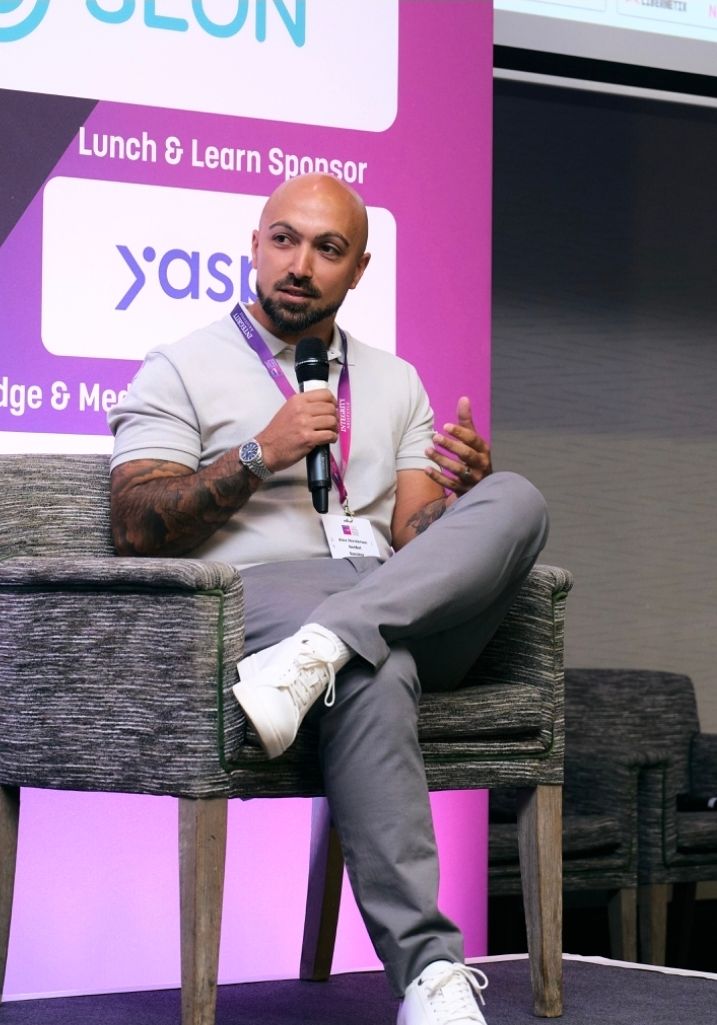
Alex Henderson
VP of Compliance, Midnite
Alex Henderson brings has extensive experience in compliance, regulatory affairs, and operational risk within the gambling sector. His career includes working with leading operators, law enforcement agencies, and advisory firms, equipping him with a well-rounded perspective on both commercial and regulatory challenges. He is the co-host of The Compliance Chronicles, a podcast designed to discuss busienss, Compliance and to help peers navigate a complex environment.
Follow Alex on LinkedIn →03 · Inside this episode
Moments worth queuing up
In their own words
Full transcript
Read the full transcriptHide full transcript
They get the belief of my role here is so focused on everybody's a criminal or everybody's got a gambling problem, but that's just not the reality. I think the message that it sends just the word alone is we're here to make you follow rules to comply and it's not what we do. I mean the whole role of working in compliance is protection. I like to make quick decisions. If you take time, especially in the eye gaming world, you lose out. If you're not the first mover, you're often then chasing. If you're not the first one to do things, it can cost the business market share
thing. And that means because I'm quite decisive, could go one of two ways. It was fantastic from a compliance perspective, but it cost the company money. We were limiting accounts, closing accounts more than any other operator. And commercially, it had a massive impact. I cost the company a lot of money there. Something had gone really wrong in the business. And I did get the blame. I did get thrown under the bus. It was a case of this has gone really wrong. It's all your fault. You've got to fire people within your team. your jobs on the line. I felt it wasn't warranted. >> Welcome to
the I Gaming Leader podcast where we uncover the human side of some of the most inspirational leaders in our industry. I'm your host, Leo Jutkins, and as an ex eye gaming director turned performance coach, I've worked with over 200 leaders from companies like Entain, bet365, Flutter, and many more to help them build the habits to achieve sustainable high performance. In these episodes, we share exactly what it takes for you to achieve the same. So with that being said, let's dive in. Hey everybody, welcome to the i Gaming Leader podcast. I am here with Alex Henderson, VP of compliance midnight and he is the co-host of
one of my favorite podcast, Compliance Chronicles. Really amazing, amazing show. His career spans from a UK national crime agency financial investigator to building compliance departments uh from the ground up. And I think really Alex, what makes your story so compelling is not just the trajectory that you've been on, but your willingness to kind of look at moments where leadership got messy, where good intentions really led to unintended consequences, and you being really open about talking about all of those things on your own podcast. really excited to have you here and and talk through some of those moments. So, thank you for joining. >> Thank you
for having me. Been looking forward to this for a while. So, I'm excited. >> What I wanted to start with is is something that is maybe a little bit controversial. I don't know, but you've mentioned that compliance is possibly the worst possible name for what you do. And I'd like to start off with that. Why why do you why do you believe that's the case? I think the message that it sends, you know, just the word alone to people who don't know what you do, that first message is we're here to make you follow rules to comply. And it it's not what we do. I
mean, the whole role of working in compliance is protection. You're there to manage risks and protect employees in the business. And I think there's somebody who I really respect in the in the compliance um realm, Christian Hunt. you know, he was one of the first people that I heard say that and he put that message in my head and it it got me thinking and I try in every role that I work into not reference that we're the compliance team or the compliance department or or use the title of officers. I try to just reference us by our by our names and what we're doing. So, you
know, for example, I've got X joining the call today who's going to help us understand the risks around anti-moneyaundering as opposed to I've got this anti-moneyaundering compliance officer joining the call cuz it just Yeah, it gives that perception that we're here to make you follow rules and I just I I don't like that. It's one of the tricky parts in business, isn't it? where you on the one side you have the commercial side of the business that wants to generate revenue but also of course needs to you know follow certain procedures and make sure that certain accounts are that accounts are in a good state
and then on the compliance side there's so little upside to people that are working there to keep an account open because if you keep the wrong account open obviously that's a massive issue comes with fines comes with all of that whereas there's upside in actually closing accounts and on the commercial side you kind of have the opposite right you obviously want to generate uh revenue for the business and >> well I disagree with it I think the job of compliance is to keep the account open the job is to find a way making that customer have a good user experience and fit within your rules
and especially with junior people within compliance they get the belief of my role here is so focused on protecting the business which it is that everybody's a criminal or everybody's got a gambling problem when the re when that's just not the reality So, I try and flip that mindset with them with they need to look at every account like this customer is a healthy human being and this person knows what they're doing with their money. They're not a criminal and we need to look at that account with that mindset, not the mindset of, oh, I've got to do more adverse media because I adverse media
searches because, you know, I couldn't find a connection. and they almost I've worked in places before where they almost keep digging until they find something till they find something negative on the account when it's just not the reality especially of the UK public. It's not the way it is. So yeah, I I disagree with it and we try and challenge all of our all of our team members to look at accounts with that mindset of how do I make this account compliant without you know bending rules. For example, if for example, my process tells me that this customer has hit ABC trigger and therefore the
signs show that they might be involved in some elicit activity. But then you look through their behavior in a bit more detail. You look at their profile on open source and you can see actually no this this is clearly a good person. Maybe it's the triggers that need adapting as opposed to you restricting that account. So we always challenge them to before you take the strictest action on account, help us understand is our process that needs changing before we try and change the customer's journey. Love it, mate. I I think I mean one of the things that you uh I've heard you say a few
times is that you really you'd rather be, you know, fall flat being super innovative than follow mediocracy. And it kind of, you know, it kind of shows here as well. How how does that how does that show up for you in your in your day-to-day job in you managing the team in your leadership style? >> It's going to sound like I'm lazy, but my my leadership style is really I just try and enable everyone around me and give them opportunities. Um when when I'm hiring people and when I'm working with people and if they've been given a certain role in a company, they've already proven
they can do the job. So it would be disrespectful of me to then limit them limit what they're allowed to do by saying no, this is a process only go and do that. this is the policy only go and do that. I think that's almost arrogant on my part to say that that's where your boundaries are. So my mindset is if you can challenge the way we do something, if you can find a different way of doing things, do it. Take a risk and yeah, it could go wrong. Take that decision and I'll back you, you know, as long as the risk isn't I'm going
to let somebody who's clearly financing terrorism, you know, um with withdraw a chunk of money. It's I want them to look at everything that they do. everyone in my team, everyone that I work with, and always be asking, is it the best way we can do things? And anyone that comes to me and says, I'm thinking we should change this process. I'm thinking that we should open this customer account because of this. I'll always back them. I'll always back them. And if it goes wrong, yeah, it's me that will get in trouble. That's fine. I accept that. But so far, the rewards in my career
have outweighed the negative side of things. Like there's been a few things where I've got it really really wrong, you know, massively and there's been impact, but it hasn't definitely there's been a lot more benefit. And I look at the people that have worked with me over the last say 10 years and where their careers have gone. I don't think that I would have been able to help their careers as much. Not that, you know, I fundamental, you know, their careers are what they are, but I think it helped by just me just saying, "Go and do your job. I'm not gonna I'm not going
to limit you." >> Has it always been like that, Alex? Have you always been like that? because I can imagine in in in roles where it's more process driven that really the easiest way to do is to to operate is just follow the process obviously that doesn't create any engagement from your team but it also limits that risk right and you sticking your neck out and so so tell me a little bit more about if you've always led like that and and I also love to hear what you just said about where it has gone wrong and it massively has affected you >> no it
definitely hasn't always been that way I think you know when I was more junior in my career you know I I looked up to my managers and I followed everything that they said and I stuck to policies and procedure. I think as I've got more senior in my career and I've earned a fair amount of trust when whenever I'm in a a role like even now in my new role there's a fair amount of trust there that okay let's believe Alex he must know what he's doing because he's fairly senior in his career I managed to convince them of that >> um so they put
a lot of trust in me and I just return that trust to my my colleague but >> I would never I never worked this way when I was more junior in my career I followed everything the way it was because I got burnt a lot whenever I tried to push things whenever I tried to challenge the way things were in a business. I didn't have great leaders around me always, which I'm grateful for cuz I learned a lot from them. Um, so I've just tried to flip that a little bit and make sure that I don't follow in the footsteps of bad leaders that I've
had. And um, like I say, in terms of when it's gone really really wrong, I like to make quick decisions. I think if you take time, especially in the eye gaming world, you lose out. If you're if you're not the first mover, then you're often then chasing whether you're entering a new market, whether you're changing the way that you approach safer gambling, marketing, etc. If you're not the first one to do things, it can cost the business market share. So, I'm always quite decisive. I'll make a decision on something. And that means because I'm quite decisive, could go one of two ways. I I'll obviously
weigh everything up. I'll I'll I'll I'll I'll follow regulations, legislation, but I'll be decisive. And I suppose the best example I have is a previous role I was in, we were trying to be really innovative around safer gambling. We wanted to do things differently. We wanted to do things good for our customers and and and push the limits in terms of how good are you how good we could make safer gambling. And it was incredible from a compliance perspective. I had a really great great team around me. We worked together. they they very much led on it and I just enabled them and said cool
if you think this is great you think this is going to be industryleading and it's going to protect our customers that to do it but I was quite rash with my decision because that's the way I work and the the outcome of it was it was fantastic from a compliance perspective but it cost a company money it cost we were we were limiting accounts closing accounts more than any other operator and commercially it had a massive impact for around 3 months until we got the analysis where we looked back at and for me it took longer than it should have but again another valuable lesson. We
we cost the company I cost the company a lot of money there because in hindsight it was fantastic for compliance but I should have not taken that quick decision got a little bit more analysis on what the potential my impact might be and then I would have I would have taken a different approach but it was still a good lesson just it was just a cost me one. One of the things I found really interesting of what about what you just said is after two three months you you get the analysis, you see that it's wrong, you you action it, you obviously reverse it or
change it in a way that it's commercially better for the business. How do you go about kind of reviewing the quick decisions that you're making? Because yeah, I I completely agree with you. Being fast is, you know, money loves speed, right? But it can go wrong. So, how do you go about that? typically making sure that you've made the right decisions and then you know potentially actioning it based on based on whatever you found >> whenever there's a a decision being made that has potential commercial impact which is almost every decision in compliance we have in place measures we have in place metrics that on
a either if I want it hourly I can get it hourly if not daily weekly and now I just keep a much tighter sight on it um or I have people with me keeping you know much much higher levels of visibility on it um it can go either It's if it starts to show a sign, if we've made a change and okay, all all of a sudden customers are spending more or we're getting more registrations, fantastic. But have have we missed something here? Because it's really really good, but is it too good? And then on the flip side, again, if maybe we gone over compliant
if we've seen a decrease in registrations, a decrease in customer spend, what has caused this? And we'll look at it that way. So now I'm just much more finger on the pulse and quicker to react because you know a day a week of poor registrations or poor registration journey or first deposit experience is um is costly right cuz customer expectations in the gambling industry are through the roof. They the customers expect so much. There's so much competition. So that that first experience is is fundamental to the long-term relationship with customers. So now yeah I'm just much much more finger on the pulse. >> That's so
true, isn't it? It's there's so much competition there is no loyalty really from from a customer perspective. So yeah, bad first experience will will massively impact it. I often think about it like the nose of an airplane, you know, when in the beginning you make a bit of a difference, a 1% difference in a customer's experience that has a huge outcome on the end result, right? Um whereas if you do that at the end, you can only change a little bit. >> I I was having this discussion with someone the other week and and we were trying to think of examples like that. What what
is it like in terms of customers for gambling? And my my example was I said it's like it's like speed dating that people will make up their mind within seconds whether you're the one. They'll make up their mind first based on visuals and then it will be the experience in terms of how the how the conversation was. People will make up their mind so quickly. They'll make up their mind. They will judge a book by its cover first of all. They will do that. And then if you don't win them over verbally or through what you're demonstrating throughout the user journey, that's it. There's no
coming back. >> Yeah. Alex, you said one of your proudest moments or experiences is really building a compliance department from from one person to 30 plus. What's the story behind that? And why is that why is that moment or that journey something that's made you so proud? >> I would say the reason it made me the proudest was because when I first started that job, I was really inexperienced. I was told something when I was young, which is fake it till you become it. And I think I took that job when I probably wasn't ready for that job in hindsight to to be leading a
compliance function. I would probably I could have done with a few more years at a more junior level, but you know, I done my best. And I think the reason I'm proudest of it was because throughout that whole experience of growing the team, it felt like I just kept maturing. I kept learning. I kept making mistakes, but I just kept learning. And two things for me were I felt like I was always improving but at the same time I was really happy. I just kept making opportunities for people around me and their careers just kept getting better and better and better. So that for me
was the biggest thing was was just it it enabled growth for for me and and and so many others which we wouldn't have been able to do had we not got gone on that rapid journey of you know starting off with one license i.e. you know, or two licenses, a UK license and one offer and then entering, you know, four, five different markets over a few years, having seven, eight compliance officers, big AML team, say for gambling team, you know, I I would when I started that job, I would never have imagined that it was going to spiral into something like that. It was just
it was it was a great experience and I think it it allowed me an opportunity to make a ton of mistakes. I keep referring to that but I've learned so much from all the mistakes I've made but it allowed me an opportunity to make so many mistakes and I think because I earned the trust of the company owner and and senior people quite early on that they gave me quite a lot of freedom. It was a case of okay if if Alex thinks this is the right thing to do then okay that let's do it. Yeah. I don't think I would have experienced it anywhere
else, but I'm I'm grateful I had that opportunity because I definitely wasn't ready when I first started. Definitely. >> I think it's certainly something that happens a lot in gaming, right? In many, not just not just in compliance, in almost every single area of business where people kind of jump into a role that they're not quite ready for and then make really fast progress through that career almost having to perhaps fake it until they make it because they don't feel ready. It's outside of your comfort zone. and then yeah either you know make it or or the break right often happens as well. So when
you think back through that journey of yours what are some of the perhaps leadership lessons that you've learned the hard way that nobody warned you about beforehand that you hadn't heard about beforehand? >> You referenced one the other day that I'd said before where something I believed early on in my leadership career was that you have to work. You have to work non-stop. Everyone needs to know. You're setting the example of you need to be first through the door. You need to be last one left in the office. They need to know that you're working till late at night and send that example to them
because then they replicate it. And I I was a strong believer of that. I used I used to be so proud of it. Like, oh, I remember we were working towards an audit. uh we got notified that we were having an audit with with one of our regulators and I had everybody in my team across a number of jurisdictions working ridiculous hours because we had to get ready for the audit and you know I remember there was one guy who had just become a dad and he was working until 3:00 4:00 a.m. in the morning and I didn't have the experience and even the compassion
to to tell him switch off stop doing what you're doing. I remember going into work the next day and telling my boss, "Yep, we've got everything ready for the audio. I had everyone working until 3:00 a.m. Amazing. We're good to go." And being really proud of that moment. And I know, you know, that can happen, right? There will be times when people were forced to go above and beyond and work extra hours. It's in every role. But as a leader, I I didn't see the signs that, you know, that was impacting people's personal lives. that what I've learned from that and what I now practice
a lot is the moment I see somebody working hours that they shouldn't do. I've got a guy doing it at the moment and it really bugs me because he's such a great team member work so hard but he just doesn't listen. You know when I say you got to switch off. You've got to have some personal time. It's so important because you're not going to know it's a problem till it becomes a problem. Then you're going to be trying to recover all of the energy that you've lost over weeks and months which you just can't do. So the best is prevention. almost like a gambling
problem. You know, you you don't want to spot the the signs late and then somebody's got a gambling problem. It's almost like workaholic should be in that category. But that's something now that I learned the hard way now with everyone that I manage. I I I keep an eye on them and I I do my best to make sure that they're taking time for themselves, that they've got personal time, that they're not overworked. I look at their schedules. I look at, you know, the the hours that they're working, the efficiency that they're putting out. I'll talk to them about things going on in their personal
lives. And I never done that early on. I never done it. I distanced myself from from a lot of my colleagues because I was told by one of my managers, don't build relationships with your team because you're going to have to fire them at some point. And I and that stuck with me. So I I never used to build relationships. Whereas now, maybe I shouldn't because yeah, there will be times when companies are forced to make redundancies, but I'm not going to not build relationships with people that I spend so many hours with in a day. And when I'm meant to be their leader, I'm
not going to close the door just because some at some point they might not be who the company wants. That's Yeah. So I changed that and I learned that the hard way. It I mean I've had Mike on the podcast, Mikel on the podcast, right? So we've got some really extreme examples of what can happen when when that does go wrong. But I often think that it's not it's not an all or nothing thing, right? It's like a scale, a gradient almost where I think if you're constantly on the problem is not just the fact that you might burn out or like might get a
mini stroke or whatever. It is actually that everything before that also means that you're very likely to be underperforming because you're never your battery is never going to be operating from like a fully charged perspective. Right? So I think from that aspect it's a really crucial piece and how do you how do you go about that? How do you go about switching off and how have you, you know, you're talking about how you changed that over time with your with the people in your team, but how's that shown up for you since having that experience? >> I mean, my my kids are a lot older
now, so I'm conscious of the fact that my my especially with my son, he's almost at that age where I know he's not going to want to spend time with me anymore. You know, he's becoming a teenager, and every spare minute that I get, I I just want to spend it with them because I know there's going to be a moment where >> I just don't Yeah. they they don't they don't want to be around me. It's going to sound horrible. But there there are times when my parents call me and I look at the phone, can't do it right now. You know, I've gotve
I'm so busy and I'll ignore the phone call and I have this period of, you know, it lasts normally about an hour. I just feel so guilty that I've chosen and I know I've got a job to do, but I've chosen to sit in this meeting instead of answering the phone to my mom, who, you know, it's normally a five-minute call. she she's just called to gossip about something that she's heard and a little chitchat, but that means so much to her and I've disregarded it so I can join a work meeting. Whereas now, if a meeting isn't critical and my mom or or my
dad or or a family member's called me, I will not go into that meeting. I'll tell make my excuses. I'm going to be 10 minutes late. I've just got to do something on of a personal nature and I'll speak to my mom. So, that's always been in my mindset. I want my son to have that same attitude and my daughter to have that same attitude towards me. So I think that's what really changed is I'm conscious of my personal time is not my personal time anymore. My personal time is my kids time. It's it's spent with them. So the way I manage it is the
moment they get back from school and the moment you know usually it reaches around 6:00 6:30 in the evening they've either got activities that I have to take them to or they just want to play know can you play football with me in the garden and I'll never say no. I it's it's something I do no matter how tired I am, no matter how my day's been. And that is how I manage things because they just keep me quite grounded and yeah, I live with a realization that there's probably not many more years left where they want to spend time with their dad. So I
make the most of it. >> Amazing. There's this amazing graph that shows how much time we spend with our kids over, you know, as they get older. And it's a really steep curve. So yeah, anybody listening and struggling to switch off might want to look up that curve. It it did the same thing for me as it did with you, Alex. like puts this mirror in front of you of going, hm, maybe I should change my priorities here. >> Yeah, I just make the most of that. I mean, I exercise a lot. You know, I'm quite into into my trading and I do different things
for longevity as well. Again, coming back to my kids, I want to make sure, you know, I want to be that 70-year-old that goes and runs marathons with my kids and grandkids and stuff. So, I think it's all just comes down to me just wanting to be around my family for longer. And work is a low priority. If I if I could do a job that ended every day at 1:00 or uh 2:00 in the afternoon, yeah, I'll do it in a heartbeat. As much as I love work, I would I would do it straight away. Hey, uh one of the things you said that
example of the 3:00 a.m. email, right? I heard you talk about that on uh on one of your episodes where, you know, me mentioned people sending emails at 10, 11 p.m., your team working all hours as a result. In that episode, you said, "How bad was I as a leader and making, you know, making them think that all of that came first." Right? It's the same example. I've got the same question the other way around. So, I think often we we see things looking backwards that we, you know, at the time we thought it was amazing that we were doing it really well and it's
because we just didn't have the knowledge and we didn't have the experience. If you look forward now, let's forward ourselves like 5 10 years. What are some things that you're currently doing that you might in five or 10 years you might be thinking, "Oh my god, Alex, why are we doing that?" I allow people too much freedom and I imagine there's going to be a situation where it backfires and I'll look back and go, damn, why was I not keeping a tighter, you know, tighter rain or or more oversight on people. Why was I trusting so much? I think that's going to be one that
that comes back to to haunt me at some stage. But I can live with that because it is risky and it is a is a weird approach. which I've got it wrong already before where somebody who I respect a lot who I used to manage came to me and said, you know, I wish you were a bit more present. I love the fact that you gave me freedom and I love the fact that you um just let me run with things, but there were times where I wish you were present. But when he said that to me, I remember thinking, damn, you know, he's right. But
I didn't change because and what I said to him was at the moment I feel like I give pe people know that I'm present. So I don't need to be calling you every, you know, every few hours or every day to say, you know, how are things going, you know, or the team know they can pick up the phone to me. And I think the mistake I made with him was probably I just didn't let him know that that was the case. Whereas I didn't change my approach to being more present. I just made them realize I now I just make people realize that I
am more present because he was open up open and honest with me. And I imagine there's probably a few other people that I've managed who feel the same as him. >> Yeah. It's like a spectrum, isn't it? On the one hand, like on the one side, you've got complete micromanagement and, you know, standing over someone and like checking every key stroke they make versus complete freedom and not being there. And it's it's impossible to get that right in the middle because we all the way we like to be managed and the way that we like managing, they're different for everyone, right? So, communication is such
a big part of that. >> I think you've hit the nail on the head, though. I think striking that balance, I don't think I'll ever be able to get that right. So, All I try and do is pick the one that I I believe is the best for the majority. And I believe that, you know, everyone says, "Oh, you know, you should treat all of the team members different and and adapt to their their, you know, everyone has a different way of working." Yeah, I get that. But when you've got a team of hundreds, you're not going to adapt the way that you work for
a hundred different people. You can make subtle changes, but as a whole, you you want to embed a culture and ethos within your department that says this is the way we're going to work at a team. You should know that you can call up any member of your team at any point and just chat. Not necessarily about work, but just chat. You know, something's wrong. You should know that you can do that. But at the same time, you should also know that they're not You might go a day where nobody's checking on you because they trust you're doing their job. They trust that everything's okay. So, I
don't know how to get the balance right, but I I do my try my hardest to embed that culture within my team that we're we're working together and you spend more time with each other than you do with your family and therefore you need to know that you can count on everyone. I would like to think that most people I work with, if not everyone, knows they can pick up the phone to me and and talk about whatever they want, you know, whether it's workrelated or not, and I'll listen. I might not have the best solutions, best ideas, but if nothing else, I'll listen and
I'll hear what they've got to say. And sometimes that's enough. Love that. Hey, Alex, but your um your reputation and how you're seen is is really important to you. I remember when you told that story about a team member who lost respect for you. I I could see how much you know that was really that how much that impacted you and what that meant for you. Not just because it happened, but because it happened in front also in front of people who whose respect you needed for people not maybe not having heard that story. I'd love for you to retell that and and talk a
little bit more about why that's how it how it occurred and why that impacted you so much. >> Yeah, you're right. It was it was a painful one because up until this point I had a really good relationship with this individual. We got on really well not just as colleagues but also you know we we'd spent time together personally and um it it hit me hard because the feeling wasn't mutual. I had huge respect for him both as a professional and as a person and it came out of nowhere that we were just on a group phone call. It was a discussion about nothing and
he just started raising his voice to me started telling me that I'm not fit for the role. He was just making a lot of statements he'd obviously harbored and some of them were justified. Some some of them were spot on, but it just wasn't the platform for it. And it hit me really hard and I I had again, you know, one of those things where I lost my temper and told him, "Get off the call. We're going to toss this one to one." But I said it in quite a harsh tone cuz I I'd lost my temper and it takes a lot for me to
lose my temper. Then I felt even worse because now I've just embarrassed myself in front of my colleagues, in front of people that I'm meant to be a leader for. they've just seen me lose my temper over something so silly. And then we went on to the the one-to-one phone call and you know he carried on for a little bit being being a little bit disrespectful but he most of his points were justified. So I so I heard him out and um it just ended the relationship. It but because he stayed in the business for a period of time it then created a toxic environment
for some of the other colleagues because he was his messages and the way he felt towards me he was part trying to pass on to others and sometimes successfully but it was yeah it was just a really tough experience because I hadn't had that before where I mean I imagine there are people that don't respect me fine but I'd never had it where they just confront me in a group environment and I didn't know how to handle it. I really didn't. Now, the thing I got wrong with him in that specific scenario was that he just wasn't being kept busy with work. So, he he
didn't have enough tasks to do. So, he had a lot of spare time on his hands. And my opinion of it was that he just built up these this anger, these feelings towards me because he could see that I was constantly the constantly busy and he could see that I had a certain reputation in the in the company. And I think there was a little bit of resentment there. And then on my part, what I had done wrong was I didn't keep an eye on his workload. And I I there were earlier signs I looked back on it, right? There was other times on other
phone calls where he'd been a little bit blunt, but I hadn't hadn't reacted. I hadn't picked up on it. There were other times when he'd sent a message in an email groupwide, you know, to me and I'd taken it as well, you know, that not taking any offense to it or taking it as disrespect, but then when I read back through them, there were clear signs and I wish I'd have picked up on them sooner and had a chat with him and just said, you know, is everything okay? Have I am I doing something that upset you? >> Yeah, I can only imagine that. How
did how I mean especially when you tied into what you were saying earlier that one of your earliest managers said to you don't build a relationship with people right and you then learning actually for me to be a good leader I want to be authentic I want to build relationships like that an experience like that could wobble you in a way where you go well actually maybe the right thing to do is not have these relationships and not invest all this emotional you know baggage into people so that also it doesn't feel as it doesn't hurt as much when situations like that happen. So, how
did you how did you deal with that emotionally afterwards? >> So, immediately after I had a chat with the rest of the team. I remember that I had a chat with the rest of the team that were on the call to apologize for losing my temper, for acting out and for the for the situation in general. So, so I remember having that, but emotionally I think the main thing was I felt really really embarrassed and disappointed that somebody who I had so much respect for just didn't feel the same. You know, I was really I remember being hurt by that because even after that phone
call, my feelings didn't change. I would I still felt I've got nothing but love for this person. You know, he's he's a really good guy. So, I was Yeah, I was hurt and I was embarrassed. It didn't change the way that I work in the sense that, you know, I'm quite a closed person anyway around like with people in the sense that I've got two people who I consider to be good friends in my in my whole two people I consider to be good friends. And the reason they're in that category is because I know that if anything were were to happen to me, they
would look after my family and vice versa. And I think and I put everyone else outside of that category as friends because I don't think I could count on them to do that. Nothing wrong with that. You know, they're still good people, nice people. But I just know if I were gone tomorrow, they might check on my family for a few weeks, but then after that, that's it. But that's how I categorize it. It sounds really like basic. >> Oh, I love that. It's great. >> But I've got these two guys who who I know would do that and I would do that for them. And
outside of that, yeah, I keep, you know, I've got people that I like, people that I'm friends with, but you know, they don't know my innermost secrets and I'm sure I don't know theirs. And I've got colleagues who I respect and who I'm who I'm big fans of. So, that hasn't changed. I still keep that same mindset. You know, I'm not You'll see when it comes to things like Lisbon, for example, we were talking about that earlier and like the you know, social events, I hate them. I hate them with a passion. I attend them because every now and then something good comes from it. But
being in those forced social environments with people who, you know, in the in the real world, I would not talk to you. If I saw you in the street, the same as when I go to my kids' school and other dads try and talk to me, I hate it. I I I don't want to talk to you. I just want to come and pick up my kids. And same with gambling events, you know, I've come here to listen to experts, panels, or or to talk to people that I've selected. But yeah, I don't like those sort of environments. But that whole my approach to the
way I am with people hasn't changed. I will look out for everyone. Like that's one thing about me is that if you're in in my team or you're in a business that I'm working in, my whole job is to protect you. That is the one thing I'm employed to do. I'm here to make sure that the business the licenses stays intact so that the employees have jobs so they can support their family so that my team have everything that they need to enhance their careers so they can earn more money for their families etc. And that's my one job is to protect people. And the
way I do that is I just make sure that I'm I try to make sure that I'm as approachable as possible and that hasn't changed from that experience. >> Amazing. Hey, Alex, those two friends of yours, right, the two that you are in your inner circle that you can trust, what are the things about work that you discuss with them? What are the things that affect you so much that you feel you need to bring that to to that friendship if anything? >> So, one of them is Ray, who I have the podcast with. So, he pretty much knows everything that goes on in work. Anyway, me
and Ray have worked for many, many years together. You know, I think it's been over 16 years, give or take now. We've been working on and off together. We do our consultancy work together. We do the podcast together. So, he knows everything about work because we we speak on a daily basis. And the I know everything with him. My other friend, he's my training partner in the gym. So, I'll I'll see him four or five times a week. Um I'm godfather to his his parents, he's godfather to mine. So we we speak on a daily basis and he is usually for me like I like
to vent a lot. So when when I had my previous job I had a couple of people who I selected where you know we would just have calls and I would vent and they would vent and he is that for me. He's an outlet where I'll pick up the phone to him you know once or twice a week um in in the evenings and tell him about my week and then we flip over and then he tells me about his week, what's going on. At the moment his work is far more stressful than mine. So it's usually him telling me and me just listening. But
they know everything. There is nothing they don't know in terms of conscious of not like breaching GDPR rules or or or non-disclosure >> confidentiality. >> Yeah. But in terms of my challenges and in terms of what's keeping me up at night and and what I'm struggling with, um they know everything because they're they're good sounding boards. And usually nine times out of 10 me just speaking to them with them saying nothing, I end up going away with some solutions and some things that I want to change. So >> yeah, amazing because it's so easy to sit in isolation, right? Especially once you're at the level
that you're at, you're VP level or executive, whatever it is, it again, especially in your area where you know, you've got to have strong shoulders, right? You you get the blame for negative audits or anything, you know, license review, whatever it might be. Yeah. It's going to be really difficult to deal with because you're ultimately you're the you can be the person that's looked at when that happens. How how's that gone for you when whenever you've been in a tough situation like that and how how did you deal with that personally? >> You know, so I had a situation where something had gone really wrong
in the business and I did get the blame. I did get thrown under the bus when I was of the belief that it wasn't my fault and um that was really really tough because it wasn't a case of you know let's have a chat about this. It didn't go things didn't go well. What do you need to move forward? It was a case of this has gone really wrong. It's all your fault. You've got to fire people within your team. Your job's on the line. And it came out of no like not it came out of nowhere, but I felt it wasn't warranted. And that
was horrible. You know, it it takes a lot for me to get upset, but I, you know, I won't hide it. I was genuinely upset to the point where I was in I remember being in tears one evening coming back from work talking to my wife just saying I'm I'm about to lose my job and there is nothing more I could have done because I I literally put every ounce of energy into the job into my team into protecting the business and it hasn't gone well but that's not it but it isn't because of me like I've I've done everything I can with with the
resources and tools that are available. I've done everything I can but I'm I'm getting the blame for it. My job's on the line. people that I care about are going to lose their jobs. And I was really really upset by it and I didn't I didn't know how to handle it. I remember having a call with Ry at the time and telling him about the situation and saying, you know, exactly I I think I think I was crying. I'm I'm not I'm not proud of I think I was crying at the time cuz I was so upset. Um cuz I didn't want to lose my
job. You know, my job pays my mortgage and pays for stuff for the kids. And even at a certain level, you know, people think that, oh, you know, you've got all this experience. If you lose your job, you're going to find one. Don't worry about it. that's not the case. You know, I know people that are far more experienced and knowledgeable than me that have struggled for months to find jobs, um, sometimes longer. So, it's a real fear that actually my livelihood is in this company's hands where I've put every ounce of energy for such a long period of time, you know, into this business. And
it was really, really tough. And I had that chat with Ry and um, and again, it comes back to that thing with why I said account Ray and Ray just said, "Look, if you feel that bad, leave the job. I I I'll make sure that I'm doing enough hours that I can support you and the family for for however long you need, etc. And I was like, okay. And it gave me a little bit of security to think, well, if it if the worst comes to worse and for some reason I lose my job, it's not going to be the end of the world. Things
will be okay. Um I was still scared. I was still upset. But that was that was a horrible experience to to go through that because even to this day, I don't think it was warranted. I think that the company handled it the wrong way and that yeah, things weren't good, but if anybody was going to fix it, it was me. Yeah, it was it was always going to be me. Nobody was going to do a better job. But that was that was quite a tough one. Alex, one of the one of the things that we you briefly touched on is redundancies, you know, when we
when you were talking about not building relationships and it's kind of an inevitable part of business. It's awful, right? when it needs to needs to happen because the business maybe maybe has grown in the wrong direction or perhaps we have a um structural change to the business on how we operate or whatever it is right so I think they're often the hardest part not not just because of the the actual conversations for me personally and I don't know if it's the same for you it's actually everything leading up to it because it's in your mind you're already making the plans you can't tell the people
that you've worked with for so long because you can't give anything away like how how's that been for you when you've been in a situation like that? How how did you go about it and how has it affected you? >> Probably the one of the worst experiences of of of being in a senior position, right, is knowing that you're taking somebody's food off their table, especially if they've got families when it's happened in the past. I'm always involved. I like to be involved in those meetings because I've got relationships with these people and I always get advised by by v in some jobs. I don't
know if it's it'll be the same, you know, in in all places, but no, no, we'll take care of it. You don't need to be there. you know, it can be quite tough, but I like to be there because even though it's painful and it's difficult, it's almost like I'm hiding if I'm not in in that call. And I wouldn't want them to think that I was to blame as well. So, I mean, everybody that I've worked with that's been through that position where they've been made redundant. I've I've ended up having good relationship with. Some of them I remployed in various jobs, but I'll
support them. It's not like I'm sitting there supporting them financially, but I'll support them in the sense that I'll I'll do everything I can to help them find new jobs. I'll I'll vouch for them. I'll go to bat for them, you know, to if they if they're looking for a new role, but there's no great way of handling it. I mean, you kind of have to live with the fact that this person's life is changed hopefully for a short period of time. And I think the way I handle it is I just stay in communication with them. You know, after it happens, I just stay
in com with them to make sure, you know, as best as I can that that that they're getting by and that hopefully it doesn't take too long for them to find work. Yeah. I I don't think I found a secret recipe to how to handle it cuz it still now I know I imagine it's the same for everyone, but I still hate it when when those scenarios come up. But yeah, I think staying in comms is important with that. I think they need to know that when they've left the business, they haven't lost you as a as a peer, as a colleague, you know, because
it's it's a big change, right? You've gone from working with people every day to now not only do I not have the salary, but I don't have those people that I depended to depended on to speak with. So, keeping those coms is is vital because it's a mental health issue as well, right? Like it's a it's a big thing to go through. So yeah, that that's the main thing I do is I just try to stay communicative with them. >> Yeah, I love it. It also shows that you care, right? That the the relationship that you built up wasn't something that was fake throughout the
the career span that you had together. So I think that yeah, makes a lot of sense. I'm going to ask you a bit of a difficult question here, Alex. You um you had mentioned something on your podcast where you said, "I still don't see I still don't think of myself as a great leader right now." And I found that really interesting. And my difficult question is what needs to change or what needs to happen for you to feel that you are that great leader. >> I think what it is is that when I go to, you know, certain conferences or I I watch a lot
of podcasts and I I hear from different leaders and and what they do, I think that's what it is. I realize I'm so far off the mark in terms of there are they seem to have got this magic recipe that everyone around them is succeeding and doing great and you know I I still make so many mistakes and maybe that is part of being a great leader. I don't know but I make so many mistakes that um nobody's ever going to hire me after this. They're going to think I'm just like mistake prone. I'm like the the Frank Spencer of compliance just like clumsy with
everything. But yeah, I think I think because I still I still am decisive. I still take risks and I I still try to support businesses commercially when where a lot of compliance people especially in in leadership will take a risk averse approach like no you've got to do it this way because the laws and the regulations say it whereas my mindset is always that find a way of navigating it and I so I think for me to be to even think of myself as a great leader I would like to have a room full of people that I've worked with that I've managed and I've
overseen and get their opinion and that might make me think that I'm a great leader is if they all turn around and say, "Yeah, you know, you you you are good. You are a great leader." Then that might make me feel that way. But I imagine if we got a room full of everyone that we that I've managed, it would be hopefully, you know, around 80 90% of them that would say that. But there's still that 10% that would be like, "No, you you got this wrong, you got that wrong, and don't think of me as a great leader." So, I think it would take
that. It would be, "Let's get a room. Let's get everyone Alex has ever worked with and see what they say." Um, and that might change you or it might make me feel terrible depending on what they say. >> Yeah, there's always going to be a percentage like that, right? And it just like you're a humble person. That's amazing. That that's exactly what I think that's what great leadership is. But also, I'm I'm just going to push back on the mistakes uh thing that you mentioned. Don't you think that our biggest growth moments, the the things that like pivotal moments for us, right, the things that
really change the way we are, the way we think, the way we lead, don't you think every single one of them is born out of embarrassment or overcoming major challenges and actually making mistakes? >> I 100% I will I will never change that. I will keep making mistakes. I won't I won't change that because it's a message that I send to my kids. I'm a big big sports fan. A lot of the things I do in my career have been influenced by people who I love in sports. I've mentioned it before, people like Kobe Bryant, you know, his his mentality of how hard he trains, how
hard he how hard he pushes his teammates to get the best from everyone. And then again, you know, obviously I'm 5' nothing, so it's weird that I'm a basketball fan, but even even um even Michael Jordan, you know, I use that with my son and my daughter because my children are amazing athletes. Really really good. My son, who is probably the most talented footballer at his age that I've seen in terms of he has all the ingredients to be an amazing footballer, plays at a really high standard, but he won't back himself sometimes. He won't take risks. There'll be like a one-on-one situation with another
football player and he'll do the safe option and play a really good pass. And I always say to him, "No, take that risk. Get tackled, you know, lose the ball, miss the shot, do it because you're going to learn from it and and it will help you." So, I wouldn't want to be a hypocrite if I'm telling him that and then I get in a situation where I've got to take a risk and I choose the very very safe option just because I'm afraid that that mistake might cost me something. Yeah, 100%. I think you you've got to make mistakes. You absolutely have to. And
I think a big part of my mentality of being that way, I had this amazing manager really early on in my career, a lady named Elizabeth, and she was incredible. She was um a black female in a world of of white males and she was just so powerful and didn't take no for an answer. And I remember her just sitting down with me. We were at dinner and um it was the first time like a really senior person had invited me to dinner in a formal environment and we're having a chat and I asked her like what do you think what separates you from everyone
else? and she made a little bit of a joke at first but then she said no the biggest thing is I will always take risks and I will always make mistakes and I live with it and that was it and that was the end of the conversation and I went away from that thinking okay well if it's good enough for her then you know and she's somebody who to this day I look up to yeah so I'll continue to make mistakes just hopefully not bad ones isn't the thing that you said about being a great leader no longer making mistakes and now you've kind of
turned it around into somebody that you've looked up to the most when I asked you you said hey maybe when I don't make mistakes anymore or I make so many mistakes and that's what doesn't make me a good leader. contradicting myself now as this conversation is um it's it's got me it's got me thinking you know it's one of those things like this again it's why I like talking to people like Ry etc is because and similar and like this conversation is a conversation can easily change your perspective you know you you you talk to 10 different people you could leave with 10 different ideas
and yeah I think you're you're exactly right just just from this one one hour yeah I think maybe I don't want to stop making mistakes I just maybe want to make ones that are less less impactful Yeah, love it. My very last question is you've had an amazing journey. I always love talking to people who've just come from the ground, moved their way up. They understand the operational part of it. Uh they also they learned leadership the the tough way, right, of making all the mistakes and being hit in the face and coming out of it stronger. for somebody maybe listening that is in a
kind of a head off type of position and wants to grow to where you are now VP type of level where like what are some of the things that you what's maybe one thing that you would say is going to help someone the most and perhaps look at this from the perspective of if I would give myself one piece of advice three years ago and I'd be able to meet myself 3 years ago what's something that I could have done differently that would have helped me accelerate in my career >> I I think The biggest thing for me was when I started enabling people around
me, my career changed. When I started going into meetings and talking less and listening more and just allowing the people around me to do their jobs as opposed to wanting to be involved in every minute detail, putting the trust and enablement in in in the people around me. I think that was my biggest lesson. It's changed the way I am as a leader. It's helped my career massively and it's helped the people around me with their careers because they've been able to grow. So, I would say that it just enable the people around you and and and trust them. >> Yeah. Don't fear the mistakes. Love
it. All right. Thanks a lot, mate. Really enjoyed talking to you. Great to have you on the podcast. Thanks for your time. >> Loved it. Thank you very much, Leo. Thank you for joining me on the i Gaming Leader podcast. If you enjoyed today's episode, head over to iamingleer.com for more conversations and insights. Don't forget to subscribe to this podcast. I'm your host, Leo Judkins. I hope to see you next week.
This episode is sponsored by


The AI platform for marketing automation used by leading iGaming operators. Turn player data into real-time engagement to deliver timely, relevant experiences and strengthen retention and loyalty across every touchpoint.