
01 · Watch the episode
The full conversation
Watch on YouTube ↗ — if the embed above says restricted, it's a block on your network/Google Workspace account, not this page.
Or listen on:SpotifyApple Podcasts
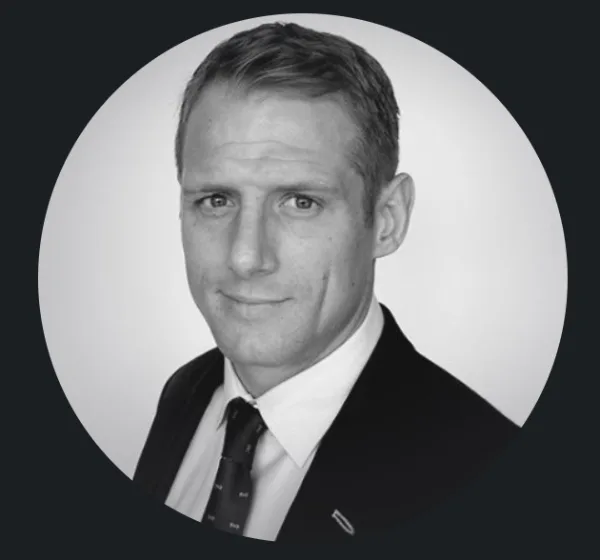
02 · The guest
Daniel Beard
Partner, Partis Capital
Daniel started off 20 years ago working in recruitment at Pentasia, he then moved into a commercial role at Openbet where he helped land one of their biggest clients, Betfair. He then moved to Progressplay, a white label solution taking them from 6 to 64 sites. Daniel then moved to GSI a casino middleware layer, which eventually got sold to Push Gaming. He now works as Partner for Partis Capital, a leading M&A advisor in the industry and has become an investor across various businesses.
Follow Daniel on LinkedIn →03 · Inside this episode
Moments worth queuing up
In their own words
“Before you've even brushed your teeth, you're already bullying yourself.”
“Why are you in the room? Why do they believe in you?”
“For me, it's all personal. It's never just business.”
Full transcript
Read the full transcriptHide full transcript
Why am I here? Should I be here? But in fact, I think what I've leared to do is try and introspect. Why are you in the room? Why are they listening to you? Why do they believe in you? Yeah. So, I was adopted straight from birth. And I think with any adopted child, they immediately go through a level of trauma. It's almost they are grieving from birth because there's a switch from one parent to new parents. I speak to a therapist every two weeks about internal politics, about external things. You know, I am an adrenaline junkie, but it that's not jumping out of an airplane
level. It's pitching for business, sales, the boxing, the events, the rugby. It it all ties into the same part. Rob lost his son Oliver over 10 years ago, but born out of that was Oliver's Wish, the charity that we represent. They're currently Simon Pilkerton a robber running six ultramarathons back to back right now. This is leadership, right? They could wake up and be, I'm not successful at work. I've got too much on. I don't look how I should. I'm not as fit as I should. I don't earn as much money as my friends. I don't have the car I want. And subconsciously, before you've got
out of bed and got to brushing your teeth, you're already bullying yourself across multifacets. Welcome to the i Gaming Leader podcast where we uncover the human side of some of the most inspirational leaders in our industry. I'm your host Leo Judkins and as an ex eye gaming director turned performance coach, I've worked with over 200 leaders from companies like Entain, bet365, Flutter and many more to help them build the habits to achieve sustainable high performance. In these episodes, we share exactly what it takes for you to achieve the same. So, with that being said, let's dive in. Welcome to the I Gaming Leader podcast. I'm
here today with Daniel Beard, partner at Partis Capital, M M&A advisory in the gaming industry. Um, over 15 years of experience. Daniel, I'm super excited to to talk to you. We've been talking for so long on getting you on this podcast and it's finally happened. You made it here. Well done, mate. How you doing? Very well. Thanks for letting me join. Yeah, you're you're more than welcome. I'm uh so excited to have you here because you've got such an interesting backstory and and and really I if it's okay for you, I'd love to start with rugby, my favorite topic. um you've been a semi-professional rugby
player for quite a few years and I'd love to hear a little bit more about how that perhaps shaped some of your you know how you go about your position today and and what kind of lessons you've learned from rugby that you perhaps apply to uh to leadership and to performance. Sure. So I guess the the rugby started really at university. I went to a top rugby uni but I didn't get there on my rugby background. I got there cuz I got an A at PE of all things. Um, so that's where the you sort of saw the the the commitment and and dedication. These
guys were all, you know, England representatives or Ireland and were already at the premiershipmies and so on and they were they were just a league above in terms of their their preparation and so on. So I guess it's sink or swim. So at that point you start to train with them. You start to see what they're doing. You start to see what needs to be done. Um and luckily I was picked up to to to go to London Welsh where the the semi-pro was in the championship semi-pro career started for eight years. And look I think a lot of leaders or companies like to hire
sports people. Not that that's one true rule. Um but their I guess their dedication to success uh and resilience they understand their weaknesses they understand the areas of improvement they should be very uh accommodating for people advising advising which parts uh need to be improved. So constructive criticism is continuous throughout work as you know and and throughout rugby. It's that resilience. Yeah. There's there's so many times in our careers people will have had situations which could have held them back. Uh whether that's clients, whether that's glass ceilings, whether that's their own internal capability, whether it's their internal thought mechanism around their capability. But I think
I think rugby and any sort of team sport as well because the team element is is one of the most important parts on on both sides just allows you to to understand that these roadblocks are here for a reason and you can continue to push forward. I mean how many people on your podcast would have said they've learned more from their mistakes than their successes? Yeah. Yeah. It's always true, right? And it's I think it's one of the difficulties when you're in a high growth business that is just anything you touch turns into gold is that you don't have those challenges that you grow through. And
uh sometimes it not that it makes you lazy, but it does just doesn't give you the opportunities to uh to to grow through it. Um so yeah, that makes sense. Like one of the things I I'd love to hear a little bit more about rugby or team sports in general is that I think one of the things that most people find difficult in their in their teams at work is to create that high performance environment. You know where when you're on the pitch or at on the on the training field, you just expect more from the guy next to you, right? You expect them to
hold themselves to a high standard. You push them to to work harder and you support each other. That's not always true on the work floor. like how have you like how have you seen that develop maybe in your career with with holding each other to a higher standard not necessarily through you know the manager pushing you but more as as peers together it's a team sport and and I think in work certainly what we've tried to do and I've been very lucky to work for um for bosses who held the same idea is there needs to be one common goal um and in order for
all of you to achieve that you have to be doing your job properly and be allow your peers to to hold you accountable. I think in work there there's definitely some self-promotion promotions or you know fear factor of of even losing their job. So I think any leader needs to be able to display that this isn't an individual game. This really is a team, a business with one common goal and if you all move towards that then then you should be successful. Yeah, love that. Um Daniel, I wanted to talk about kind of your early beginnings and I saw what you're talking about is um
you've been adopted, right? And um I want to talk a little bit about how that's influenced some of the feelings and some of the difficulties that you've had throughout your career in maybe breaking those ce those mental barriers perhaps that you've had. how that's shown up and and yeah, how you've grown through that. Yeah. So, I was adopted straight from birth. Uh and and I think with any adopted child that they they they immediately go through a level of trauma. Um it's almost they they are grieving from birth because there's a switch from one parent to new new parents and this inev inevitably will will
leave lead to abandonment issues, self-esteem issues. um a really a a loss of belonging even even though in my situation I had two extremely loving parents who I'm best friends with both of them now and we have arguably the tightest bond we could I don't know whether that would be tighter than a blood relationship I was very very lucky but I still struggled a lot from that moving forward certainly in my teenage years where that comes into business is it's a it's a pro and a con. Um, again common traits of adopted people in business is a perfection perfectionism. What I suffered from being completely
honest is imposter syndrome two ways. So um to give you an example with partis intellectual level because three of our team went to Oxford. They've gone to like Swansea University. They've got business uh you know MBAs from Warick Business School. I got 22 in sport science from brew now. So internally you have you know should I be around these people you know am I good enough that's not the normal senses you're already feeling am I good enough to be in this world per se um and and then certainly externally you know we work with very very bright um CEOs a lot of your your guests
would be our counterparts who are very sharp polished very professional um very very uh intellectual and you sometimes wonder, you know, why am I here? Should I be here? Um, but in fact, I think what I've learned to do is less see that as a weakness, but more why are what, you know, dig into try and introspect. Why are you in the room? Why are they listening to you? Why do they believe in you? Um, and it became more a, okay, I'm fantastic at this, which is why I'm here, and my colleagues are fantastic at this. I can't do what they do, and they can't
do what I do. And once you start to appreciate, and you'll talk about this a lot, and how gratitude for what you are good at, the narrative within it starts starts to uh to to change it. It's been a long process to get to that, but, you know, we're here. I I still get it. You know, you're still around the mega brains. Um and even, you know, our competitors, uh there are investment banks, there are other boutiques. Yeah, these guys are fantastic. Um but, uh yeah, look, it's more apprec appreciating where your cards are, uh and what you're strong at. Yeah, I love that. Um
I I want to go back a little bit to kind of when you were at Pantasia with Rob and and um you know before kind of or when you were starting parties. One of the things that uh happened I guess is people were seeing you as uh as a bunch of recruiters right that now all of a sudden were in this area. And I can imagine that that even accelerated that feeling of you know feeling like an impostor. Take me back to perhaps the first moment that you sat in a room across from someone, you know, being part Capital now and and you feeling, "Oh
my god, I like what am I doing in this room? He's going to find out like he's going to find me out." What What did that look like? Yeah, sure. So, the back the backstory is I got my first job out of rugby working for Rob as as a recruiter, which was fantastic. uh you know a place to go and learn how to work hard and learn the industry and really start to form the relationships in this industry. Um, I then went into selling software at Open Back, same at Progress Play. Um, and then finally at GSI. Um, and then Rob and Gideon were shareholders
in GSI and they said, "Would you like to come and launch a division?" They already had a world-class strategy consulting, but this seems like a natural progression. I said yes without fully understanding what M&A meant. not from a you know you buy and sell companies but but really how difficult it is and the capability that's really required. Um so yeah we we started off with you know smaller deals trying to broke not really getting anywhere because I I guess it was it was twofold. It was one people weren't taking us as seriously as they should. Certainly people in industry must have thought we were mad. you
know, these two old these two old recruiters trying this like banking game. To be honest, we didn't know what we were talking about. Um, but you got you've got two people who can, you know, sell ice to Eskimo type and uh and we sort of muddled our way through. That was very very difficult. But I think in any sales role or in any industry, any position, you need to be robust and resilient. Um and in fact one of the traits of adopted people is your your ability to adapt and and sort of push through because of the fear of failure. So we we left at
zero doubt we were going to build a an industryleading capital team. There was nothing that would put us off. Um I mean we laugh and joke at some of the reactions we've had. Um but it had to be you know learn adapt move on get better. Um and that that's something you know from rugby all the way through it is look if if you're not learning then then why are you doing this? Um but eventually we learn how to to sell it as a process and then and then built a very strong team. I'd love that whole story. Tell me a little bit more about
some moment any moment really Daniel where you were sat in a room where you feel oh my god I this this person is going to find out I I don't know what I'm talking about you know he's got me out of the room what did that like what was the first time you experienced that there's one in particular I can't mention their name but they're a Canadian private equity client um that that we were working for and again PE guys are uh no nonsense very sharp uh and you know they're asking me quite detailed questions around my thoughts around the market and business valuations and
so on. And it it's utter panic. But even even within that conversation, your ability to just flip to what you're good at and what you know and pivot very very quickly to at least be able to at that point get through the the conversation without sort of letting yourself or or the company down. I've had panic attacks before in via various means and measures. It's utter fear. But also, weirdly, I quite enjoy it. I quite like these like high stress situations where, you know, live or die style, which I guess lends to the boxing. It lends to, you know, my personality. Yeah. I remember we
were even talking about it with fitness, right? how you have these really extreme sessions where you just got to do a complete blowout otherwise it feels like it's not even a workout. You know, lots of people I speak to a therapist every every two weeks and we we go through, you know, I talk to him about work a lot about bits I get stressed about and one of the things we we worked out is you know I am an adrenaline junkie but it that's not that's not jumping out of an airplane level. It's I am not interested unless it spikes my adrenaline. So, you know, pitching
for business, sales, you know, the boxing, the events, the rugby, um it all ties into the the the same part. So, yeah, these highly stressful um situation, they're almost cathartic for me. Even though you get anxiety before you're going in, it it can it's stressful when you're in there. Um, but then afterwards you you you feel like you've you've run up a mountain. So So let's talk a little bit about the boxing Rob in that context and and and what that's all meant for you. So take me back to when you first met each other and how that relationship has formed over the years if
some of the best things that you've done throughout your career with him because I' like I was so inspired when I first heard it. So I'd love to hear it kind of from your from your side. Yeah, sure. Um, and this ties into, you know, previously asked me who's been the biggest influence on me. Uh, and by far number one is is Rob. Um, from giving me a chance at 22 to come and work for his business. But obviously that that relationship has formed. It was it was work and I'd say we're more sort of best mates and friends than than than colleagues now. Um, but
we obviously work for him at Pantasia. who was a shareholder at GSI. He then allowed me to come back in as a partner in into partis um so over that time we've we've sort of worked in around or completely together for 22 years now. Um it's the longest relationship I have in the industry. We've you know we we we debate but we've never fallen out. There's never been crosswords. Um and that's really indicative of Rob. Um he he's one of the only guys I know that will always see the best in people and and gets the best out of them. Um he allows you to
believe so big above what is uh could be perceived as achievable uh and and gives you absolutely everything to be able to go at it. And then unfortunately on the on the boxing side, Rob Rob lost his son Oliver over 10 years ago. But born out of that was Oliver's Wish, the charity that we represent. They're currently Simon Pilton and Robber running six ultra ultramarathons back to back right now. And this this is leadership, right? This is a guy who's a heavy a heavy bloke showing the world, you know, pushing himself through things. And he's like this in business. Um there are no obstacles. So
we we I'm a patron of Oliver's Wish um and we raise money for the the charities. We always wanted to do a boxing event. So the the the last two years we've had 12 executives fight each other and we're you know pushing towards um making over half a million now for the the the charities. Amazing mate. So back to that first boxing event, Daniel, how did that go? and and what was some of the I don't think we had even spoken to each other back then, but I still remember all of the media attention around it and like how big it was. So, take me
back to the buildup to that and how that eventually unfolded that very first time. Yeah. And I'll tie this into leadership as the that's the name of the the podcast because this is where I think the industry is unbelievable. So, we had 12 people raise their hands. You know, they' never boxed before. you know, they they are putting themselves into a uh quite an exposed position in our industry. We sell it out. There's 55 tables at the Hilton. It sells out in two or three weeks. Um and this is where they're leaders in my mind because they're boxing. All the sponsors that came in, they
are not doing it like a B2B award. They're not doing it to to to win clients. they are doing it to be a community to stand behind a wonderful charity um which was obviously came out of an awful awful event um and then everyone else who contributed the videos that people sent you know the buying of tickets I I'd say collectively the the the industry is leading by you know helping these organizations for absolutely no return that it is so humbling when you you launch these events. So, we sold out. We had uh we had six fights, a fantastic event, massive follow-up. Everybody was asking
afterwards, "When's the next one?" So, we did one the next year. And SBC were fantastic. They run events like no other. Extremely professional. Um the music, the the theater. Um our our presenters, we had Natalie Pinkham and James Haskell that year. Obviously, rugby would be close to you. We had David Fratman the following year. We're looking to do it this year. There's going to be some surprises again. So like from a leadership from an individual to to to companies to managers within. Yeah. That's fantastic leadership, right? To support an event really amazing, you know, coming out such a dark like horrible horrible thing at at
that getting together. I think that's one of the beautiful beautiful things about gaming, right? It's such a It's global, but it's also super tiny, right? We're such a small industry really where everybody knows everyone and um yeah, amazing. Hey, if you're a VP, a director, founder or executive in I gaming and you want to achieve sustainable high performance with without sacrificing your personal life or your well-being, then the i Gaming Leader Mastermind might be your kind of thing. It is a highly vetted community in which we work together with other eye gaming leaders in the industry to achieve that sustainable high performance because leadership in
I gaming can be really lonely and isolating. But when you've got the right people around you, it can make such a difference to your performance, your productivity, and your personal life. So, if that's something you want to know a little bit more about, head over to iamingleer.com and apply to join. If you think about today, Daniel, what are some of the things that you've taken away from organizing those events and and how's that affected you personally professionally? Seeing what what happened to Anna, his wife. Um, obviously, you can't help but reflect on on your life. Um, and you can't help reflect on what's important. You
know, we talk about value trees. You know, what are your top values and priorities and of course, you know, because I suffer from some of the parts that came out of of being adopted and I over compete. I'm a perfectionist. I take on more work than I should. I drive myself. I work weekends. I work evenings. So, did how we talk about burning out. I I take myself to the limit I think most weeks um to to where I am better um we can come on to you know Craig who's been a big influence I'm better at managing that but that the huge sense of
being overwhelmed for the majority of the week is is quite common so I think having seen what happened from that has quite helped me re-evaluate what's important building when's the time to compress uh and and allow myself to to feel less pressure. The fear of failure and the fear of being rejected by a client. I will take that way more personally than someone that doesn't have my background. You say it's not personal, it's business. Well, for me, it's all personal. Yeah. Look, it's made me re-evaluate. Life's not about success and money. Success linked to money and deals. there's much bigger um values out there. Yeah, thank
you for sharing that. That's so powerful because there is it's easy to always power through. It's not easy, but that's the default mode, right? Power through, keep going, pressure through, don't take rest, never stand still. Standing still is like going backwards. You mentioned Craig and helping you with that. talk a little bit more about that and um what what's happened, how that kind of materialized itself and what some of the outcomes are of of that help that you've had. Yeah. So, it's a gentleman called Craig White. He was the strength and conditioning coach for Wasp um for Wales and the British Lions. So he effectively
took himself as far as he could from a physical performance of humans and then pivoted straight into I want to get to the best in the world at mental performance. So he he works with people who are really struggling with trauma from their past. Um but also works from a an executive function. So he works with you know CEOs of footy 100 businesses and so on and high high level elite sportsmen and sports women. So I've been working with him on sort of how to build performance at a gradient that it doesn't lead to being burnt out. I've done fiveday men's retreats with him because
I guess a lot of it anyone who's done therapy will know it's about talking to their inner child a lot of times, right? And and hugging that inner child or or apologizing or forgiving or whatever it needs to be. So, it's really sort of modules around loving yourself before being appreciative of yourself and gratitude. Um, and that can be for people that just want to get on in their their their relationships. Um, maybe that that's not where it needs to be. But for me, it was less the relationships, but it was more, you know, trying to disconnect. A lot of it was around adoption trauma, which
obviously we've talked about stems into work and then work life balance. Um but uh yeah it was it's about how to to continue to perform at a trajectory um that is accommodating of also having a life. Yes. And I bet a lot of that is also around just not being self-destructive. Right. I think that's one of the big things that I often see with almost all high achievers that it's not just about performance. It's actually about the real suppression mechanism of and and being self-destructive around some of the things that maybe suppressing those feelings or or whatever that is. Was that the same for you, Daniel, with
you look at the journey that you've gone through? Is that something that you've had to battle and overcome? For me, it wasn't a suppression of feelings. It was, you know, I'm showing I'm being triggered too much. Uh that's been a const constant battle. I mean, it could have gone one of two ways. My brother who was also adopted became a heroine and drug addict and alcoholic and has had a 30y year battle with that whereas I sort of found sport and I guess the right people around me. So, we we had the same trauma, but you'll see you could go two ways. But with my
way, it was more I was still very triggered uh and emotional and allowing things to to to be very personal with me rather than um seeing it as another if you said, "Look, go and win 10 deals, I'll see it as a challenge, but if someone doesn't respond to me on email or ignores me, I'm offended by that." H it helps me. But for me it was really just to to to stop the triggers and be able to to move forward. Yeah. Love it. Okay. I also asked in our mastermind for some questions for you. Uh Daniel, what are you seeing in terms of appetite
of buyers and valuations? So very I know we're diving straight into business. Bit of a weird switch, but I wanted to I wanted to ask you. We from what we're seeing, we don't see the turmoil affecting M&A at all. Um in fact we're seeing a a complete U-turn from the last 12 to 24 months where buyer appetite has increased. What you have seen is valuation multiples be reduced. Um and a number of the the very large strategic players have now said they will consolidate into existing positions which they haven't done before. Uh the buyer market is very buoyant. There are a number of new funds
that have been created to look at M&A on both gray and white. We don't play at the league where perhaps you know raising debt for draft kings to go and buy and tain. We don't play at that level. So on small midcap M&A it's it's extremely buoyant. Um there's cash available, there's cash on balance sheets, uh they have debt provisions, they have credit um facilities. So we're seeing it as there there is no issue right now. Um but M&A is cyclical. I've I've been through this twice now like the ups and the downs. You know the three years ago there were all the spaxs that
happened in the US. Um and and then that that that wave emptied and then there was a different vertical. So look this is the busiest we've ever been at Partis. Uh last year we did the most deals we've ever done. We did six deals um for a small boutique. we're we're very proud of. Yeah, I love that, man. That cyclical kind of behavior or a cyclical kind of environment, right? That that must be so challenging as well. Uh from from feast to famine, what are some of the things that someone like you where you where you take a lot of this stuff really personal and
as a big big challenge like how do you deal with that? That is market, right? That's not your performance. that is the the wider market that is going up and down and and you like you maybe slightly affect that but certainly not to a very very large degree. So how do you deal with these things that are outside of your control that still affect you personally? I think initially you get quite worried. I'm so used I'm 10 years into doing this now. Would you believe? So I'm so used to the the the cyclical nature. Um I think the larger boutiques have been fantastic at having
different industries to be able to do MLA. So it might be sports, I gaming and gaming. So the cycles are different upon each. So one year they'll just do more deals within that industry vertical. We are looking to do that as a business. Partis is lucky because we like I said globally we have the largest um strategy consulting business that does very well. So, you know, some years M&A might do more than consulting and and vice versa. We're always underpinned by one or the other. Um, so, but at the start, then yes, we'd never do a deal. Um, but at the moment, we're structured to
be able to absorb any volatility in the market. However, Robin Gideon won't allow us or the team to sit on sit on her ass and not do deals for a year. Uh, and you probably wouldn't either, right? That's very much against your nature. No, I I I just can't do it. Like to be busy. So, not overly busy that it's every weekend these days and evenings. It's a whole new world. You know what you'd call M&A within investment banking. Uh, it is very stressful and the the the hours you sign up you sign up to it. There are, you know, large rewards for people that
work in this industry. The pay is is great. So, you know, with that, you know, the territory you're in. Yeah. Yep. Makes a lot of sense. I want to ask you one last question, which is, um, there's a lot of people that are struggling with similar things that you've gone through. Imposttor syndrome, working through things, you know, overwork, not necessarily feeling that they're burnt out, but perhaps feeling that they're very, very stretched. Um, if you're in that situation for somebody listening, right? If somebody is in that situation, what's one small step that you feel someone could take that would uh that would help them the
most? If they feel overwhelmed, you have to start putting workloads into buckets and then those buckets into priorities. Uh because, you know, our to-do list could be, you know, a hundred by the end of the week. So, I feel as long as there's um progression and you're working on the highest priority. I am the king of doing 20 things at once um and then not completing any. To give an example, I haven't put my expenses in for 16 months because I can't the the thought of doing it sends is worse than actually do it. Um but no I think prioritization and and putting things in
buckets what's what's the most most important and also what what do you need to do that day? Um and maybe that is not all 100 items. It's if I can get these 15 for today that's a good day. And then reward yourself with some kind words towards yourself. And that's actually an interesting point. I once did this um three-day retreat called Landmark um uh which was again personal development. One of the things they will teach you is how many people wake up in the world and subconsciously are already bullying themselves. So they could wake up and be I'm not successful at work. I've got too
much on. Um I don't look how I should. I'm not as fit as I should. I don't earn as much money as my friends. I don't have the car I want. And subconsciously before you've got out of bed and got to brushing your teeth, you're already bullying yourself across multifacets. At the end of the day, just look back and say, "I've had a good day. This has been a great day. Well done. Now you've you can go to the gym and enjoy yourself. You can walk your dog or be with your children." So that that you know, affirmations and so on. But yeah, if you're
just kind to yourself towards the end of the day, you need to talk to yourself in a kind manner. Yeah, I think that's so powerful and thank you for saying that, Daniel, because I think for high achievers people that are in a very, you know, commercially driven environment, they don't buy into the soft stuff, right? Like selft talk. It's because that internal voice is unfiltered, right? We don't put a filter in between it. And we would never allow anybody else to talk to us like that. So, so what what one of the the parts that I've I've worked on I'm actually quite strong at because
you know again leading back to the adoption side is you know emotional intelligence and empathy. Emotional intelligence like EQ is actually something that's become prominent in business now. So obviously before it was purely IQ. Now you'll see and and I imagine lots of your leaders look for EQ. It's so important. But how can you have strong emotional intelligence if you talk to yourself in a certain way? Yeah, it's super important. Yeah, thank you. Thank you very much, Daniel, for uh being on the podcast. Absolutely love uh your stories and thank you for sharing. Thanks, Derek. Thank you for joining me on the i Gaming Leader
podcast. If you enjoyed today's episode, head over to iamingleer.com for more conversations and insights. Don't forget to subscribe to this podcast. I'm your host, Leo Judkins, and I hope to see you next week.
This episode is sponsored by


The AI platform for marketing automation used by leading iGaming operators. Turn player data into real-time engagement to deliver timely, relevant experiences and strengthen retention and loyalty across every touchpoint.
Related episodes