
01 · Watch the episode
The full conversation
Watch on YouTube ↗ — if the embed above says restricted, it's a block on your network/Google Workspace account, not this page.
Or listen on:SpotifyApple Podcasts
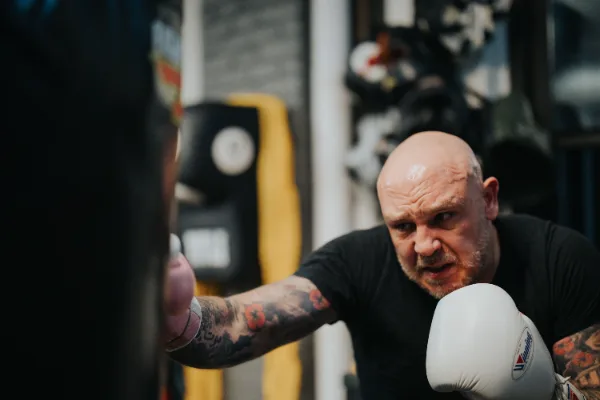
02 · The guest
Lee McFarland
Founder, Praxis Point
Lee McFarland — a seasoned iGaming professional with a unique journey from elite military service to senior leadership in the global gaming industry. Lee’s built high-performing teams and delivered complex projects across North America. He’s the founder of PraxisPoint, a consultancy helping operators navigate market entry, product due diligence, and platform optimisation. Lee is also the driving force behind BehindTheGloves, a wellness and boxing community within iGaming that’s reshaping what leadership looks like in the industry. Whether it’s launching a new Casino, evaluating PAM platforms, or running a 6am boxing session at a conference Lee brings energy, empathy, and execution to everything he does.
03 · Inside this episode
Moments worth queuing up
In their own words
“We all get knocked down, how we get back and how we proceed is what defines us.”
“What? There's other people like me?”
“If I can help one person, then it's worth doing.”
“Sometimes you have to slow down to get the right things done.”
Full transcript
Read the full transcriptHide full transcript
In the military, you have that 24 hours a day, 7 days a week. You know, each man's got every man's back. Well, 9 to 5 is not like that. You know, the people I work with, we were on the same level. And there was this thought in my head that I thought everyone was just my friend. And it's not the case. I'm a man's man. Oh, I don't need therapy. I can deal with it all. But what ended up happening was I started doing therapy and was diagnosed with PTSD. But going through EMDR, it allowed me to process a lot of the information and the
occurrences through my life that I just put away that were still there, but I just hadn't managed them or dealt with them. You know, when stuff going wrong or my head's getting a [ __ ] full of stuff, I go and hit the punch back. We all get knocked down. How we get back and how we proceed is is what defines love. Welcome to the i Gaming Leader podcast where we uncover the human side of some of the most inspirational leaders in our industry. I'm your host Leo Judkins and as an ex eye gaming director turned performance coach, I've worked with over 200 leaders from
companies like Entain, bet365, Flutter and many more to help them build the habits to achieve sustainable high performance. In these episodes, we share exactly what it takes for you to achieve the same. So, with that being said, let's dive in. Hey everybody, welcome to the I Gaming Leader podcast. I am super excited to be here with Lee today, a lead paratrooper, private security contractor in Iraq and Afghan. and we talk about all of that exec and entrepreneur but behind all of the hard work and respect that he gets from everybody in the industry there is some profound battles that he's faced personal cost that we'll
all talk through today uh a man who's rebuilt himself turning hardships into stepping stones and today we look at what makes him an i gaming leader really cool to have you here Lee thank you for joining me on the >> thank you Leo great introduction >> oh thank you practiced Um, hey Lee, I um you've lived you've lived many different lives, mate. Um, from you know, soldier, security contractor, like I said just in the intro, now your own business, executive, like really fast growth in your career, but uh you and you even described like having had a really tough childhood in the intro when we
when we spoke beforehand. uh and uh you've said it online a few times, but through all of those transformations, I just want to I'd love to hear what's the what's the real Lee, you know, how have you reconciled that kind of that young par with who you are today as an eye gaming leader? Yeah, I think for me if I look back um it seems like it seems like a lifetime ago, but it also seems like it was only yesterday, you know, and I and I do think about it quite a lot, you know, those those hardships um and those those places I've been in
the world where, you know, most people won't go and I think for me what it's given me is this given me this view that actually, you know, things can always be worse. Um so so again and you mentioned it there around kind of utilizing some of my hardship you know and this is the the piece for me is that it's been a huge struggle for me both mentally physically you know relationship going through this process and this process and this journey still ongoing you know I'm still I'm still learning you know and I and I'm grateful for you know the eye game and leader um
you know group that we have um a coaching, you know, because it's allowed me also to see that I'm not the only one. But a lot of that comes back down to, you know, being able to look at what I've been through and go, well, actually the next generation, it's so hard to keep moving forward, but also how can how can I grow other people as well. I a big part of who I see myself as today is how can I lift the next person up. I love that, Lee, because I see every single piece of your history, your career history, um your personal history
coming through in like how you talk and how you lead and how you work, everything, right? They're all pieces of your that formed your puzzle of today, which I I think is is so special because you're you're so authentic and you can like everything that you do is, you know, shows authenticity and I I but I'd like to start kind of with that transition from military to to civvy life, if you will. I know how hard of a transition that is. People dress different, people talk different, people walk different. Uh, one day like in military obviously for you everything was for the the man next
to you, right? That's that's who you turn up for where in corporate life it's probably more around, you know, people show up for the money, I suppose. So, how was that transition for you? I know you you kind of you started working on IT project management and studying there, but but how was that transition for you? I know how difficult it is for so many to make that transition. How how did it go for you? >> I still think I'm a transitioner. I still I still and and so I always look at it like this. I was instalized. I joined the army at 16 and
they broke me down, you know. Um and that's what the military does. It breaks you down and it molds you how they want you to be. The mod spend hundreds of thousands of pounds on each soldier training them up, you know, defining them. team, team spirit, courage, camaraderie, you know, these kind of core things that, you know, you get to to really hold inside and define who you are. The transition for myself was difficult and the reason being is I didn't have a network. I didn't understand coming out the military, you know, and I went into a high paying job in, you know, hostile environment
which was kind of going from one military to another military. So that transition was quite easy. What I find was I was going away for 9, 12 weeks at a time and coming home for a month, having a big bank balance and thinking that I was still a guy in the military going out, you know, partying, buying fast cars, cuz the military doesn't teach you about saving money, paying taxes, you know, buying food, paying for electricity, because that's all there for you. So you get so used to having, hey, well, I just whatever's left in my bank balance in a month, that's mine. We'll go
out and party and then you get free meals a day. All of a sudden, that that's not done for you. So there's that side of it, which is kind of that personal side. Um, but then it's also, let's talk around, you know, joining a a company, you know, a corporate company, you know, where, you know, they have this structure in place, they have a hierarchy very much like the military does. The difference being is, you know, I was going out and I was, you know, calling naked bar, you know, at 5:00 in the afternoon and picking 30 circuit like what what's this guy doing? Because
that camaraderie, that that kind of we don't have that in the military. You have that 24 hours a day, seven days a week, you know, each man's got every man's back. Well, 9 to5 is not like that. And so, you know, and I thought everyone was my friend. And this is I'm still, you know, I honestly believe that, you know, the people I work with, we were on the same level. We were gonna, you know, we're going to take over the world or whatever it be, deliver the project. And there was this thought in my head that I thought everyone was just my friend. And
it's not the case. >> I so see that and I see it in so many people. So when you when you came out or when you came out from the private contracting you you retrained in IT project management right to start your civilian career initially from what I read you were met with rejection. How how did those um early nos hit you at the time? What were some of the you know some of the things that that did to you emotionally and what did you tell yourself to keep on going? >> You know I'm a firm believer in myself. I do believe in my capabilities
and and I I put in head when it comes to that, you know, and but again that's also a positive and and also a negative sometimes but but again that head that kind of strong to my will should we say which is easy to those rejections which say you can do this you know I go back my military career I was 22 they weren't hiring guys my age you know but I was very lucky for what I've achieved in the in the past I was selected but again at 22 years old I was teams of bodyguards in Iraq. It's unheard of. Again, that ability to
go, do you know what? I can do this. I've had got the ability to do it. They just can't see it. Keep going forward. Just keep pushing forward. And that's all you can do. I think for me, it was just that every rejection was a was another notch to go, hey, I can do this. And it was to prove even family members, you know, cuz even my family were like, what are you doing you in it? No way. >> I know that. Then you started focusing on on networking and personal connections and I think that that really describes you so well that that I think
that's your whole character trait that I think that's defined your entire career. Like when did you when did you learn that that was maybe something that you were specifically good at and how you know building those bridges were were really important for forming like starting that career and then going onto what became a really successful trajectory that you went on. don't think I have consciously thought, oh, I'm good at networking. And and again, I get and there's been a couple of times over the last eight months or year people have said this and I still struggle with the idea. I'm just myself, you know, I
give 100% or I try to give 100% uh of when I say I'm going to do something, I do it. And and again, it's just that's ingrained in me. So, I think that's just the natural outcome of of my personality. Uh but I'm also really really grateful for that you know and I think that for me is is important you know I turn up I say what I'm going to do or I try my damn desk you know we we all all have setback I think that for me kind of define who I am you know and I think that's just who I am as
a person and one I one of the outcomes of that is that I do build authentic relationships >> I mean your work ethic is just something else right one of the one of the big things that I I did I actually didn't know about you is that while you were at a head of a head of delivery North America at SG, you were also um got your master's degree, right? And that is just that's just that's insane, right? Being able to do all of that at the same time. And then I saw that you were finalist for role model of the year as well. So
tell me a little bit more about like that whole like how did you manage all of that and how like yeah meteoric rise I felt like how how how did that you experience that whole progress from you know kind of being met by nos in the beginning of your your civilian career to then all of a sudden rising really successfully. I I'm gonna attribute that to to the people that I work with and I think you know light and wonder you know light and wonder I think I was it was the first time that I felt like I was actually in a place where people
appreciated and you know acknowledged you know the my abilities whether that's you know building teams um you know getting getting [ __ ] done as I like to call it hash get done that was kind of my whole mantra and I live and breathe that as well and I think you know again it comes back to if I'm going to ask someone to do something, I'm going to do it myself. And this is how I I lead, you know, I don't lead from the back or you know, in the office and and tell people I I roll my sleeves up. I like getting involved, you
know, if people are working there. I work late with them. So that allowed me to create again a very very strong team and you know, I went for my own challenges, you know, and I talk about this a lot and everyone knows this. I struggle with alcohol use and Dylan saying he was a CEO at Light Wonder at the time. You know, there was a couple of instances again, you know, a big part of my life is consequences of my actions and and and I acknowledge those. I own those, but Dylan and and uh quite a few people at Light Wonder really supported me through
that, you know, and and again, I went into the post program. And by doing that, again, I I I was I felt like I was somewhere where, you know, um I was supported. I was guided cuz I didn't know. Again, there's so much in this world. I I don't know. And I I like to think I know everything, but I don't. But having those people around you that will fine post you and actually really guide you I think was really important for me and that allowed me to pick more on whether that's you know do my masters whether that you know some of the additional
you know uh charity work that I do you know again it's important that I give back um and I'm a firm believer of that you know it's not just about what I can get what I can give back as well. So you just talked about that that personal crisis 2022, right, where you you you were given some time to to step back and reassess, get therapy, get help. Um, can you take us back to that moment, what that was like and how that's how that happened and how how those conversations went >> when there was there was a an incident where I was I was
drunk um you know and it was pretty much it was the white on the wall but in any any business would have said you know what G you know what we're not going to dealing with with this kind of you know behavior outside of work but also around in the working environment and and I'll win and it quite easily they could have done that and you know I would have appreciated if they did the big and and Dylan and and the wire and so many others like one were like Lee what can we do to help and I'm like I don't know I don't I
don't know um you know key who was the head of HR the BP of HR like and one was like why don't we give you some therapy and and I'm I'm a man's man oh I don't need therapy I can deal with it all but but what ended up happening was I started doing therapy and there's a technique called EMDR light and It's about processing information. I haven't processed all the trauma I've been through, but I am, you know, I was diagnosed with PTSD. Um, but going through EMDR, it allowed it allowed me to process a lot of the information and the occurrences through my
life that I hadn't just I just hadn't I just put away that were still there, but I just hadn't managed them or dealt with them. Um, or at least acknowledged them. And I think by going through and having that acknowledgement this stuff happened allowed me to process it. And so when I started to unwrap and unravel all of this and you know I'm on this journey um going to a 12step program realized that alcohol was you know it was it was the consequences my life the consequences were from alcohol but obviously um stuff that happened when I was in the in the military and obscurity
and as a child all of a sudden you're like ah this might start breaking then and and so once you can you you know, identify that, acknowledge that it's a process of going through that. So, I started getting started getting peace. >> Thank you for sharing that, Lee. What What was that like for some like somebody like yourself who is in control, right? Who wants to be in control, who wants to lead from the front, who wants to get [ __ ] done to then almost be at the mercy of others. and you know people that are obviously being very compassionate and helpful but then
also seeking help which is probably also something that was not in your you know normal dayto-day kind of um way of thinking. How how did that how did that feel? That must have been that in itself must have been very very difficult. Do you know what? And and I think for me it was the fact of being at that point in my life where I've got I've you know I've been married to my wife for for seven years now. She'd been through the ringer with me. We had a child on the way. There's all of the there's all these other elements where actually I had
to acknowledge that I couldn't control everything and I I can't go back and change history. But having that compassion and and just again you know not the fear around it again there was so much fear in and there is today still and fear inside me around how people perceive me or how let me rephrase that how I think people perceive me not and there's there's a lot in my head where I think people perceive me in a certain way and that always comes out 99.9% of the time to be unfounded where I play it so much in my head so actually being able to go
Okay, well I'm doing this and then doing it and then realizing that actually the fear was unfounded. I think that was the for me was a real eye opener to to acknowledge that actually it's okay not to be okay. And again, I I've been through suicide. I you know, I've attempted it. And so there's all these moments through my life where it was all fear based and it was fear that was on and it was everything all the pressure I put on myself because I thought that's how the world worked. Um, and unfortunat and and you know I'm just grateful that actually I have a
a a better view of that today. So I still have to work on it and it's time you know again it's a journey. Um you know and I have to I have to keep working. I have to keep putting in the effort to to just remind myself that, you know, that things happen and I I just have to process that and take my time because again, I think we spoke about this before where I'm very reactive and that probably just needs to have as we call it a pause. >> Yeah. Pause and um yeah, respond rather than react. It's but it's normal, right? It's very
normal. we like you feel something and you you react instead of respond and but look it's just it's a journey of self-awareness as well right and that's that's really what you've gone through Lee and and uh it's amazing and you're helping so many others others around you as well um and and thank you for thank you for being so open and honest about all of this because I think it's like one thing is of course is talking about it the second thing is dealing with it I think there's so many people that struggle in silence and we hear these um sound bites like you just
gave them of it's okay to not be okay but I always felt that it's such an easy thing to say it's so it's so easy to flow off your lips to just throw it out there it's okay to not be okay but then to actually see people talk about it like that doesn't happen a lot I I think you know I don't think it happens enough so I wanted to ask you how like what's what would have helped cue you think at an earlier stage to identify some of these challenges that you've had or to maybe deal with it more effectively at an earlier point
instead of at that intervention you know um 2022 >> personally I think having I didn't have a a a close-knit family should we say um in the sense that we were very all geographically dispersed and just you know my coming from a single parent background I just acknowledging emotions. So having a dad who was quite, you know, again, I spoke about this, he was quite violent. I didn't know what emotions were. I didn't understand what being dad was. I just identified sad as angry. I felt fear as anger. Everything was angry. And so for me I'm just having again it's so easy for me to
say this but just probably some earlier interjection in my life whether that being from you know some support services or whatever again I am where I am today because of a lot of what's happened and I'm very very grateful for that but I think especially around the military priest I definitely see an improvement there. I unfortunately I've had three friends this year take their own lives you know for but again it's you and and again we had but I only spoke to him three weeks ago it was fine it's like we just don't know what people are thinking so I think having the ability to
have a conversation but is that conversation attainment we don't know but I think we have to try and I think for me um having open forums and the ability to be vulnerable um you know and and to be appreciated. You know, sometimes people don't know how to speak. They don't know who to ask. And I think the more that we can do that, the you know, the better we are going to get at it. And I have seen a change. I've definitely seen a change over the last four or five years with, you know, those services and the ability to help. But yeah, alcohol, I
think that the military could could do more around alcohol usage and consumption. um very very you know it's easy to put this but alcohol is deemed as the hey go out and enjoy yourself three nights a week it's okay it's okay but it's not when there consequences and I think that you know again I think there could be an a better education piece around the impact of alcohol alcohol you know and I see it so often if we actually ask ourselves how many times our consequences been the cause of alcohol consumption I think we'll find that actually our lives have a lot less consequences to
our actions um or reaction that we participate. >> Yeah. And I often think it's like I've had exact exactly those struggles as well where it's a suppression mechanism. Right. And I I think the beauty is in what you've just actually said the the problem most people have I feel in this situation is that they don't have the words to describe what they're actually going through, right? The stress, the pressure, the anger, the fear, whatever the emotion is, they don't have the words to describe it. And even if they would have the words, they don't necessarily have the people to describe it to. So people might
be judgmental or there might be a fear of kind of what you were describing earlier, fear of how you're being perceived, right? >> And so then the default is all right, let's jump to drinking because that just suppresses all of it and it makes it go away. And alcohol of course is addictive and you know, but I think the underlying thing is often the issue. You know fear is fear is the number one thing and and it's fear of they may think and it's because again fear of speaking out the fear of what other people think the fear of not knowing you know it's it's
again not knowing how you feel I mean sometimes it's it's very you know we internalize everything and we build this fear up um and I think we have to try and do whatever we can to to to at least alleviate as much of that as possible and and being able to talk about it is so important >> thank Thank you for for sharing that. The I'm also I'm so sorry for your loss back with with people um friends around you committing suicide this year. How like how do you deal with um those ups and downs nowadays versus how you perhaps dealt with it before and
not just ups and downs but terrible losses, struggles that you go through in in life now versus how you deal dealt with them in the past. you become a bit numb to it and and I'm going to be honest like it's like oh like again it's oh no why and the first class is why your feet should have reached out but then it it becomes so normal and it's been started to become a bit numb and and you kind of all I can do is watch in front of me and look after myself um I can't spend too long you know um sitting on that
so I do talk about it quite a lot I've got friends that I talk So it it's important to talk about because that soon you have that relief whether that's through talking exercise is another good one for me and all of a sudden there was finding my own coping mechanism but I have become a bit numb to it um which is unfortunate but it it is it is what it is. >> Um Lee you like I want to talk a little bit about boxing and punch bag um and behind the gloves. I like it's it's actually really impacted me as well. I've shared it with
you a few times now. It's made a massive difference for me in a time where I've gone through ups and downs recently and felt a little bit lost and and just actually the session at Malta was the spark for me to get started again. So, so thank you very much for that. Uh, but for people that perhaps don't know, can you tell us a little bit more about what Behind the Gloves is and uh how it started and um yeah, how like trading trading shots for shots I think is such a great great credo for it. Tell us a little bit more about it. So, you
know, I love boxing. Boxing for me is is something I've done, you know, throughout my life. Um, it's it's got me times and and also just gives me so much energy. So you've had Daniel Beard on this, you know, podcast recently and, you know, they set up and Rob Dalin, um, and Michael Brady, you know, organized the NBC boxing through that process of, you know, supporting those guys in training, um, early morning, you know, sparring with those guys in late nights, etc. I really value that. And these are, you know, in the first SBC boxing were pretty much competitive. Um, you know, all really busy
careers, you know, lots of obviously social events, etc. Um, but he had them over that kind of period of, you know, they they look better, they were, you know, they were getting bitter, alcohol consumption was down, etc. So, it's like, okay, so why don't why don't we do something at these events? And through that process I started to do you know morning boxing session with FBC Lisbon three years back um then I don't want to G2A so Craig well you know with G2A and all of a sudden we start I started to see that actually the value this was creating and new people connecting that
probably would have never connected before and the camaraderie you know you work uh the next time I'm at boxing in in Malta the camaraderie the laugh the giggles the threat but it just you create something and you know yourself and there's a few others that have now taken up boxes three to four times a week and you know people are losing weight but and to see that grow and to see the group and the community grow around it you know it's been amazing. I had a message last week from um one of our you know uh Julia from I gaming leader um she you know
I'm not going to go to D3 like Lee cuz I'm on the box devel I don't even need to be there you know this community is like going into it own community and people are you know chasing this forward and and I think that's super important I just love it I love seeing people have a good time get a bit of a breath on maybe get the punch me in the What award do you want? >> Yeah, I love that. I still remember that picture of you and Julia, you with the black. That was great. It's such a that's such a fantastic movement. And I'm
like, we were talking about this before, right? We're talking about thought leadership and what that actually means. And in my head, this is what thought thought leadership is. I think the industry is um, you know, so focused on trans transactions, right? Transaction. there's a very transactional nature to the industry which like I get because that's kind of how how the industry deals with customers as well. So there's no surprise that even on a peer-to-peer level that that kind of that that happens. But uh Pierre actually said it really well in in one of the first podcasts I've done on this this podcast which which was
that we all have interests beyond eye gaming, right? And but I think many of the the conferences actually don't cater for it. So I think it's fantastic what you do and I think it's a it's a real Yeah, like you said, it really brings people together and and and it makes a massive difference. What are some of the best stories that you've heard coming out of it, you know, some of the some of the funny things or perhaps the the real tr transformations that you've heard of as a result of starting this this movement? TW, you know, TW playing game, you know, he started boxing
two years ago. He's still doing three sessions a week. He's the fittest he's ever been, you know, and you you just wouldn't see Twig, you know, he's he's the life and soul. He's one of the magic guys, you know, but again, he's now going to boxing multiple times a week. He's still saying fit and that for me just, you know, to just hear that. Um, Frank, who I who I work with at Strive Gaming, um, he joined the Molter session. He's on this weight loss journey. He's going boxing two, three times a week. And just to see that actually people are really inspired by this
and enjoy it because most people think when you put a pair of boxing gloves, it's going to hurt cuz you're going to get punched and there's so much more to it. there's that, you know, that camaraderie, you know, and again, just having those people together and I just think people have, you know, really come and again relationships get built in the ring, you know, and again, it's hard to explain why, but you're all going through the same elements together at one time. It's all again, it's like unified. Um, and then you come out of it like that was hard, but super enjoyable and I just
love seeing it. I I really do. And I just I'm grateful for all of the the people that support it, continue to support it, you know, the sponsors that make this possible. I am looking to to grow this community. Um, and so there'll be a lot happening over the next three to six months around that. I'm super excited, man. It's kind really passionate about I just love seeing people smile. It really does make me happy. >> So So you mentioned Strive there. You were um you were senior VP of ops at Strive 2024. Um, again, you know, fantastic transition. I'm so impressed by your growth, Lee. I
I I think it's amazing. But you you step back to recharge and it's something that I think most executives are super fearful of doing, right? Because it's like there's this identity thing that happens almost, right? You lose your identity. you maybe you fear that you know your your career trajectory is lost, you have a gap on your CV. Like what were some of the things that were going through your mind in and in making that decision that you were going to slow down and reassess and recharge? >> No, I think if I if I look back, you know, Q4 last year, I was burnt out. You
know, I reached out to you. Um, I just doing too much. I'm trying to be everything that I wanted to be. You know, I have aspirations to be street level. I have aspirations to, you know, to to make an impact on the industry. And I have to and I think again this goes back to what we said, which is awareness at what cost. So I think that was the important point for me. So just being able to to acknowledge that for for a year or two just to you know work on my own stuff you know be able to feel like you know behind the
glove I'm willing to take that risk and I think that's important for me and again there is a risk to it there is a fear around it because I have to go and do my own business development now I have to make sure that I got enough work to come into my family and my lifestyle but also realizing and I've touched on this about you know when I first got into the commercial sector of thinking everyone was my friend actually acknowledging today that I am doing work to support a business but also I have to be cognizant that I have to look after myself and
my interest and you know I put so much pressure on myself because all I want to do is achieve achieve achieve sometimes I have to take a a step back and go what did that cost and why am I you know why am I doing that and is the the cost worth the the impact on it I just I just realized that it wasn't That must have been really difficult Lee because you're like you like we talked about before you're get [ __ ] done guy right like I'll just do it myself and and so for someone like that that's you know gets a degree
while doing a full-time job and being at top of his career like while while you're doing all these things at the same time you're an incred you've got incredible work ethic for someone to then slow down that must have been really tough right that must have been very very very very very difficult. What what do you find hardest about the slowing down part of it? just the my thoughts and I think that's the piece is that when I'm when I'm running at least speed which is like just go go go I don't really get time to process too much in my own thoughts emotions I
think that the piece for me was all of a sudden that fear sad become really really well like I don't have a contract I'm you know I'm going out on my own to kind of slow down a bit and work on what I want to work on but what if I don't get what if I don't get that contact oh what happen so all of a sudden there was a different kind of And and again, I think having the sessions with yourself, Leo, and and the wider community and being able to talk about that and again, we go back to this whole conversation around being
able to to be open and and actually have someone to just to unload on and what my thoughts are being told. Don't worry, Le, you're not the only one feeling that what there's other people like me. Um so, >> yeah. So I think that journey in itself, Leo, is is been exceptional for me and it's given me so much and continue to continues to give me so much. And I think that's the the personal growth that I actually want to talk about getting [ __ ] done. There's a lot of narratives to that which is, hey, I'm still getting [ __ ] done, but I'm
doing it for myself to make myself better. And that might not be, you know, juggling five contracts. That actually might be blowing stuff down so actually I can be present for my little one. So it's still getting [ __ ] done but in a different way >> that is so difficult right that's I think every founder every entrepreneur every consultant will realize as soon as they start doing that how difficult it is to actually set boundaries to say no how difficult it is to not do all the work and not work all the hours every day. And so with you having such priority around your
family and also the you know the challenges that you've gone through with your own personal health what are some of the boundaries that you've learned setting around you know starting your own starting your own business and you know obviously having those challenges every time. Yeah, I think and the key one for me has been the ability to say no and that super important for me because I want to I want to keep everyone happy all the time. Unfortunately, you can't do that. Um, and I can have the best will in the world, but being able just to acknowledge that actually it's okay to say now
as long as it's done professionally for the right reasons and just being able to to have that conversation. And I think it's the level of maturity for myself that I have really kind of acknowledged and identified to actually especially over the last six to eight months which is I don't have to do everything all the time. And I think that that's super important for me personally. Again, we we touch on this is responding rather than reacting. And you know, a big part of what we've worked on is is that pause, whether that's a 5 minute, 5 hour, just being able to slow down and go, okay. Okay. And
I think that's another piece that I think has been really really key for me because I'm very good at responding uh by reacting. um I need to to improve on my responding which is very very different and I would say that's a that's a characteristic that has taken a lot and continues to take a lot of work for me because I do like to react. It's the animal inside us, right? Um Yeah. Yeah. Yeah. Kind of to close off, I want to talk a little bit about you sharing vulnerability around the challenges that you've gone through because many people see a an elite par, you
know, uh somebody that's done security contracting, has been in war zones, you know, been under extreme pressure, months of isolation, like super tough, hard guy. I think they don't they couldn't imagine somebody like that struggling or being vulnerable, right? How's that been for you? How's the responses been? How have people reacted as you started, you know, being more and more open about your challenges and you your stepping stones to growth? Yeah, I think I like it's been a journey for me on that in itself and I think just you know the more that I am honest with both myself and others around me and and
actually being um quite vocal about the challenges that I've had and those experiences and and again a lot of the feedback that I get is that I appreciate that. Again, there's people in the industry have reached out to me for advice and I'm always there. So if anyone does ever want to reach out or want to help like or get some fine posting or just have a conversation, I'm always there for that. No one's ever took the room and said, "How dare you?" You you know to what my thought would have been people people are going to be coming up to me and I you're
being too honest and being too personal. But I think you know that's who I am and if I can help this one person then it's worth doing. I again the feedback always being supportive which again I'm I'm so appreciative of. >> All right, last question. You've been knocked down literally and figuratively many many times. Um, if you think about somebody that's maybe at the start of their career as you were in that transition from, you know, from from military life to civvy and they're being knocked down now and again, what would be some of the what would be a piece of advice that you would
give them on how to, you know, break through that, stay resilient, and keep on going. >> You know, I go back to this, it's about the people I have around me. I'm very very grateful for you know the people that have supported me through all this journey um both in the industry and outside the industry. So I think you know find the people that can anchor you and ground you but also can guide you you know and again not everyone's going to know everything but you create that network and that support network and connections. I think that is for one bit one bit of advice
I would give is you know find your anchors and find people that you know can can help you guide you through some of these trials and privilegations that you have and you know we we all get knocked down how we get back and how we proceed is is what defines love. >> Love it. Lee, thank you very much for uh your honesty and your openness and sharing your story. >> Good. There's Le. >> Thank you for joining me on the I Gaming Leader podcast. If you enjoyed today's episode, head over to iamingleer.com for more conversations and insights. Don't forget to subscribe to this podcast. I'm
your host, Leo Judkins, and I hope to see you next week. [Music]
This episode is sponsored by


The AI platform for marketing automation used by leading iGaming operators. Turn player data into real-time engagement to deliver timely, relevant experiences and strengthen retention and loyalty across every touchpoint.
Related reading