
01 · Watch the episode
The full conversation
Watch on YouTube ↗ — if the embed above says restricted, it's a block on your network/Google Workspace account, not this page.
Or listen on:SpotifyApple Podcasts
02 · The guest
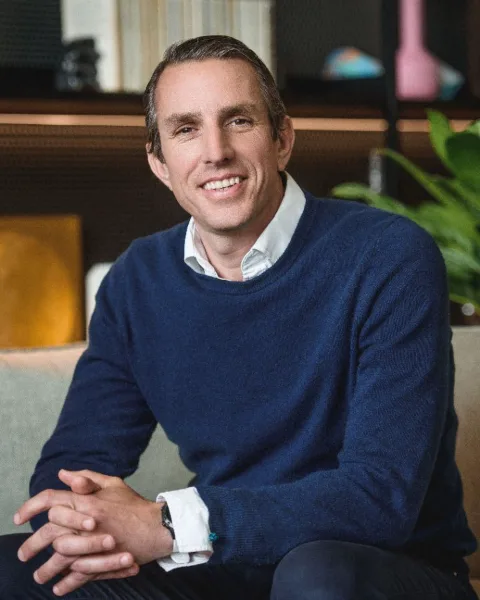
Huw Thomas
Founder, Brandstage; Co-founder, Recovery in Gaming
I run a business called Brandstage and a community project called Recovery in Gaming. At Brandstage, I work behind the scenes with established operators, ambitious startups and fast-moving scaleups to shape the strategies that drive growth. I focus on brand and communications - helping businesses define who they are, how they’re seen, and the impact they make. Dozens of clients across UK, Europe and US. Recovery in Gaming is an alcohol and drug recovery community for people in the gambling industry. We launched this month and we’re having our first community get together and 12 step meetings at SBC in Lisbon in Sept.
Follow Huw on LinkedIn →03 · Inside this episode
Moments worth queuing up
In their own words
“When that moment of surrender came, there was this level of peace and serenity that flowed through my body.”
“If you've ever thought, even once, 'Am I drinking too much?' the answer is probably yes.”
“I didn't realise that the feeling of no shame and full acceptance was just one step away.”
Full transcript
Read the full transcriptHide full transcript
I saw an ad in the early 2000s in a local newspaper in Surrey for a casino and games manager and I thought, "Wow, this sounds edgy." Yeah, you know, this will be fun. And I joined Gala Coral as a casino and games manager and it was just a fantastic sort of learning ground and totally new to the industry. In 2014, I got to work one morning and a chief exec at the time and the chief HR officer pulled me in and said, "You're in a lot of trouble, but we're going to help you because you need help." And you know that human side of how
I was looked after there. The evening after that happened, I was in my first Alcoholics Anonymous meeting and that was the first day of my recovery, which was 11 years ago, and not had a a drop or a drink since. When that moment of sort of surrender came and and I was like, "Okay, this is it." There is this level of peace and serenity that flows through your body because all of the shame and the lies and the worries and the fears, they're all out in the open now is where we all take a big sigh of relief, right? And it's like, okay, now I'm
at level zero and I can rebuild and regrow here. Welcome to the i Gaming Leader podcast where we uncover the human side of some of the most inspirational leaders in our industry. I'm your host Leo Jutkins and as an ex eye gaming director turned performance coach, I've worked with over 200 leaders from companies like Entain, bet365, Flutter and many more to help them build the habits to achieve sustainable high performance. In these episodes, we share exactly what it takes for you to achieve the same. So, with that being said, let's dive in. Hey, and welcome to the I Gaming Leader podcast. Today I'm joined by
somebody who's been in the industry for 20 plus years, been part of 1.1 billion pounds of successful exits, was chief commercial officer at Bedson, chief strategy and marketing officer NYX during uh their acquisition SVP and chief marketing and strategy officer at Open Beds and has recently founded a new business around a topic that is really close to my heart and really important to us as an industry together actually with one of our mastermind members which we'll cover later on today as well. But behind all of his success is a is a very very dark and troubled foundation that he's kept hidden for a very long
time which we'll talk about today as well. Uh you welcome to the podcast. >> Pleasure to be here Leo and uh thanks for having me. Yeah, I'm super today. Thanks very much. >> We've had the pleasure of recently talking and meeting each other and yeah, really inspired by your story, mate. I I I wanted to start off with um kind of the highs of your successes and you've been in the industry for a very very long time and I'd like people to understand the scale of yeah what you've achieved you know like I like I said in the beginning you've been part of the part
of major businesses successful exits and can you tell us a little bit more about your your journey you know how you got into the industry and yeah your progress throughout your career >> I saw an ad in the early 2000s in a in a local newspaper in Surrey, where I was living at the time, for a casino and games manager. And I thought, "Wow, you know, this sounds it sounds edgy." And um and uh I'd been working on a a couple of startups, failed startups with um a couple of friends. It was during that sort of, you know, early.com sort of, you know, boom. And
um and we tried and failed a couple of little startups. and I saw this and I thought, "Yeah, you know, this will be fun for a for a while." And and so that was about sort of 2003, 2004. And I joined Gar Coral as a casino and games manager and it was, you know, it was a just a fantastic um sort of learning ground and totally new to the industry, right? And you know, I can remember sort of back in the day I got to meet Evolution, right? in 2004 when they were first getting going and I can remember these conversations around, you know, yeah, we're
going to stream live casino and it's going to be, you know, it's going to be the next big thing and and and really it was a kind of vision and a pipe dream that they had, you know, remembering in 2004 we had like download speeds of two to four megabytes at home, right? and and and here were these like couple of Swedish guys who who who thought that video streaming was like, you know, the next best thing. and and and that that's absolutely what inspired me was was was these these sorts of people that were charting new territories and remember back then as well we
had very little regulation and um you know the the the entities were quite small so there was like zeros or market consolidation very new you know just what a what a fantastic sort of fastpaced edgy industry to be a part of and and it and it and it had me hooked from day one you know so um so that's where I started and and then moved to Betsson in Malta then um you know Betson when I joined in in Malta was probably a couple of hundred people no more and um and obviously today a giant organization and and uh all the rest of it and
I and I sort of worked my way up at Batson and became chief commercial officer in sort of 2014 or 2012 2013 and from there uh went to NYX Gaming Group, right, which was a gaming platform uh led by Matt Davyy and uh there I was chief strategy and marketing officer. So we kind of built that business um out for a couple of years. Matt and the team had been on it for for many many years and had done a wonderful job by the time I got there. Um and then we sold that business to Scientific Games for 631 million- which was you know a
big number but it was right at that point where some of the bigger oper bigger um operators like Scientific Games were looking at how to get into this world of of I gaming. Um and then became part of the big scientific games now Light and Wonder became part of that crew and and um looked after strategy and marketing there for the eye gaming business. And then we carved out Open Bet, right, which is the sports betting platform that that we'd acquired along the way. We carved out Open Bet and then we sold that to Endeavor. Um, Endeavor is the the company that owns UFC and
IMG and WME and all the rest of that. So then I became an an Endeavor employee and uh had a fantastic, you know, ride there and and and I think all the all the way along I was just I I felt like I was kind of lucky to be in the right place at the right time with the right people around me. >> We hear it in every story, right, where massive success is is um yeah, being in the right place at the right time. But it's not just that, right? I think that always underells underells ourselves which is quite quite typical for high achievers
underelling your own achievements and your own performance. I'd like to kind of go back through that journey a little bit. What were some of the what were some of the things that you were most proud of in in that journey that you've had in in your career progress? the human stories are the ones that I remember most and and I'm a very sort of human person and and um you know not so strong on you know analytical financial stuff but but very strong on human very strong on creativity you know I think one of the high points I was working in India for a while
with with Betsson and and and we were looking at that market and I was based in in Kolkata and I I had a member of my team a female member of my team who who came to join and um massive imposterous syndrome because on a on a cultural level, deep cultural level, you know, she had been told uh throughout her childhood that the place for a female was at home, was not in the workplace. And so when she became part of our team, you know, this was imposter syndrome. Uh, you know, not not just an anxiety or a fear or or or or a worry. This
was deep deeprooted uh fear and uh really sort of counterculture, you know, going against everything that that she had been brought up to to, you know, to know and and to learn. And and um in my conversations with her, this came to light, right? And and so, you know, I did a load of work with her on a you very sort of personal level, you know, tears, very tearary conversations, you know, her throwing the towel in occasionally saying, "I don't know whether I can handle this." And and she was amazing, right, at at what she did, you know, really hardworking, really thoughtful, really energetic, really
bright. And so over the course of of a couple of years, you know, we worked together, you know, very very closely to to share each other's vulnerabilities and and and uh to try and sort of carve out this fear and create some sort of path that she could go down where she felt comfortable and valued and that she was she was doing the right thing. And you know to cut a long long story short she is now a seauite executive absolutely smashing it and and um it's funny because you know when I talk to her she feels indebted to me but really as is often
the case I'm sure you find it too you know when you're helping people and supporting people the amount that you learn for yourself and and and the you know the fears that that that surface as you're having these sorts of discussions within yourself they become extremely important lessons as we go along and a lot of that comes from helping others and and and uh and that's the story really >> two big things that I pick up from that the first one is that through all the successes of big businesses exits progress um you know executive role goals. The thing that stands out for you the
most is not the titles and it's not the money and it's not the things that the money were, you know, able to buy you. It was the it was the human side of it, right? It's one specific individual >> in one specific journey that still is important to you today. And I think and the other thing that I I really love about it is that we can the things that we could do can really leave a mark on people, right? it can change their trajectory as well. And this is true in in anybody that we interact with in any shape or form in in our
businesses. And let's dive into that a little bit more. You when was the first time that you noticed that human elements to leadership was so important to you? You know, my dad um is still alive and and he's a he's a decorated military officer and he at one point in his career he was commander of what they call the rapid reaction force, right, which is a NATO uh military unit that can be deployed anywhere in the world within 24 hours. And so, you know, high-profile um high risk, all the all the rest of that. And I can remember asking my dad one day, you know, bearing
in mind that I think this unit was a thousand or more people of various different military sort of units, including, you know, special forces and and all the rest of that. So, and I remember asking him, I was like, you know, dad, you know, what what's the most important thing about your job right now? And and I can remember specifically asking him this. And and he said to me, well, I tell you what he didn't say to me. He didn't say to me, "It's to win every battle. It's to, you know, plant a British flag. It's to, you know, get home and get medals and
and all the rest of it." The answer he gave me when I asked him, you know, what the most important part of his job was, it was to look after the well-being of men and women under his command at all times. All right? So, very military sort of, you know, look after the well. But this kind of stuck with me and and and the way that he sort of describes it was, you know, if you come back from winning a battle or or whatever it is and you've got, you know, 17 people in hospital and, you know, 50 suffering from PTSD, is that a victory? You
know, is that a victory? for for people watching this who who are not not familiar with with with the military, they pay just enormous amounts of of of attention to the wellness of their people, you know, whether that's the food that they serve them, the activities that they do, you know, the the the mental, you know, side of of of being in that world. Um, and that's really, you know, where I sort of picked up um and and I saw firsthand, you know, the camaraderie and the humanness of, you know, these men and women who are going out to do probably the most dangerous work
in the world coming back and and and and it wasn't the technicalities and, you know, the finance side of it and all the rest of it that there was the glue that that held them together. It was the human connections that they had with each other, you know, the trust, the empathy, the honesty, the courage, you know, that that they had collectively was what got them, you know, out there and back safely. And um so yeah, so so that's where it comes from, I think. And and um I tried to reflect on that throughout my career and uh it's been super helpful. And you you
um you throughout that whole success and and your fast progress, there is also an underlying dark side that kind of mentioned at in the beginning, you know, a really difficult period that you've gone through, something that you've battled along for a very long time. Uh and then suddenly you got called into into the office 2014 expecting nobody to be aware of your challenges. Tell take me back to that moment and and what actually happened. >> So 2012, I'd been at Betson for a while and and sort of worked my way up to chief commercial officer, big team, big responsibility. And to be honest, you know, what
happened was the pressure I could feel building. All right, so you know, lots of direct reports, uh, lots of, you know, big targets, high pressure and and all the rest of it. And what started out as as drinking to sort of decompress, you know, became drinking to numb. All right. And um that's really where I would say my my alcoholism. And and I'm happy to call it that today is is that that's exactly where it started with the using alcohol to to to numb the pain and to take the pressure away. And what happens when I know now what happens when I when I numb
pain or when people try to numb pain um you also numb joy at the same time because you can't selectively you know numb one or the other. So so you become numb. Um and that means that you know emotions of happiness and joy and connection and and fall away along with you know momentarily feelings of anxiety and fear and pressure you know they get numbed and um in the end my drinking was was so heavy that that I was you know drinking to blackout most nights I would wake up the next morning you know shake ing having to go to work, put on a brave
face to try and freshen up and um I started using Valium in the morning um to sort of calm myself down a little bit. But you can imagine what is happening now. So I'm sort of into blackout out the other side into Valium trying to control my drinking during the day. there was a huge urge for me to sort of have a drink to try and top up and you know it's it's classic sort of um addiction uh feelings of addiction and um despite my best efforts to try and not drink during the day you know I would try and push out my drinking till
the following evening when I was behind closed doors you know eventually that drinking sort of crept up so you know I would have to have a drink at lunchtime you know and then I was like okay I'm never going earlier than lunchtime and 3 weeks later it was midm morning and then it was breakfast time. So, so at that point I'm feeling feeling like I'm I'm really in a black hole. Um unaware really that that that anyone else kind of knew about it. Thought I was keeping you know fairly tight control on it. And um you know this industry as well is is say sort
of oblivious is the wrong word but you know forgiving maybe right forgiving of of you know work hard play hard. Um and then in 2014 you know I got to work one morning and the and the chief exec at the time and the chief HR officer pulled me in and said you're in a lot of trouble. And I thought, you know, [ __ ] I'm about to get written warning, verbal, whatever it is. And they said, but we're going to help you. Um, because you need help. And you know, that that human side of how I was looked after there is something that that that
I'll I'll I'll never forget. And um you know, the the evening after that happened, I was in my first uh Alcoholics Anonymous meeting. Um, and that was the first day of of of my recovery, which was 11 years ago, and not had a a drug or a drink since. So, I actually emailed the uh chief exec and the chief HR officer at the time. I I I messaged them actually on LinkedIn last week and I'd said, you know, just kicked off this recovery in gaming, but I want you to know that, you know, you were really the the the catalyst for everything that has happened. um
you know since I got sober and I wanted to thank you for that. who >> amazing you well done great uh great journey and again it goes to show that an intervention like that right where just one single moment can make a huge difference in somebody's trajectory I want to dive into some of some of the things that you've said there because I can find myself in that story how I was I was I think you were 35 right when you were promoted I was 33 when I was promoted as youngest director I felt a lot of pressure And I was also drinking at night
just to relieve that pressure feel like numbing my mind, right? I felt completely as if there was yeah completely brain fried every day. So but a lot of people do right a lot of people have a have a pint after work or have a just need to decompress before coming home. The real difficulty people is to understand when it's an issue and when it's not and when it's okay and when it's not okay and and um I think there's a real fear as well almost to admit it's a problem. Maybe you're you're kind of wondering in your own head whether or not it's an issue
but you also don't want to be stigmatized or you don't want to you're fearful of the identity change that it might create when you have to stop drinking or when you need to stop drinking. So, I want to want to talk a little bit about the beginning part of that early, you know, just just having a pint after work or just feeling completely stressed after work and and having a few drinks like how do you know when it's something that you should probably talk about? >> Very good question, isn't it? Hey, and it's a very very big question because I think also, you know, we're
all on some sort of spectrum with our with our and for me personally, you know, the the moment of powerlessness was the moment when I realized I was no longer in control. And um if I think back to that time, you know, those moments when I physically could not stop myself going to the fridge on my own first thing in the morning, you know, to have a drink. There is a line that I've crossed there. And you know, you could say, well, it's the time of day that you're drinking, which is the line that you've crossed. But I would say that that it's you know
if you feel and and I you know I would be shaking at the time and and literally being drawn feeling like I'm some sort of magnet towards the drink uh and and and and that intensity you know of of of that and that draw to the drink you know you can feel it sort of inside you and then the the utter relief that comes as soon as the alcohol hits your bloodstream. dream and um if you feel this this deepseated sort of urge that that life will not be the same or the afternoon or the evening would not be the same until I get a
drink. Now that's something which I think should spark spark off something in people's minds is is um I think as soon as you had a thought one thought around am I drinking too much the pro the answer is probably yes right because otherwise you know >> yeah does that mean that you like need to change everything or does that just mean have a chat with someone see if it's actually an issue check in with yourself for many people the problem is when they have a thought of am I actually drinking too much they feel that well I wouldn't classify myself on an alcoholic because an
alcoholic is x y z and they you know whatever the label whatever the view is that they have on it but also I think people are very fearful to have that conversation because it might mean that maybe they're the person that is always the first one to go out. Maybe that's how they're known by their friends or their family. Maybe maybe they don't even see how they can have fun anymore if they wouldn't go out for a drink. So they're very fearful of of giving up the alcohol and that might be the that conversation might be the first point of that. So what is the
next step after that? What does that look like and what are your options and and yeah paint the picture a little bit about what that looks like for for people. >> Everyone has got to kind of reach their own point right in in in in recovery. And I see lots of people um who uh struggle with their drinking, but until it becomes a a problem of a certain size. Yeah. There is no point there is no point anyone else trying to sort of get them to stop drinking or to slow down their drinking or whatever cuz you know if if someone is addicted to something
you know outside pressure often actually adds fuel to the fire. uh you know if I was struggling again and and and this is this is what we this is how how I help people in the program right now is um you know those first conversations really really matter don't they and um and I think that that if if people are harboring these anxieties around drinking or or drug taking the first thing to do is to is to chat to someone who you love and you trust and and and to have that open open conversation and and and I think that's the it's the first step
to solving nearly all of life's problems is to you know in in some respects admit surrender to the problem in some some shape put your hand up and say I'm not entirely sure where I am right now but I know that it's causing me pain here and it's causing me pain in my head I'm thinking about it too much >> it's such a big there right people are so fearful of that the the other thing I uh that you mentioned there earlier in your story you I think is also really important it's this moving of boundaries right I think it's something we're all guilty of
uh I'm not you know I'm not necessarily talking about alcohol but in in general we all kind of go yeah well I've done this thing now but gee it won't happen again we'll move our own boundaries right we're very um might be harsh on ourselves in many cases but we also say ah but this is okay for now as long I don't do X Y Z later. And I think in alcoholism that is certainly something that's that happens a lot because it it's not something that happens overnight, right? It's something that progressively gets worse and you don't see it as an issue because you keep
moving those boundaries. >> There's always some sort of justification for it in my experience, right? And it's like you know and and and and this is this is how the disease of of addiction and I believe it is a disease by the way is is you know we we say that it's sort of cunning and powerful and and and baffling because it is you know it is a trick of the mind you know all of the time which is oh I've had a I've had an even more stressful day than I did yesterday. Oh, if everyone else was going through the same sort of pressure
that I was having, they would be drinking the same, too. Or, you know, I'm I drink less than so and so. You know, the mind can find all sorts of different ways to sort of justify. And it takes a a level of sort of selfawareness that is normally with me when I was in in the depths of my alcoholism, zero self-awareness, you know, and the mind is is gone. Um, but it takes a little moment uh of clarity and and only one moment of clarity to really sort of bridge that gap between being able to draw a halt to the addiction or continuing for some
time until something catastrophic happens. You lose your job, you lose your house, you lose your wife, you lose your, you know, whatever. And and it's unfortunately with addiction, it is more often than not a catastrophic issue that actually prompts someone then to reach out and say, you know, okay, give up my, you know, I'm busted. I'm in a lot of trouble. I've had quite a few um friends of friends who reached out who've got children who've who've had, you know, addiction issues and obviously they've been very very upset and they're talking to me about what can we do and how can we help them and
how can we do this and my advice is always the same is is unfortunately there's very little that you can do to sort of push someone into recovery. It's just not going to happen. And unfortunately sometimes the best thing is something catastrophic. You just want to make obviously that it's not a a life and death thing, but um people have got to find their own rock bottom in in some situations to prompt them to have what we call the um you know the gift of desperation, right? But don't you think that's true almost everywhere you like if we take this beyond alcohol, talk about weight
loss, talk about I don't know any sort of behavior change that because we're creatures of comfort because we're creatures of habits. We have these behaviors and although we don't like the behaviors, we like the easiest thing to do is to keep the habits. It's very difficult to break habits. >> Yeah. And so sometimes it takes a cat, in most cases I believe it takes a catastrophic event or it takes a real deep, you know, deep dark moment to provide the fuel that we need gives the motivation to actually break the behaviors that we have that we no long that no longer serve us. Right. >> I
do think that's true in entirely. I mean not not not only think that that's true, I I actually know that to be true, you know, because I I run recovery meetings. I see people at the various stages of recovery. I see husbands who've been forced into recovery and all and and those that have come because they've, you know, surrendered and accepted and all. And when that moment finally came for me and and bearing in mind I've been drinking black out for many months and valium and all the rest of it. When that moment of sort of surrender came and and I was like, "Okay, this
is it." There is this level of peace and serenity that that flows through your body because all of the you know the shame and the lies and the worries and the fears they're all out in the open now right and there and there's nowhere to go and so this level of peace finds found me very very quickly and and and I think that's true I mean you you will know because you work with you know, lots of exceptional leaders and and sort of transformation journeys that that that that moment of acceptance and and and out into the open of of of problems, you know, is
where we all take a big, you know, sigh of relief, right? And it's like, okay, now I'm at level zero and I can rebuild and and and and regrow here. So I think if anyone is is worried about you know their drinking or or worried that they might be addicted to to drugs or alcohol you know the message is is that there is a there is a window of peace and serenity which is literally one step away and and and it is there for for for for everyone and I know that to be true not for myself but for lots and lots and lots of
people that I've helped over the years is I didn't realize that that this feeling of of of no shame and acceptance. I didn't realize that was going to be available available to me and it was like, you know, it's right there. It's just literally one step away. Yeah. It's just your mouth the way, right? It's just talking about it actually. >> Yeah. Yeah. >> I think that's the biggest challenge for most most of us is that we all keep it inside. the lies as we tell ourselves, the stories we tell ourselves, the justification, the moving of boundaries like we spoke about, you know, the industry
is so full of pressure. It's so fast-paced. There's a real drinking culture in the drinking and drug culture actually. I mean, go to any conference and you see it left, right, and center. How would you advise people to deal with that pressure uh that is perhaps in a healthier way than just drinking it away uh or numbing your numbing your brains? >> One of the tools that I have found most helpful in in recovery and it's a tool that that anyone who's been in recovery will will know about and it's called a sort of personal inventory. All right. So it's it's very short exercise every
day. takes three minutes maximum. If it's taking any longer than three minutes, then it's probably too deep. But it's to think about how your day has been, what has troubled you, you know, and and this is a writing very short writing exercise, you know, what is troubling you, you know, where you've done well, where you haven't done so well. And importantly, like if there are any sort of, you know, apologies or any amends that you need to make or or whatever it is now and and and it takes a couple of minutes. All right? and and I have a a book here which is full
of my daily inventories and you know bad behaviors, good behaviors, people I need to say sorry to and all the rest of it. But but the whole process of that is to pick out patterns, right? And I think you know we talk about you know the pressures of of of everyday life in the gambling industry and and events and and all the rest of it. I just wish that I had had little tools like this along the way to help me stop, you know, behaviors um and uh actions that were not serving me, you know, and that level of, you know, introspection and and by
the way, some of my daily reflect some of my daily introspections are just like scrappy notes, you know, so it's not very detailed, but but just a little bit of daily reflection over a course of uh you know, a month or two really helps to kind of you to see the the black and white of your life, you know, in a in a way that it doesn't happen if you think about it. >> When your brain is fried at the end of the day, right, and you're numbing it, it's because that's the only way out. I think there's three things happening. One is we think
we're we're at the mercy of that. We think that it's just a consequence of the day, you know, our brain being completely fried. And I think there's many things. I think the first step is you've got to take more control and you got to look at okay how can I actually make sure that I don't feel completely brain fried at the end of the day right then the second bit is the numbing right okay so if my I'm brain fried I think for most people it's just that they don't have a tool belt of tools to help with relieving that pressure and I think the
third thing is also about giving it words you know the feelings that you go through the stress dresses that you have, but being able to actually describe that and being able to and I think I'd imagine writing is a is a big piece of that, right? And and I think very often it's just we almost feel like we're on a train and yeah, it's inevit of course I'm drinking because I'm I'm brain fried. Of course I'm brain fried because it's been a stressful day and and it's like we're a passenger. I think all of this all of the stuff that we're talking about here is
actually taking control and ownership and responsibility. You know, I really like that, Leah. And and I, you know, I think there is there is the accountability piece. I totally align with. I think on the control piece, you know, it's really interesting. Control as a as a as a topic is really interesting like what we can control and what we can't control. And and and and I think in my own life, there are only and and in my business life at all that there are only a very small amount of things that I can control. Can't control people think of me. can't control, you know, whether
I get, you know, um, you know, this or that and and and and all the rest of it. And I think that that's partly where my my issues in in the pressure side of things came from was because thinking that I had to control everything. >> Yeah. Okay. Great points. Yeah. >> Got to control, you know, the numbers. I got to control my team. I've got to control the strategy. I've got to control the know having to control everything when when in actual fact there were probably you know four or five things per day maximum that I can do to to to affect change and
and you know the biggest drivers of change and knowing what those are means that you don't have to worry about the 4,000 other things which are rattling around in my head where I think I've got control over. >> Yes. Really love that you because that's true isn't it? It's there's so many things that are outside of our control and because we're always focused on the short-term results, the short-term pressures, we like you can't the fact that, you know, profits are down yesterday because of some bad results, you know, not going to do anything about it today really, are you? Um, so okay. Um, I want
to talk a little bit about connection, mentorship. Tell me a little bit more about what you do today and how we spoke about this before, right? how your mess has become your message. Um what does recovery and gaming look like? Why did you start it? And uh what does the future look like for you? What what are some of the things that you want to be doing with this? >> You know the story of recovery, you know about me now. So um and I think over the years I've I've helped quite a few people in the gambling industry sort of get onto a path of
recovery which has been amazing and um you know something which is really meaningful. Right. So, aside from business and all the rest of it, this is a this is a real meaningful part of my life. And I was sat here in this office um at home a couple of weeks ago really. And um I stumbled across an article which was all about doctors in recovery and um how these doctors all around the world because they're all in the same industry, they were getting together and sharing their experiences of being in recovery but also being doctors. And I suddenly thought, you know, there is nothing out
there for the gambling industry. And why is that? And and also that I'd never heard anyone really mention recovery. I' and I looked through sort of agendas from previous events and speaker agendas and I could see nothing. I could see lots on responsible gambling of course, which you know, the industry does a wonderful job on now, but um nothing that really talked about recovery. So I thought about it for a couple of days. I wrote down some notes. I wrote a little bit of a plan and um and then I started reaching out to a couple of other people that I know are in recovery
and I said, you know, should we do this? And I tested it with three or four different people and they were like, this is just, you know, this is a it's really needed. Secondly, there's nothing there's nothing like it. And so, yeah, so we put together a little plan and got some people on board and and really the purpose is to is is is sort of twofold really. one is to lift up the topic of addiction in the industry um from alcohol and and drugs. Um and then the second one is to provide you know a a safe space if you like an anonymous but
safe space for people like we've just spoken about who might be on the edge who might have gone over the edge. At least they know now through this podcast and and through some of the stuff that we're doing that there are people there who they can get in contact with and and and reach out and you know this really is a life and death scenario and I have had the unfortunate experience of you know having to attend funerals and having to watch families at funerals who are you know burying or cremating loved ones and I tell you it is a horror uh that no one
should have to go through. So the aim of of of this group really is to help a few souls along the way. Um and so that's what we do. >> Really love it. You and it's so important. I mean uh I had Mark Smith on the podcast who I know you spoke to about about this as well and uh he he spoke about his own suicidal thoughts as a result of uh his struggles with alcohol and uh Lee similarly spoke about how he's you know his battles with alcohol and who you're doing this together with who um you seen many friends as well going going
through similar similar challenging journeys and it's it's all about just being able to talk with others right just being able to to no longer having to keep this dark secret inside of yourself. So if people feel that they're maybe like you said on the edge or maybe before the edge or maybe over the no matter where they are on that spectrum that you described before, what can they what should they do? What's how do they get in touch with you and with the recovery and gaming? >> Perfect. So I mean I think number one is just go to the website recoverygaming.com and and there you
will find all sorts of different stuff. Um but you will find our contact details. Um, and I think Lee and I both got our mobile numbers there. There's an anonymous WhatsApp chat that you can join. Um, or you can message on on LinkedIn or whatever it is. And, uh, I think this comes back to that first step, isn't it? It's reaching out and making some point of contact. And, and in my experience, you know, alcoholics working with alcoholics and addicts working with addicts, that's exactly how we all get well and and uh, that's the best thing to do. >> Thank you very much for your
time today. Great, great mission. >> Thanks, Le. >> Thank you for joining me on the I Gaming Leader podcast. If you enjoyed today's episode, head over to i Gamingleer.com for more conversations and insights. Don't forget to subscribe to this podcast. I'm your host, Leo Judkins, and I hope to see you next week. [Music]
This episode is sponsored by


The AI platform for marketing automation used by leading iGaming operators. Turn player data into real-time engagement to deliver timely, relevant experiences and strengthen retention and loyalty across every touchpoint.
Related episodes
Related reading