
01 · Watch the episode
The full conversation
Watch on YouTube ↗ — if the embed above says restricted, it's a block on your network/Google Workspace account, not this page.
Or listen on:SpotifyApple Podcasts
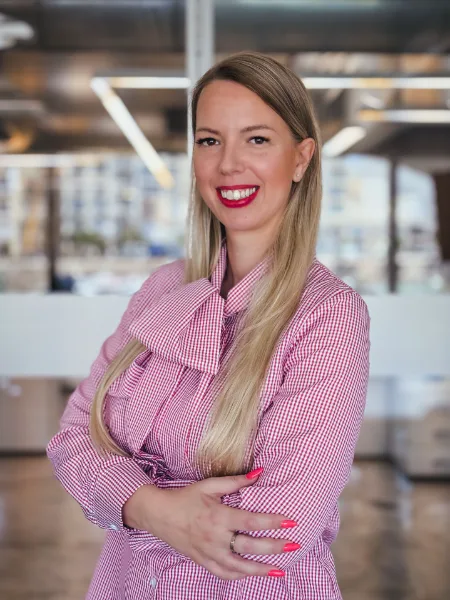
02 · The guest
Jovana Popović Čanaki
CEO, iGP
Jovana Popović Čanaki, known to most as Jovi, is the CEO of iGP, an iGaming platform, aggregator, and lottery provider. With more than 15 years of experience in the industry, she’s helped shape some of its most recognizable brands — from Aspire Global to ORYX Gaming — and today leads iGP’s evolution from a single-platform provider into a trusted, full-suite partner for operators worldwide. But what really defines Jovi isn’t just strategy or product innovation — it’s her belief that growth comes from people first. She’s known for leading with empathy, authenticity, and a strong sense of purpose, building teams where creativity, accountability, and trust go hand in hand. At iGP, she continues to champion the company’s Be Purple mindset — a reminder to stay bold, curious, and human — guiding both her team and partners to build gaming experiences that inspire connection and progress.
Follow Jovana on LinkedIn →03 · Inside this episode
Moments worth queuing up
In their own words
“Do what you believe in.”
“Why are you so afraid to show who you are? What's the worst that can happen?”
“If you don't have a little stage fright, you don't care enough.”
Full transcript
Read the full transcriptHide full transcript
I was doing presentation on a monthly basis in front of the executive board of a publicly listed company that had 7,000 employees. That was a first for me. And of course, I didn't feel, okay, we're going to do it. Of course, I felt intimidated. It was such a down. It was like from 100 up to a minus 100 down. And it happened in the lo of the hotel, which is like the last place that you imagine it's going to happen. spending 4 hours with the police and understanding that I'm never going to see any of my belongings ever again. More importantly, my documents. As an
expert, you can appreciate that it's not the easiest thing to recover. It got me thinking of these highs and lows in leadership. How do we handle those? And do we talk enough about them? I'm not just a CEO of IGP. I'm a wife. I'm a mother. I'm a friend. So that balance that everyone talks about is kind of completely ruined. Am I going to finish writing this email or reading this contract versus sitting down with my daughter and doing her homework or cooking a meal for the family or calling my dad that I haven't heard or had a conversation with for the last 2 weeks. I
was always a straight A student. But then my first exam on the MBA, I failed it. I miserably failed it. I was talking to my boyfriend at the time and I was crying and he was like, "Why are you crying? Why are you so upset? What do you think? You're studying this and you're going to be this big boss one day? You're going to be a director somewhere? No, you're going to be a personal assistant to some CEO or finance director and you're going to be making coffees or teas for them." Immediately my tears disappeared and I said, "You know what? I am going to
be a manager one day. The one I want to be and I'm going to make my own coffee. I don't need a PA." You just need to do what you believe in. >> Welcome to the i Gaming Leader podcast where we uncover the human side of some of the most inspirational leaders in our industry. I'm your host Leo Judkins and as an exi gaming director turned performance coach I've worked with over 200 leaders from companies like Entain, bet365, Flutter and many more to help them build the habits to achieve sustainable high performance. In these episodes we share exactly what it takes for you to achieve
the same. So with that being said let's dive in. Hey everybody, welcome to the i Gaming Leader podcast. I'm here with Jovi Popović Čanaki. She's the CEO for IGP. Been in the industry for a long time, 17 years. Super inspiring story and trajectory that she's gone through. Obviously, one of the very few female CEOs in B2B especially. and uh we met for the first time on your stand in in Lisbon which was awesome. Really uh enjoyable conversation and um yeah, welcome to the podcast. Really looking forward to talking today. >> Hi Leo. Well, thanks for having me. Uh yeah, we did meet for the first
time which is very unusual nowadays. We meet people online for the first time, not in person. Right. >> But that's true as well. Yeah, >> our story starts in completely different and I'm I'm also super excited to be here. I mean, I've I've never done um anything like this. So, let's see how it goes today. So Michael, just for context for everybody, Michael's the CMO at IGP and he shared that article that you had on uh on IGB about the loneliness of leadership and like it's so reinforce some of the things that we talked about in Lisbon as well on how much of an authentic
leader you are and how you openly share. We even spoke about it just before we started recording about some people felt that sometimes you overshare all super cool. That's what that's what I'm most excited about because I think you know we have so much uh inauthenticity in the industry and it's uh having pe leaders like you who actually openly share about struggles I think is really important. So that's something I'd like to start with if that's all right Joey is in the beginning of that article you were talking about um the situation you had in Barca. Can you tell us a little bit more about
that and kind of what made you lead with that piece of vulnerability in such a you know such a such a big article such a big big big news item? >> We all know um you know how how these expos go and conferences and we meet so many people and we are really most of us at least are on the high when when when the when the event ends. So it really it really uh hurt me in a way not uh you know physically or something but it stroke me more is a better word. Um it was such a down. It was like from 100
up to a minus 100 down. Um it happened in the in the lo of the hotel which is like the last place that you imagine it's going to happen. Uh I think I mentioned it in in in my article. It wasn't about the things you can replace the material stuff, you know, but I give you an example. I I had a small wallet that I've been looking for years exactly like that of that size of, you know, that capacity and so on. And then and then it was gone. So then, you know, spending 4 hours with the police and understanding that I'm never going to
see any of my belongings ever again, more importantly, my documents. as an expert uh you can uh you can appreciate that it's not the easiest thing to recover but it it got me thinking of you know these highs and lows in in leadership and how do leaders managers team leads doesn't matter so even if you lead one person your team is one person you're still a manager and a leader right how do we handle those and do we do we talk enough about them so I had four hours of of thoughts in the in the police station and then also um quite a journey back
home. Barcelona is uh you know Europe but Barcelona to Malta seems almost like a flight to New York to Frankfurt >> takes forever and it's uh uh such a wonderful source for anybody listening. I would highly recommend read reading it. uh that's where the the the story opens but of course it goes about like the loneliness of of and the isolation of leadership at the top and I mean one of the one of the things that you talked about is I've got the quote here thought of a simpler less demanding path always lingers in my mind and I often ask myself is it all worth
it why do I do this and I thought that was so amazing and it's it's I I bet it's a question that many people struggle with is is it something that you Um, yeah. When when was the last time you kind of thought about that? When's the last time that you that went through your head? >> Every time we're in the budgeting season. >> I I can't really recall when was the last time I I I thought about it. I don't think there is any pattern. It just comes and and goes and uh I guess it it comes in the you know in the periods
of life when when you are when I am overwhelmed not just by work you know I'm not just a I'm not just a CEO of IGP I'm a I'm a wife I'm a mother I'm a friend I'm a daughter I'm a sister so you know as many roles uh that that that we have we're not just people in the you know working for a company or owning a company and so on it's I guess in those moments when that balance that everyone talks about which in my opinion doesn't exist is kind of completely ruined when you know in between am I going to you know
finish uh writing this email or reading this contract versus sitting down with my daughter and doing her homework or cooking a a meal for you know for the family or calling my dad that I haven't heard or had a conversation with for the last two weeks or cleaning the apartment or you know putting the the window robot on. I guess these are the moments is like okay so I should find time for this you know I I should be able to do all of it really and and um I remember as a kid I well as a kid as a teenager is time management was
a big thing it was a new thing and then also in you know in in uni we dedicated a lot of time to time management and it's like it's just time management but but it's not you know because you do not control all of the things that come your way at every single point of time. So I guess is it worth it? Is it all worth it? Is is a question I ask myself in the moments when from every area of my life thing come in where I I need to do something. >> I also agree with you. The whole balance thing is so over
not overrated, it's over marketed, right? It's overtalked about because we all know especially like if it's conference season there's no such thing as balance it just it's just not going to happen and even holding yourself to some sort of work life balance it's an expectation you won't be able to fulfill. So when when you think back when you think about those kind of not just the conferences and the intensity but like you said you know in all aspects of your life as a wife as a as a part as a mom as a sister as a daughter like what are some of the things that
you feel had to sacrifice on or had to do less of to achieve the the progress that you've had and we'll talk a little bit about that progress in a bit. I like the question because funny enough I was asking myself quite some years ago well actually when my daughter was born and after the maternity leave I came back to to work I was searching for that balance and I couldn't find it and then uh my husband sat me down at the table he took an A4 size paper and he drew an image that is still very vivid in my in my head he's not
an artist. He draws horribly, but you know the the graphic is still there. So he drew circles. He drew a circle in the center which he named, you know, Yoi. And then he drew a couple of other circles. Our daughter, well, our family, himself, friends, you know, my parents and brother and so on. So kind of the rest of the family and and work. Okay. And then he kind of said, look, you have 24 hours in a day. You can't equally portion for each of these circles enough minutes. You cannot. So you will have to choose. So that really changed my perspective on on what
balance in life is. I think that we can achieve the balance if we look over a longer period of time. If you look at it on the on the yearly uh yearly kind of scale there you can find the balance you know you go away for a vacation for three weeks and you and you have some rest and that's these three weeks are then only dedicated to your family so to answer your question I I I can't say that I sacrificed something completely but uh there were periods of of life and you know within my career when I had to sacrifice one or the other
thing from silly example, you know, for a year I was not doing a manicure, but that is uh you know, for for the male um audience, they would that would not know. It's one hour and a half every 3 weeks. So, an hour and a half every every month that I would use, you know, for something else and stuff like that. for a year I sacrificed my career during maternity leave for staying with my daughter fully 100% not doing anything else. So this is I can't say as you know I sacrifice this 100%. And I'm pretty sure that you know going forward there will be
periods of time when I will sacrifice something more than than the other thing. You know friends not seeing them as much as I used to in my 20ies or you know parents not calling them every Sunday but calling them once every two weeks and stuff like that. So this is where then I I find the balance. It it helped me a lot. >> Yeah. you spoke about that as well, right? Where just I mean it it requires a lot of sacrifice and I you're right, you know, in the moment it feels like that and when you zoom out perhaps you find that you see more
balance in in that area. Before we started recording, we we were also talking about expats and you know us being expats and being parents and not having that family support and having having to balance all those areas at the same time. That is a lot, right? And like have how have you found that throughout your career Joy? Have you found it um like at this time where you're now CEO or as you were progressing towards that level where where have you found that most challenging and have you become wiser as as you got older with like finding like being happy with where you are? >> I
know I'm going to sound uh very cheesy but I found you know content and happiness in every stage of the career that I that I had. I believe that each of those stages led me to where exactly where I'm supposed to be. That is, you know, every company I worked for, every role that I took and I had many. I started as a customer support agent. You know, my entry into I gaming was basically getting a job not even knowing that it's I gaming. So, I was I was supposed to be um a financial auditor, financial controller. And on the same time, all these different
roles that I took, I I I really cherish them. I I I literally enjoyed every single one of them. Some a bit more, some a bit less. I mean, you know, I did work for like six months as part of customer support, but I was assigned to work in the department of telemarketing. So, I'd be doing night shifts and cold calling Canadian and Australian players. That's not really a phenomenal job and not something that you would enjoy you know spending 2 3 5 10 years but even that taught me a lot more than than many others. It it taught me humbleness. I was alone in
the office. I remember it was cold. There was no heating in that office. The office was in basement. It was night shift. So no one to talk to besides you know really doing doing your job. uh making a um a cup of tea just to you know warm yourself up. I was literally sitting in a jacket you know. >> So today when I sit in you know this beautiful office of IGP with with the with the view like I know you can't see it but there is a there's a beautiful view outside even though it started the storm started and there's a horrible rain. Um
I appreciate it more. I do. And um what made me happier? I don't know. Um I guess as I said, every every bit of it had its beauty in it. >> I think that's amazing and it's such an important piece of it. I think that's really what forms you as a person as well. You have appreciation of what it's what it feels like right at every level. How does that translate back into kind of how you lead the team and how you work with the the rest of the company? Does it make you a different leader? you feel >> it might make me maybe not
a better leader but closer to to everyone else leader cuz it's kind of I I did that path the same as they they did you know from from both kind of this appreciation of where we are today but also to the to the knowledge and expertise. it is much easier for me to have a conversation about tech with the CTO and about product with the CPO throughout you know all these roles I had many more touch points than if I would just you know becoming a manager let's say from scratch or after a couple of years so our conversations are are dialogues they're not monologues
you know we do we do do talk to each other and brainstorm together and this you know understanding of what they're talking about >> a bit more deeper than than um you know and we have a in IGP we have a again I'm going to sound cheesy but uh you know this open door policy and flat organization where we actually do listen to everyone's opinion and uh this is this is the environment and the culture that I always kind of wanted and I find we finally have it here so it feels really good because that also allows you to just hear what's actually going on
instead of hearing what people think you want to be hearing which is what's happens in most organizations but I also I'm also like acutely aware that people like in front of a CEO people just behave differently right they some sort of switch happens in people's brains where they start like I remember when I was when in my one of my first roles in I gaming I just couldn't like I couldn't even form normal words you know that's maybe a little bit extreme That's you know what I mean and and it's and you know that that happens in front of you as well with probably with
current people currently in the business. So how do you feel about that in a kind of a flat organization and in open door policy culture? What are some of the things that you do to help kind of break some of those barriers or some of those feelings of you know having to perform in front of a CEO? >> I ask them uh very direct. Are you nervous? >> Great. I love that. >> I just do that because you know you you can you can see that you can feel it. It's not always that, you know, people will stutter or not find words. By the way, I
was in the same situation many years ago. It it can be intimidating. I get it. And I get it because I was in that situation and not once. So, I just break the ice by saying, "Guys," or a person, are are you nervous? There's no reason for you to be nervous. And and more often than not, they just open and then say, "Yes, I am nervous." And then and then we you know pause the let's say the topic uh of the conversation or the agenda of the meeting or whatever and then we go into why are you nervous and then we go into and through
this I saw you know different fears that that people have very often it's about them not wanting to sound stupid or ask something stupid. they want to be at their best in front of Calele or CEO or you know their manager. But what I always try to explain to those who are receptive of hearing and and learning is that if you don't do that you will never grow. If you don't show your weak spots to your manager to your team leads they will never help you close those gaps. they will never you know help you grow and overcome those fears or you know certain lack
of skills and so on and so forth. So it it kind of comes both ways. You know, we uh in my article and and you mentioned it, we speak about this kind of unsaid uh loneliness or isolation of um of leaders because we don't want to show at all times or not allowed to show at all times our human side and our weaknesses because we are supposed to be the ones to lead and you know without fear with having all the questions covered, all the answers to all the questions. But then there's also the rest of the organization. they want to show also their best
to be always at their best, you know. So, it's kind of a um it's kind of a two two-way street. So, again, in my opinion, this is what I've been doing is is just to just to open it, just to open the topic and uh address it straight. >> How was it for you then? Uh Jovi, like I still remember it very well in my early 20ies feeling like that. Like what were some of the things that helped you back then to overcome it? Was it just time or did you like was there something different in your mindset on how you approached those conversations? >> I
never thought about that. Thanks for bringing it up. Um, I guess I always uh knew what I wanted, so I squeezed my teeth and just went through it. There's a funny story from my personal life. I failed my first exam on the MBA studies. I was always a straight A student, but then my first exam on the MBA, I failed it. I miserably failed it. And I was talking to my my boyfriend at the time uh and I was crying. I never got anything anything less than uh B+, you know. And he was like, "Why are you crying? Why are you so upset?" I said, "Well, I
never failed an exam." And he said, "But what do you think? You are going to be you're studying this and you're going to be this big boss one day. You're going to be a director somewhere?" No, you're going to be a personal assistant to some CEO or um finance director and you're going to be making coffees or teas for them. >> Wow. >> Yeah. I was like 19 at the time. No, sorry, 21 or some 20, I guess. But very early. And immediately my tears disappeared. And I said, you know what? I am going to be a manager one day, the one I want to
be and I'm going to make my own coffee. I don't need a PA. So, we laughed it off. But this sent and this was before my first job. So, this situation often was, you know, appearing in my mind in the moments when when I struggled, when I was stuttering or felt intimidated, I just squeezed my teeth and and went through. And I don't know, it's not really good advice. Yeah. But uh you need to you just need to do what you believe in. >> I think it's fantastic because everything is on all of your dreams are on the other side of your comfort zone, right? It's
cross that boundary of your comfort zone. It's just you just got to do it for long enough for it to no longer be uncomfortable. >> It's exactly what it is. just we just push through because no good stuff is easy. >> Yeah. >> Outside of business, take sports for example, you know, I trained um you're going to laugh. Please don't laugh. I trained chess when I was uh young and I competed in chess and people don't call chess sport, but I call chess sport because you need to train. Yeah. And I had a coach and I was going to tournaments and so on. So it's
it's the same. I wanted to win the tournament. So it was difficult. It was you know mental work. It I had to memorize uh I was what seven eight. I had to memorize you know as many combinations as I could to predict then also a bit of bluffing tactics and so on so forth. It's not easy but then you win you feel great. And take any other sport right? It's no good things, no dreams come just like that magically poof and and and it happened. We we all need to work for them always. We're in gaming industry. We know that luck is a you know
a big factor. There is a bit of that but I take luck more as in being lucky to meet some people on the journey who either you help or they help you you know overcome these type of uh challenges including the one you mentioned you know being intimidated in front of I don't know your manager at first uh executive boards five years ago I you know was doing presentation on a monthly basis in front of the executive Ive board of a publicly listed company of a company that had 7,000 employees. So that was a first for me. And of course, of course I didn't feel, okay, we're
going to do it. Of course I felt intimidated. It's like actors with, you know, 30 years of career, but they still feel a bit of that stage fright, even if it's a bit before they go on the stage in the theater to perform. Because if you don't have that, you don't care. And if you don't care, you cannot you cannot really pursue your dream. Then you're kind of whatever happens is good. >> It's embracing that, right? It's embracing the fact that like your next level just requires you to be unsure and a little bit messy because of course you haven't figured it out. That's why
it's the next level, right? You haven't done it yet. Correct. you also spoke about this kind of LinkedIn friendly CEO that nowadays everybody expects and you know like whatever um like it's hard sometimes right because there's things that you don't you can't talk to anybody else about because there are things that only you you deal with at your level and nobody else in the organization. So how do you um how do you deal with those moments? How do you kind of how do you get perspective? How do you overcome challenges there? Is it is it the same thing? You just bite on your teeth and
you get through it or what do you do in those moments where it's really tough and you don't have anybody at your level to to really discuss that with? So what I do it's uh just a bit you know with with my husband obviously he's been my mentor for many many years but I try not to bring much work home so it's more of um let's say generic topics and strategical topics you know that he helps me with and then obviously with my you know fellow fellow chiefs from from other companies within the industry who understand the struggle who who can share an opinion advice
uh or just listen sometimes, you know, just just listen. >> And we do share a lot of these um kind of uh same challenges. I I meditate a lot. I meditate a lot during sleep. So I sleep to a couple of specific frequencies to clear the mind and then you know sometimes it takes two three nights for let's say big stuff but for challenges where only I can uh or am supposed to address that are not as big one night meditation normally clarifies the mind and then in the morning I more often than not know what to do that's maybe you know biting the tease
and you know going going through it. But some of the feedback on my article was that you know um that they felt that I'm like super lonely. I'm not super lonely. I have people I have people around me uh you know even even within IGP on management level we discuss way more than you know I bet quite a few other companies don't. It's more of those things. Are you sure you this is something you want to let out and you want this to be discussed or this is something that you need to kind of solve within yourself within within your mind or within your personality
because some of the challenges also come from from ourselves. It's a it can be a fight or a struggle between um how do they call it? You have an angel and the devil on each of your shoulders. So who's going to help you you know talk about these things? this is something you need to solve by yourself. >> You told me this beautiful story in um in Portugal about this all hands meeting and where you know you felt like you're the CEO of the company and you got to you got to talk to everybody and you've got to you're making announcements and and then sometimes
you feel like you've got to pretend that you've got it all together, right? Or not pretend but you've got to like you got to show that you've got it all together. You smile at everybody. You bottle bottle it up. Maybe you don't even want to show signs of weaknesses. Did you want to share that story? >> At the moment when it happened, I felt terrified. But then a couple of seconds after I I was relieved. So we had in all hands a quarterly overview and uh as as usual I present you know as as it goes from from financials to clients to product update, tech
update and so on. at almost end we had the the marketing update where you know where IGP went in terms of expos media so on and so forth and that was just uh after the SBC summit Malta but I uh I literally didn't know I was nominated when they announced my name um on the stage I was eating chicken and my mouth was full of chicken because I was so hungry and I was like what's going on you know uh so I went on the stage and and you know I I I got um award leader leader of the year. So, one of the slides
was uh was about company nominations and awards and that was it was there. Um and then I remembered and I'm going to do it again now. Uh that just behind me I have the actual thing. So, you know, I took it and I've shown it to to everyone. I said, "Guys, this is this is not my award. You know, this is this is actually all of yours award. This is our award." And you know it I I could have not got have gotten it if you know this company would be one one one man band. It's you know what because what we achieved all together. And
when I when I said it out loud I almost cried. It was such an emotional you know moment for me because I I I meant every single letter that I that I said. But then at this in the same second I was terrified that everyone is going to notice I'm about to cry and my voice started shaking. I mean you know how it goes when when you're about to cry. But then the very next second everyone like 200 people started sending these um emojis. Yes. Like these reactions on teams with hearts and and I was like okay no this is this is beautiful. Uh, and
then I had to check with Michael. Was that okay or was that not? And he's like, "Yo, you're only a human being, the same as all of us." And it's nice and beautiful that you've shown it to to everyone. And it's true, but there is always that bit of like, is it oversharing? Is it overshowing? Should we? Should we not? Uh, is it a weakness? With time, I realized that maybe it's it's more of a strength than a weakness. I definitely agree with that. Why why do you think that that's the case? Why do you think it's more of a strength than a weakness? >> Because
of authenticity. I mean, will you believe a person who tells you that they never shed a tear in their whole life and they're like 40, 50 years old? You wouldn't, right? So, why would why would you know people in a certain company believe in a leader who is acting like a robot? And I think especially people that are new in managerial roles, they they sometimes feel that they have to be someone that they're not yet, right? >> Yes. >> It's the opposite of authenticity. They It kind of goes against perhaps who they are because they think they have to be someone. And um have you
experienced that with as you were progressing through your career? Are those those things that you had to learn and overcome? >> 100%. This is one of the moments in my career that I will never forget kind of you know my my start. So before I I got promoted into a manager and got to lead a team we grew friends with colleagues you know and then I think you mentioned it happened to you just before we started the recording. Suddenly you find yourself managing your friends out of out of work. So I was at the time 24 25 or 24 I think or something. So I
I didn't really know what is the right way how to address this and and segregate between okay this is Y friend and and this is Y manager you know I wanted to erase completely subjectivity and be you know objective to to leading the team and later company and so on. So at the time I decided to wear a mask to be Y manager and to be Y friend and those two people were so different. It was so difficult to maintain that you know but at at the time I thought that's the right thing to do that this is the only way to do it. I
didn't have a mentor at the time who could have guided me and uh I I was exhausted. Leo, I I was literally exhausted by, you know, having to perform one way and not be myself. I'm talking about the character and personality more than, you know, professional skills and stuff compared to what I was at home and in the in the in the society in the sium, let's call it that way. And then what happened was very beautiful. I I had a yearly performance with one of my reportes, a dear dear friend of mine to this day to I mean we've known each other for 17
18 years. It feels like a lifetime. She told me we went all according to the you know structure this then and then at the end she said I I have to tell you something. You're the best friend in the world but you're the worst manager in the world. >> Oh my god. And I was like, "Excuse me?" You know, with that kind of, "Excuse me, what are you talking about?" And she said, "Why are you so afraid to show who you are?" She said, "I'm tolerating you because I know that this is not you. I know who you are cuz you're my friend. I've known
you outside of work. Why are you so afraid? What's the worst that can happen?" And I said, "Fine, I'm not having this conversation anymore. It's done performance overview and then but I went into the weekend talk thinking about it. What is the worst thing that can happen? Okay. And then I said you know what let's uh let's let's let's just experiment. And the worst thing that happened to me was actually the best thing that happened to me. I changed my management style. I you know I I I I just stopped playing this role of a manager and wearing this mask and I just went with
you know who I am and uh wonder or wonder it was much better accepted. People were listening more and following more and and everything else that you know followed after that and it was so much easier for me. So that was it took time by the way. It it it was not an overnight not change from my side. It was not an overnight change from everyone else cuz I still had that reputation and there was a nickname for me back in the days. They used to call me dragon lady. >> Oh my god. >> I I know I know it doesn't sound well but that
is who I was or that mask that I was wearing. And it took some time to kind of slowly overcome, you know, that past and the the reputation. And I'm so glad that she spoke to me about it, that she literally just cut me with that one sentence that that literally changed my career. I'm eternally grateful for her and she and she knows it. If she's going to be listening, she knows that that's her. >> It is true, isn't it? Like it's always these kind of pivotal moments where either we feel ashamed or we're confronted by someone. Someone puts a mirror in front of us
or people tell us something that we really maybe hadn't thought about or we hadn't said out aloud and all of a sudden it's like that horrible boyfriend, right? That says something like that's awful. But it it it it was the fuel for you to it it brought up a like the the the dragon fire maybe. You know, it brought up the dragon fire. >> He played his role. He played the role 100%. That's what they needed. Yes. >> And isn't that true sometimes? And and I I think about this a lot as a parent as well. We want to, you know, we want to wrap
our kids in bubble wrap. We want to protect them from everything. But sometimes it's the uncomfortable things, the discomfort or the the honest truths that help us. Well, not sometimes, they are the things that help us the most and really form us as as people. Do you think about that at all as a as a leader as well? how you can be balanced in your feedback versus brutally direct and and really help people change how they maybe perform or how they lead. >> I do both. The fun fact is that you can be brutally honest and direct without being rude. But what is more important
than than you know this balance is to understand who are you talking to? For your message to be heard the way you want it to be heard, you need to adapt your let's call it wording to the person you are giving it to to that is to receive that feedback. Uh we go back again to you know being authentic and having open door policy and letting people know you but also getting to know them so that you can then manage them also from this perspective that you just mentioned way way better. I know 100%, you know, there's a number of people where it's a just
cut the BS. This is wrong. This is wrong. This is wrong. This I'm very disappointed. This needs to be better. By tomorrow morning, it needs to be on my desk cuz this is what works for them. This is the feedback that they take the best. Maybe I exaggerated a bit but like this very brutal direct and you know with the timelines and it's now or never versus whereas other group of people where they would not handle this at all. So I still need to tell them that you know something was was not let's say good enough but I need to give them example why it
was not good enough. I I need to compare it to something else maybe that they did. I need to give them a tip or two how what they could do to improve it. So there are many ways how you can provide uh if we're if we're talking about negative feedback but even positive there are many ways but what what's the this balance is is more about balancing it out in front of who you're talking to rather than balancing out your words. >> It's not about what you say it's what people hear. Right? That's really the key. Um I want to talk a little bit about
female leadership. You're of course one of the very few females especially in B in the B2B space in I gaming very few CEOs but what has that meant to you and what what has that like in that journey what are some of the challenges that you had to go up against that perhaps men don't even recognize or realize and what are your views on it and and how's that experience been for you >> roller coaster >> a bit >> if I can say in one word >> this topic is is very close to me because yesterday in IGP we celebrated created a loveless day with
an internal panel and we discussed many topics around women in STEM in general not just in in in gaming and I was asked a question about evolution of women in gaming specifically how it was you know 18 years ago and 10 years ago and how it is today I think I'm quite fit to to say at least from Mars my perspective how it used to be in the last 18 years because I I was on that journey And it didn't uh start without any challenges for sure. I was dismissed not being taken as seriously because when you and just let's remember that those were the
days where you know all the meetings were done in person. This were no Skype calls or teams was not even alive back then, right? So, you know, meeting with the potential client, uh me walking into the room, 25 year old, 1 m 80 uh tall, blonde, I had a few situations where I was asked to bring uh coffee and uh mineral water, which is fine. I went out, I ordered coffee and I brought it back into the room, then sat at the table and said, "Okay, well, nice to meet you. I am, you know, name and surname. We can start the meeting now." I was
genuinely not offended. Why? Because that those were the times where you you would not find young female managers um you know leading meetings with suppliers or clients or or so on. It would not. So that was let's say the environment as it was. So that was not they did not ask me to bring coffee because they wanted to offend me. It's because it was very unusual and uncommon. So I would bring coffee would sit down with continue. Fun bit was the look on their faces. >> You started the meeting. Yeah. >> Every time that was the fun bit that I always uh you know remember. So
at the beginnings were like that but it was very similar to to my other story that I that I mentioned. It just kind of, you know, helped me push through and and and push forward and and go forward. And so many years later, what we see today and not just in I gaming but in say the rest of the industries and businesses is that women are represented have a you know better representation a more uh a larger percentages even though I am not a fan of hiring a woman for the sake of hiring a woman to fill in the quota. So I would always give
the chance to the let's say better fit of the person whichever gender they are. But what I don't tolerate is that you know one gender over another would have a preferential treatment because it's not just women having preferential treatment over men. It could be the other the other way around for certain roles. Again, if we talk about tech, there are many more uh developers, males, than than females, right? But if there is a woman that has a better chance, sorry, a better skill set and experience and so on than a man, I would hire her. I I have seen I gaming progress massively in supporting
females and you know allowing them to let's say enter into the roles that we haven't seen before. What we still don't see enough is uh women leaders. We have a higher an increased portion from 15 years ago to today in the entry level and at and mid level but senior and uh you know sea level is there's not many but also this is changing you know I was on um birthday party a few weeks ago and it was all people from gaming it was maybe 25 30 people and I found myself uh having ginonic and talking to uh COO and the CTO both of them
ladies you know that I never met before and it is beautiful and I think this trend you know will will continue nowadays um I don't have any any challenges anymore it it it used to be you know even 5 years ago I was introduced uh or six years ago I was introduced as a woman CEO a couple of times on meetings so again not offended but then the next time um I did um maybe an uncommon or unpopular thing but I introduced a CEO as a male >> COE. >> Yeah. Without having any discussion, without complaining or saying that I didn't appreciate uh you know
them calling me women CEO. I just said okay so this is XY uh male CEO and magically I was never again called a woman CEO. Do you think it's a consequence also uh nowadays of kind of the pool of talent uh or because like I'm I'm kind of thinking back to this story from from Lewis Hamilton, right, about um people of color in Formula 1 racing teams and he's saying there's literally nobody like there's all there's just white people that are in these racing teams. and they did the whole research and they found that it's actually it's kind of starts with the opportunities from the
bottom. There's just literally hardly anybody feeding into the bottom and therefore even if you'd set quotas there's there's you know there's very little that flows through to the top because there's no nothing at the bottom. Do you feel that that's the case? Do you feel that's changing? What are your views on that? >> This has definitely changed. So uh the entry level is is not what it used to be before in gaming 20 15 years ago. We have so that starting point let's say of the pool of women who could grow is is I don't think that's a that's an issue. I think we or
I see it more as um combination of also cultural differences and let's say expectations from the environment that you are in. This is something again that we discussed yesterday. Uh there are still you know countries and nations and cultures that expect women more to you know to not to stay at home but to be there for their parents as a caregiver if needed to support you know the kids more. Say you know a child gets sick. Who is the first one you think that's going to take care of of that kid? Father or mother? the the the natural thought is ah so mom is going
to stay at home right so it's kind of a role that historically to this day as well women take in the in the society with you know these roles that I that I mentioned then becomes a choice between are we going to fulfill are we going to do this or we're going to you know pursue our career and I don't know because I was uh I I knew what I wanted but also I had you know I have my beautiful husband who supports me in every step of the way for the last 10 years but you know maybe maybe other ladies don't feel like they
they can do it all but guess what they can. Sometimes it's just this crazy expectation that we have of ourselves that we just have to have it all sorted out. It's okay if that's not the case all the time. >> 100% Leo. I I can't agree more. I think that the pressure is more the one that we put on ourselves than uh than anyone else really does. I'll go again to my stupid example of nails. So, who cares if I don't have a fresh manicure of three weeks? So, I'm going to have it of four weeks. Is that important to anyone else rather than me? So
what am I doing here? I'm disappointing myself and I'm disappointing my expectations. But then to reach that balance, certain expectations need to be adjusted. They need to be adjusted. You know, otherwise we we can all just go mental. You cannot you cannot juggle all of these things with brilliance at every single moment of every single day. it's impossible. So the sooner the sooner we um admit ourselves that we don't have it all covered and yeah we you know we don't know yet we'll we'll cross that bridge when we come to it the easier it actually uh becomes and yeah not everything needs to be perfect
you know I didn't I I didn't put my bed uh uh you know neat in the morning because I was in the rush so it's maybe one day out of seven that I didn't do it What's going to happen? Well, storm is in Malta. Maybe that brought bad weather, but nothing more than that, you know. >> Yes. Yes. I love it. Joy, last question for you. If you would go back to maybe your VP days or a little bit earlier in your career, what's a piece of advice that if you'd go back five or 10 years, you would give yourself that would have um >> that
would have really benefited you. something that perhaps you only found out later that you wish you knew earlier. >> I'm going to sound like a sentence from a Hollywood movie. Sorry for that. But I would I'd tell myself just uh just one sentence. Uh don't doubt yourself. I spent way too much time thinking if I'm able to do it than if I would actually gone and did it >> because we have so many overinkers in the world, right? People that doubt themselves and think, "Oh my god, should I do this?" Think with AI, it gets even worse because we throw this stuff through AI and
they it keeps going like you go through the rabbit hole. So when you find yourself over overthinking and and uh and doubting yourself, what's what's something that helps you kind of break that break out of that? >> I think of all the of all the achievements that were there looking in the past and seeing you know every time looking back and seeing every time that when I doubted myself but then I've squeezed the teeth and went through it either myself or with the help of someone else or you know jointly with the team even in personal life it's the same. It's the same, right? You
you need to overcome something. I just remember that and I say, okay, so you doubted yourself in on 12th of October 2021, but you've dealt with this situation. What was the outcome? It was good. Okay, so you doubted yourself on 3rd of March in 2017 that you won't do, you know, make through that exam. How did the exam end up? You got a straight A. So why do you keep doubting yourself every time where you're in front of a wall, problem, challenge, unpleasant situation, whatever. Why? You might fail, you might not solve it, but you're going to learn from it. So just this is this
is what really helps me. This is the conversation that I learned how to have with myself. >> Joy, thank you so much for uh for talking today and taking taking all this time. really really great talking to you and thank you thank you for sharing. >> Thank you so much Leo. It was uh such a lovely chat and all these questions they also brought me back you know in in in the past and you know all the good and challenging stuff that were happening. I I feel very nostalgic now. Uh thank you thank you for that thank you for that feeling and thanks for today. >> No
worries. Thank you. >> Thank you for joining me on the i Gaming Leader podcast. If you enjoyed today's episode, head over to iamingleer.com for more conversations and insights. Don't forget to subscribe to this podcast. I'm your host, Leo Judkins. I hope to see you next week.
This episode is sponsored by


The AI platform for marketing automation used by leading iGaming operators. Turn player data into real-time engagement to deliver timely, relevant experiences and strengthen retention and loyalty across every touchpoint.
Related episodes
Related reading