
01 · Watch the episode
The full conversation
Watch on YouTube ↗ — if the embed above says restricted, it's a block on your network/Google Workspace account, not this page.
Or listen on:SpotifyApple Podcasts
02 · The guest
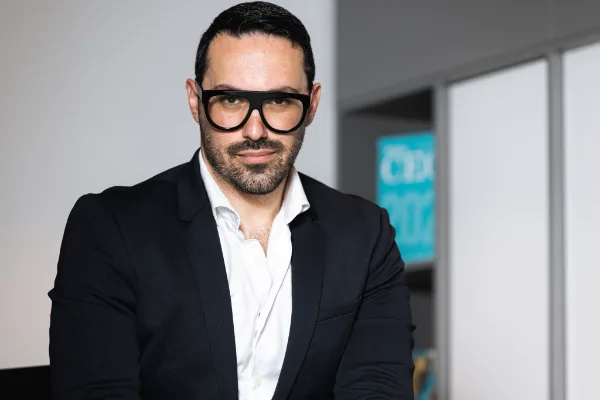
Justin Anastasi
CEO, VentureMax Group & OverPWR
With over a decade of experience within the iGaming industry, Justin Anastasi exemplifies a unique blend of iGaming expertise, HR knowledge, and entrepreneurial skills. As CEO of the VentureMax Group, he leads a team of iGaming veterans so that together they can build the industry of tomorrow, invest in disruptive start-ups and nurture new ground-breaking solutions. Justin’s impressive track record in global business growth and leadership development, coupled with a keen understanding of the human element in business, makes him a standout leader in the industry and sets him out to drive innovation in both the iGaming and technology sectors. Aside from his role with VentureMax, Justin is also Chief Executive Officer at OverPWR, a Malta-based angel investment venture.
Follow Justin on LinkedIn →03 · Inside this episode
Moments worth queuing up
In their own words
“I've never really been burdened by the problem. I'm always thinking, how am I going to get it done?”
“Time is a currency. I invest it, and I don't like to lose.”
“You can't make a CEO. Somewhere within them, they have that innate ability.”
“The only thing you should be is happy.”
Full transcript
Read the full transcriptHide full transcript
I think people feel that because they have a voice that that it has to be used. Is what you're saying going to add value or have you really taken the time to lick them? I find that a lot of people are so caught up with the difficulties and why it can't be done but not so focused on why it can how it can. I find it very difficult to sit down and do nothing. I don't really feel like I can never stop. For me, for some reason it feel like relaxing is a bit of a waste of time. My fundamental belief is I'm here for
a limited period of time and I want to get the best possible outcome of the time that I have. I don't think you can make a CEO I think somewhere along the line somewhere within them they have the ability every person has their own intrinsic toolkit that they need to be successful at something. The trick is to try and ident. >> Welcome to the I Gaming Leader podcast where we uncover the human side of some of the most inspirational leaders in our industry. I'm your host Leo Jutkins and as an ex eye gaming director turned performance coach. I've worked with over 200 leaders from companies
like Entain, bet365, Flutter and many more to help them build the habits to achieve sustainable high performance. In these episodes, we share exactly what it takes for you to achieve the same. So, with that being said, let's dive in. [Music] Hey everybody, welcome to the I Gaming Leader podcast. I am super excited for today's guest. I'm here with Justin who's gone from call centers to catwalks to sea suite and somewhere along the way he's uh he's decided to say the quiet parts out loud talk about the stuff that others really don't talk about and uh we were talking a little bit beforehand Justin I'm so
impressed by everything that you've do done like you're the type of guy that somebody tells them how to do things and you do it the opposite way and I'd love to explore that a little bit more uh more today on the podcast. So, welcome welcome to the show. >> Thank you very much uh for having me. I'm very happy to to be here and I I look forward to um adding some interesting conversation to the mix. >> Let's start with that if that's okay. What's um what's the earliest moment that you can remember where you thought, you know, the rules weren't wr written for you
where you decided, you know, I'm going to break away here and do things differently than than everybody else. >> I I remember being being at school. Well, I think it was uh very young. I mean, I must have been, you know, we're talking early primary school possibly. Um where, you know, there was a lot of disorder, I would say, at at school. And you'd find me um having everyone sit uh in particular areas, uh making sure that everyone knew, you know, what it was that was going on and making sure that I created a bit of struggle. I listened to the teachers. Um, and but
I I definitely had my own my own way of of doing this. I kind of just feel like I was uh I really hate to be the one quoting uh Lady Gaga, but uh I was obviously born that way. >> I love that. Yeah, I love that. And like did you have moments where you thought, okay, I've got to I've got to kind of comply. I've got to follow, you know, follow what everybody else is doing. or have you always have you been more of a person that felt comfortable just doing things your own way? How how did that evolve? >> Um I think it's
it's an interesting question for for me. I think I I've always struggled with the the concept of having to do something. Um I think that that sentence never really computed very well with me. Um not because I don't like structure today. I think I've leared to appreciate it. I think what I struggle with is um the doing something because it's always been done that way or doing something because I haven't taken the time to think of how to do it a better way. Um I think I think it's those approaches that um that I struggle with. So for me why is um is very very
important. And I've asked why a lot a lot of times. But for me, I think being able to ask that and feel comfortable asking that without, you know, feeling the uh the burden of feeling silly or feeling like, you know, you shouldn't ask that question, I think has has helped quite quite a lot to be fair. Uh so I've always felt comfortable challenging challenging the norm, but not challenging it for the sake of challenging it. I think that's where a lot of people make make the mistake. >> Yeah. How so? Tell me a little bit more about that. Why where do you feel people go
wrong with that? >> I think people feel that because they have a voice that that it has to be used and I think that that is that is a tough one. Uh it's important to to speak when you have something to say uh something something that can add value to to the conversation because everyone has an opinion. Of course that that's who we are as human beings. We all have an opinion on on things. But I think um is what you're saying going to add value or that that you want to say? Have you really taken the time to listen um to what's being said? I
find that that's a big a big plus. You know, for me back in the day, there was a lot of very very early teenage years. You know, there was a lot of what I felt or what I thought and it's good to express yourself, but sometimes it's also good to learn. So, very early on I I took it upon myself to really focus on the people who have already been there done. So a lot of my friends, a lot of the people I thrown to myself about uh at work even till to this very day are people who have had um a lot more life
experience and experience in general certain aspects of of work professionally that I can take and learn from terms of their knowledge. >> I mean that's the thing, isn't it? It's there's there's a difference between feeling comfortable speaking out um saying things and asking why and and there's what you'd said earlier. there's people that just want to challenge everything for the sake of challenging it. Um, was it for you was it more about understanding what's why things were the way they are or was it more about can I find a different way? I'm trying to like I'm asking because I'm trying to uncover the early entrepreneurial
mindset I suppose. >> Um, I think I think for me uh I always like to understand why something works the way it works. what has led it to get to that particular stage. Um, but someone said something to me a couple a couple of months ago, I think. Um, and he said to me, he said he he he loves the fact that I I am unbburdened by the problem and he doesn't understand how how and why I can think of a solution so quickly um on my feet and that's up to to float my own boat. But I suppose I never really took the time
to to to even reflect on how or how I've gotten to where I've got to how why I think the way I think until that moment. And I and I realized that really I've never really been burdened by the problem. I'm not also burdened by the the realities of things, but more that I'm I'm really looking beyond all the nos and all the reasons why it can't be done. I find that a lot of people are so caught up with the difficulties and why it can't be done but not so focused on why it can how it can. >> Yes. >> Um and I think
that is where a lot of people struggle. So it doesn't even cross my mind what the issue is the the or what is the blocker. I'm just thinking how am I going to get it done. >> Yeah. I love that and I see that in everything that you do Justin. you know from you thrive in the challenge right it's uh for you the obstacle is the way I think and and it's it's something that you've talked about a lot where you and you feel that patience has been one of your biggest challenges right one of your biggest learning like one of the biggest skills that
you want to develop but also one of the biggest things that you've found uh challenge challenging so yeah I can see I can see how that's true for you and how uh problems are actually yeah the area that you thrive in what happens so what happens then when you find yourself in a stable situation where there's no where life is good business is good there's no ch I know it's like la land and it doesn't happen but what's what what happens to you in those situations where it's the opposite of where you thrive >> um so for me it's more a case of I'm constantly
working on something else I I'm I I there is nothing I don't want to do or I'm interested in. I'm very uh proactive in that sense. So even though I'm very busy at at Venture Max, I obviously have my own my own companies, my own project, my own interest and I I make sure I'm always active. My challenge more than anything is probably to relax. Um I I find I find it very difficult to um to sit down and do nothing. Um so even if I am lying down um on the sofa um I am thinking about something I'm working something out in my head
I am calculating something on my phone um I'm I I I don't really feel like I can never stop for me for some reason it feels like everything is a bit of a relaxing is a bit of a waste of time and I I think it comes down to the fact that my my fundamental belief is I'm here for a limited period of time and I want to get the best possible um outcome of the time that I have and that that time to me is it's almost like a currency you know like I if I put my time into something um I am investing
it you know so me having this conversation with you is is an investment they are minutes I will never get back am I going to am I going to am I going to see it as an investment is it going to be an investment normally on the losing end of that and I don't like to lose um lose my time because I can't get it back and that's what also makes me impatient. It's also what makes me so focused on for the most part the three minutes it took me to let the car into this call and keep me coming on time because I don't
like to take away some other people's time either. So true, right? time. I always say time isn't money because money you can make more of, you can reinvest, and time you can never get back, right? So, it's a one-time expenditure. So, I completely agree with you with you in that. There's different mindsets, though, right? There's people that kind of look at rest and recovery as a way to be able to achieve more in their active periods, if you will. Think about it like sprinting and resting and not being able to sprint all the time. And there's people that um feel that they've constantly got to
be on like you sound like it's not have to be on but are constantly on and maybe struggle a little bit more with rest and a relaxation but is it something that you think you want to do you should do and you have to do the rest and relaxation you were talking about having been to go for a fair bit of you know over the last period um yeah do do you think it's something that you want to develop? I I think the today and I think it's become more and more problematic as time has gone is we we we almost feel like there is
a a cure or a fix or a label or a box for everyone. Um and I don't think anyone should be anything. Um I don't think I think I think if you function well um and you and you thrive um in in that situation that's what makes you happy. And I think happiness ultimately is what keeps you going and what and what life is all about. So I think if you're happy um your body a job, you know, some people say, "Oh, you know, you need to have 8 hours sleep, 7 hours sleep." You know, I function just fine with with six six and a
half hours sleep. Now, do I know if I'm going to live to 300 or if I'm going to live to 60? I have no idea. Um but but I'm very happy with the journey as as it's going and I'm happy with it myself. Um, it comes with stress and and there are times when I when I think to myself, my god, how much better would it be if I just went back to retail and did and did something I I really enjoyed. Got paid terribly, but um I I I enjoyed it what it was and uh and life was simple and good. So, there are
pros and cons to everything, but for me, I think no could uh be anything you should the only thing you should be and is is happy. You've had such a diverse background. Uh you've been in retail, right? Parrots, you've been in call centers, Popeye Village, changing batteries. Uh you know, you you've you've you've gone you've been in politics. They are such different worlds as well. What's the constant that you've noticed through those different types of environments? What are some of the things that maybe about yourself that is constant within those environments or perhaps about how people work or how people how to deal with people? What
are some of the things that you've noticed that are the same across those Yeah. massively different areas? >> You know, you're right. I think I think in the beginning um I was definitely looking to find myself you know so I think that I think we all we all do that even though some people see reason doesn't necessarily show they did uh but I think ultimately we we all we all do um I think what the the common thread there is is that work is work and you can enjoy work or work can just be work. Um, for me I find enjoyment in work. Everything I've
done has always revolved around around people, around relationships, around adaptability. Uh, I think I think these are these are all key and I think people is probably even the the common thread there as well. I I find myself very good with people. I love working with people. I like learning from people from everyday people. You know, my partner once had a had a donut truck and where he was selling donuts and I and I I went there and was helping him with the donuts. I mean, back then I I think I was already um chief people officer or something like that and I was there
serving donuts. So for me and and there was silly things, you know, that seemed trivial at the time that you wouldn't expect. But for me, I I always learned something from someone. I remember giving someone a donut. I think it was about Christmas time. I said, "Happy Christmas to you and your to you and your family." He said, "And he said to me, I'm going to tell you happy Christmas, but I'm not going to say to you and your family because I don't know your situation, you know, and if you have a family." I was like I was like, "You know what?" I said, "You're
you're right." Uh, and and uh and that these little things that you learn along the way, I think uh priceless. So, if I had to pick out of what everything I've just said, I'd probably say people has been the common the common trick. >> Well, I've got a quote here from you. uh above all things I've built solid teams around me and together we have blazed a trail through whatever journey we've taken together. I think it's such a great quote because it really describes what you've just said and um I mean one of the big things that comes with that is because you love people
so much and you work with people and you empower people that you work with like of course businesses go through ups and downs as well. It comes with hard decisions as well. comes with having to let go of people that have been truly loyal to you for a very long time that you've been truly loyal to because that's what the business demands, right? Because that's what the whatever the that's the way things go. And what have been some of the hardest uh emotionally the hardest decisions that you've had to make when it comes to to people and and perhaps that almost felt like they they
went against your values? Well, the most common scenario is probably going to be making people redundant or or terminating. Of course, um it's probably going to be the situation. Um and I think the most difficult ones are scenarios where it's not necessarily their own fault. Um I think in some cases, I I can recall a few where they were they were good at the job. um they were good but um they were not able to fit in to the bigger dynamics the culture and and trying to shift a culture especially when you have certain deliverables and certain um objectives that you want to reach in
a short space of time and sometimes you do just have to you know look at the bigger picture and make those tough decisions. I think for me what makes those decisions less difficult is being transparent. You know, I remember in the beginning of my career people my my bosses would would fire people um with this very long winded um approach and we all know what's coming. I mean and I I learned a lot of what not to do in my in my career very early on. So for me it was I'm very direct, you know, having that conversation felt being let go. Um, so we're
going to be letting you go. That's the first That's the first thing. They they already know. I've already said what what's going to happen. And then I lead into the why and how we're going to make that happen. What is going to be the support? I don't let people go and just throw them out without giving them a plan. I think for me that's very important. I'll go through their CV. I'll go through their references. I will help them uh secure another opportunity. Um where obviously I think they they're good employees. Um and I think the key there in those difficult scenarios is to make
sure that you treat people well um in in a dignified manner because a lot of people forget that those people go to other companies, they go to your competitors, they they obviously they become a part of your employer rant ultimately. So difficult decisions they were. I think for the most part I don't think we've ever at least I keep saying we I have ever um uh left someone without a positive outcome to some degree. >> One of the hardest things in that in that whole trajectory of redundancies or having to let someone go is actually the moments leading up to it, right? When you already
know, you're already aware of what's going to happen. the person isn't aware yet, right? You haven't had you haven't scheduled in the conversation yet. You're making the plans. Um, you're well aware of the restructure. People are still having those conversations with you, people that maybe you even consider as friends. How did you deal with those situations? What would you advise to people perhaps listening that might be going through a situation like that? >> Yeah, I think I think the the best advice I can say is don't gossip. Um, I think that's that a big one. What I find is that people might tell someone that
they're close to at work. Um they might tell someone that wasn't necessarily in the the board meeting or the management meeting and it leaks and it creates it creates chaos. I think I think the most important thing is keep it to yourself. Beive of the situation that you were in and do it quick. I one thing I can't I can't stand is when people drag out that type of situation. I think it's extremely disrespectful. Um, and it should be done swiftly. I also cannot stand it when when people do something like that on a Friday after the person's put in an entire week. If you
knew about that throughout the week, you need to do it as quickly as possible. So, for me, the opposite. For me, it's not normally on a Monday. Just before Christmas, those kind of things, like don't do it, you know. Okay. So, from the kind of negative side, let's turn it into some of the positives. today. Justin, what are some of the most what are some of the proudest moments you've had in your career? What are some of the things that you really feel that you know that is do the quiet moments perhaps that you've celebrated? Maybe you celebrate them loud, I don't know. But what
are the moments that you're proudest of um that you've achieved? >> I think for me uh some of the proudest have been when I have brought on or backed someone that other people wouldn't have backed or wouldn't have brought on. I'm a big believer in the underdog for me seeing those people win. Um I think I'm probably my my happiest uh of moments and the same applies even to business. You know I I I look at companies as well that I've bought a stake in orve contributed to and exactly the same thing. I mean I'm big fan of of the underdog and I think in
part because I think I see myself as that underdog. Um and today I look back on uh on on things I try as much as I can to give the opportunities to to them um to be able to to progress. I have been bitten by the underdog as well which is probably the most disappointing um of of things that that one can experience when you're rooting for them all the time. But I think overall that would probably be my my my greatest one. And I would say the other one, although it's a maybe a little bit cheesy, but the other one is actually my my
niece who I I love actually her name is and she is an absolute star. So um you know seeing her grow and uh and and she picks up things like this there's no tomorrow. She's going to be a definitely one to watch. I'm saying that from now. Uh she all exactly I think I think she's also one of the one of the proudest things as well. I think backing the underdog is such a it's such a such a great trait. I mean, I've had I've had Vladimir on the podcast, Pierre, um Dimmitri, I saw you on stage with all four of you on stage in
in Malta. I'm like, "Oh, the only one I haven't had is is Justice. I have to have to talk to you because that like that's one of the things I love about what you say as well where it's not so much about the the pitch deck itself. It's more about the preparation, the character, the person behind the pitch deck." Um I think I mean what's why do you feel that that's more important than the actual you know getting the the seven words right on the slide and you know what I mean like what the the things that typical investors might look for why do you
feel the character the person is so much more important than the actual presentation? you're able to pinch. >> I think the I think it's a person that is going to be uh in their garage working their ass off to to get it over the line. And if they haven't got if they haven't got the aptitude or the grit or the motivation to be that guy or girl, then the business is ultimately going to suffer. They might have a great presentation, but if they're not willing to put in the blood, sweat, and the tears to to make it happen, then you've got a problem. I would
say initially when I first took this on um there was a little bit of that uh that imposter syndrome which is you know I have mentioned it before uh in passing in the office and people like oh what you have imposter syndrome how how is that pos but I we all have something like like that at some point I think >> but I I quickly kind of realized that u that my background in in with people in HR is actually probably what uh makes me very effective in in in my role I mean at the same time we had had countless amounts of dicks. I
would say we're close to probably 300 by now. Uh we have we're probably going to invest in in maximum three. We've just signalized one ratio is very low. But at the end of the day the probability of success is probably going to be much higher. I'm banking on given that um I'm I'm backing people. So I think I think that for me that is all works the the secret source really and and why I prefer to look at those those individuals. Obviously if your if your numbers are completely wonky and um you're saying listen I have an idea it's worth 5 million let's make it
happen. It's probably not going to work out. So there's also a delusion that plays a bit of a part to that. Uh but I think if it ticks all the boxing and um and the the person who's driving the business is going to be solid, I'd probably back that business more than anything else. >> Before we started recording, we were talking a little bit about, you know, building collapse in Malta and people being killed on the road, you speaking out on even you speaking out on grreylisting, right? I was such a such a great thing that you did and and having a voice there. Why
do you feel that that's important for you to do? Why do you feel that that's I mean you have the voice, you have the opinion. Why do you feel it's important for you to speak up on those type of topics? >> I think it's coming from a lot of different places. I think for me uniquely so is I'm I'm old um and I live in Malta, so of course I am a bit of a patriot in that sense. >> Um two, I'm I'm in an industry that contributes a lot to to the economy. um and for the most part one could argue is almost has
played a part in um Malta's progress or rapid progress as well. So I think uh we can't always just talk about the positives. Uh we can't always just consume. And I think we also have to contribute. And to contribute doesn't necessarily mean just to give. It also means to spark conversation, to critique, and to try and um evolve and push things forward. So for me, I think if you deny that we're on a gray list and we need to fix it and also prevent how how how we even got there in the first place, then for me that that is also um counterproductive. It's it's
thought of delusion really, right? So I think we need to talk about everything. So if we're going to neutralize our voices and if we're going to champion a cause, if we're going to be ambassadors for our industry, and if we want, you know, the country we're based in to continue to grow and evolve and support the the industry and any industry, then we have to talk about the problems, too. >> Yeah. I I mean, but you positioned it as an opportunity, right? And that's like I I love that as typical you, right? Going it's problem, so it's an opportunity. uh very different from how others
would would position it like what was the response that you got to that how did people you know what did you hear from people after after you took that position or you know you you I don't know showed that position that you had >> yeah know I think I think overall um I would say vast majority has always been very positive I think I think the uh the business community locals um everyone likes the fact that um these topics are are raised, they're discussed and they have the opportunity to even voice their own their own opinion. So I think overall it's always very positive. I'd
like to think that there is a small part of the change I think that come after these the commentaries and videos and so on um that is somehow related to having been voiced in the first place. So I think I think uh overall it's been very positive. One of the things I'm super interested in is uh one of one of your career decisions, Justin. I think you were in a in a call center where as you know Malta really rapidly rised in terms of outsourcing and so perfect perfect timing. You then made a decision to go into a little bit later to go into politics, right? Um
like I am so curious about that because you're a you're a business person, you want change, you you can't sit still, right? you um you you thrive in the challenge. You know, that's definitely something that you'll have in politics, but politics is obviously notorious for just being slow and like it's difficult to change. Like what made you decide to enter politics in the first place as a career change? >> I mean, to be fair, I think back then I was looking back a little bit on things and saying, you know, what is it that I where's that next thing that I want to to add
value to? But I think politics is kind of like HR but on steroids really because you've got an entire country to to to look after and I think what what took me into politics again at the time I think I saw nothing but issues you know a lot of issues a lot of good things happening of course but I think I think sometimes the good things happen almost by design by flukes you Um, I think it's just the way most people are, but a lot of the things that could be done better weren't really being addressed. And I think politically there was a lot a
lot of turmoil, a lot of a lot going on. Um, and you hit the nail on the head there when you when you said that I I tend to go into the problems and the the challenges and see them as opportunities. And back then I I saw that as exactly the same the same thing which is it was an opportunity to go in um do something where I'm adding a lot more value to a lot more people uh with the same effort or maybe just a little bit more um and really contribute to to what makes malt great. So that's that's really why I got
in. >> How did you feel being in politics? Did you feel that you were able to create that change? Did you feel that uh it was too slow? I mean, you I think you moved out after six months or so, if I've got that right. >> Um I think what were some of your experiences there? >> For me, it was a lot slower um than than I that I would like. And I I think there's nothing worse than uh having all the energy in the world, um all the right ideas in the world and feeling like you're in quicksand. Um and that only gone to
to drive you down. So I think I was also a bit naive um as well when I when I went in thinking that you know everyone uh had only the best um interest and intent. I think for me that was that was a bit of a stumbling block. But I think had things gone the way that I was hoping and the way that I was trying to get things would have probably been vastly different even today. Um but that wasn't the case. So for me I I think I had to go through that experience. I had to learn from that experience in order to kind
very very different. Um I think today there is no more naive just but more just more of a wise one and I think had that happened today probably would be a very different story. Just like you said there, being in quicksand, you want to be at the forefront of change, right? And that's that's difficult when you're part of a bigger hole, I suppose, >> depending on your position, of course, but even even as a group CEO, that can be difficult, right? You've got a larger organization to to kind of consider and there's direction that the company's going into. Do you struggle with that nowadays with
um maybe not being able to create the change as quickly as you'd like to versus when perhaps you were doing things completely by yourself or um you had full reigns and control? Yeah. No, I think I think today um they I find it easier to affect to affect change of course. Um and I think we have we have some great great shareholders. >> And but I think people sometimes forget that even though you're a CEO, you have shareholders to report to. And when you don't have shareholders and you are the only the UBO, um you have uh banks to um to report to. you have
um suppliers, you have clients, you have a number of different things. So, you're never really completely free to do uh whatever you're going to do and however you want to do it. I think you always have to consider the the bigger picture ultimately that includes also your employees, they have to be have to buy into uh what direction they're going down the communication that you can send your throat and so on. And I think in short, yes, there's a lot more I still think a lot more change today. And but at the same time, I've always told people anyone who's ever come to me for
advice and a lot of the time been, you know, they're having trouble with their manager or this hasn't been done or or or whatever, and that is is that absolutely everyone, no matter what their role is, can affect change. Uh it's just how you go about doing it. you know, so sometimes you can't be so direct. You do have to take the longer um more blood soaked path in order to uh to get there. H but ultimately you'll get there. So if you have if you have the will, if you have, you know, that grit, uh then you have some um I would say tenacity, I'd
say some cunning, bit of wisdom, some advice, you'll you'll get there as well. And you know what's interesting while you were talking I was thinking about your challenges with patience right when you're in a middle management position then sometimes you got to have patience because you got to get the rest of the organization with you. On the other hand actually not having patience is a great great skill to have or a great um character trait to have as well there because perhaps you don't want to sit still. Perhaps you do want to push through the challenges and you do want to disrupt what's you know
an organization that has been uh been doing things the way because they've always been done like that for so long. So where's that balance do you think between when to choose I mean this is a skill that you've been practicing for so long so I'm going to say that you're the expert here. What's where's the balance between choosing between patience and choosing choosing for uh action? I think there has to be a number of factors and it always depends on on the situation is probably the the right answer. So how much time do you have and by when do you need the result I think
is is what probably the driver to how much patience I have and if I need the the result uh yesterday then I'm probably not going to have much much patience. Uh but if I have a week if I have a day you know then the approach would probably be be a little bit different. I think with with patience ultimately you you have to step and that's why I don't really like patience too much because sometimes you have to be patient you have to sit back and be okay. I would probably be a terrible um commander or general um in a war because I would probably
want to go in with them um to uh to get things done. So um I think patience for me it is it is almost again I would superpower in a sense in that yeah I don't have patience >> but at the same time I think I had the thick skin that you need because there have been people in my past who tried to emulate in some way shape or form um how I how I rationalize or how I manage and how I do and it never it never works. In fact, most of the time I call it catastrophic. Uh, but especially in in in a
corporate sense. Um, and a big part of that is because you have to have a bit of a unique um blend to be able to um to harness impatience. Um, you have to have you have to have thick skin. Uh, you also have to have some charisma, you know. So certain things that you might say from that that patient don't land at the brick but land you know uh a bit softly you know more like a little water balloon all subject. Um so I think I think for me it is something that I I use a lot. I do try and find the balance and
for me the balance is between um being a brick um and being that that that balloon if you will. I think it's so true. People often try to emulate other people and they see what's on the surface, not understanding that everything that's actually made that happen is the stuff that's under the water, like an iceberg, right? And you talked about um 2023 being both transformative uh and really intense, a really rare phrase I you know, for a CEO I thought and I just wanted to ask you what's what's behind that phrase? What was like tell us a little bit more about that. I think it's
it was because uh growth and comfort don't really coexist. Us being able to deliver, you know, making great deals, I think is is great. And I think we're going to see more of the the fruits of that um as time goes on. But with that calm, long hours, tough decisions, flights, you know, stress and god knows what else. I think it can be taxing to keep evolving. It can be taxing to keep pushing. It can be taxing to keep um growing. I think I think what I learned is about the value there is in team. Um I think that's that's probably the biggest takeaway there. There
was a lot that was done in that period where I relied, you know, very heavily on the stamina and the experience of my colleagues and my CFOR Heighton being being one of them in particular and that was a good that was a good uh thing to do really but I also needed that. So I think I think for me it's always difficult to not go in and do something myself. It's it's difficult to take a step back and to to believe in team but I think uh that was probably my one of my biggest uh takeaways from that period. >> No longer be the bottleneck. That's
love it. If only you could duplicate yourself a million times, right? Life would be so much so much easier. Um the very last question uh for like your your rise and your career progress is truly impressive and like you said it's something that you're particularly proud of uh and rightly so. I I'm I'm going to ask you if for somebody young, ambitious that wants to make um wants to make fast progress in their career uh and is listening to this and was perhaps thinking I'm not going to do exactly like Justin because that's what he just said I shouldn't do. What would some piece of
advice be that you would give them to or you know, you know, character traits perhaps that you see in that make people really successful um that help them stand out from the others and help them rise above everyone else? What would that be? >> I probably wouldn't go down the character traits thing because I think um I I I'm going to say what I don't think that you can you can't make a leader, you know. I think I think uh you can't make a boss. I don't think you can make a CEO. I think somewhere along the line somewhere within them they they they have
that uh they have that innate the innate ability. I think the the the trick is to be the best version of yourself. So, I know that sounds really cheesy and we've heard that before, but every person has their own intrinsic toolkit really uh that they need to be successful at something. Okay, for some they can be successful at more than one one thing. Um and the trick is to try and ident works for me is to spend time with people who have more experience than you. Okay? Um who have more knowledge than you, who have more life experience than you. Uh and to hear them
have conversations, to interact with them, to have jokes, laughs, to go to meetings with them, to have calls with them, to have a coffee with them. Um, I think one of the best things that happened to me was I I learned a lot from my my elders. And I know it sounds really basic, really fundamental, but they failed on a lot of different fronts. They succeeded on a lot of different fronts, but they failed more than they they succeeded. So their failures in listening to those stories and hearing about those things have really become part of who I am. the the wisdom I have, the
experience I have, the approach that I have for the most part have been molded by um decades of experience before before me. Now I don't read and I think uh and I can read of course but I don't read as much I would like to when it comes to when it comes to books and all that sort of stuff. I I tend to listen more um and I I like people's experiences more than than reading. Um, so the other bit of advice I would say is it's great to have all these self-help books and and all this sort of stuff, but there is no um
one fix all uh model or scenario that's going to apply to you. Only you can fix you and only you can build on you. I think if you have enough faith in yourself and your ideas and what it is you want to achieve, find people around you or find people if they're not around you, find people who can become close to you and that you can learn from and really tap into that experience to help build what that vision what that vision looks like. Don't be afraid to say you need help. Reach out. Sometimes you will get the no. Sometimes you might not get an
answer all but keep persevering. If you persevere, you'll get there eventually. >> Love it, Justin. What a great note to end on. Be your uniquely you and persevere. Justin, thank you so much for uh today's podcast. I really enjoyed talking to you. >> Thank you very much for having me. >> Thank you for joining me on the i Gaming Leader podcast. If you enjoyed today's episode, head over to iamingleer.com for more conversations and insights. Don't forget to subscribe to this podcast. I'm your host, Leo Judkins, and I hope to see you next week. [Music]
This episode is sponsored by


The AI platform for marketing automation used by leading iGaming operators. Turn player data into real-time engagement to deliver timely, relevant experiences and strengthen retention and loyalty across every touchpoint.