
01 · Watch the episode
The full conversation
Watch on YouTube ↗ — if the embed above says restricted, it's a block on your network/Google Workspace account, not this page.
Or listen on:SpotifyApple Podcasts
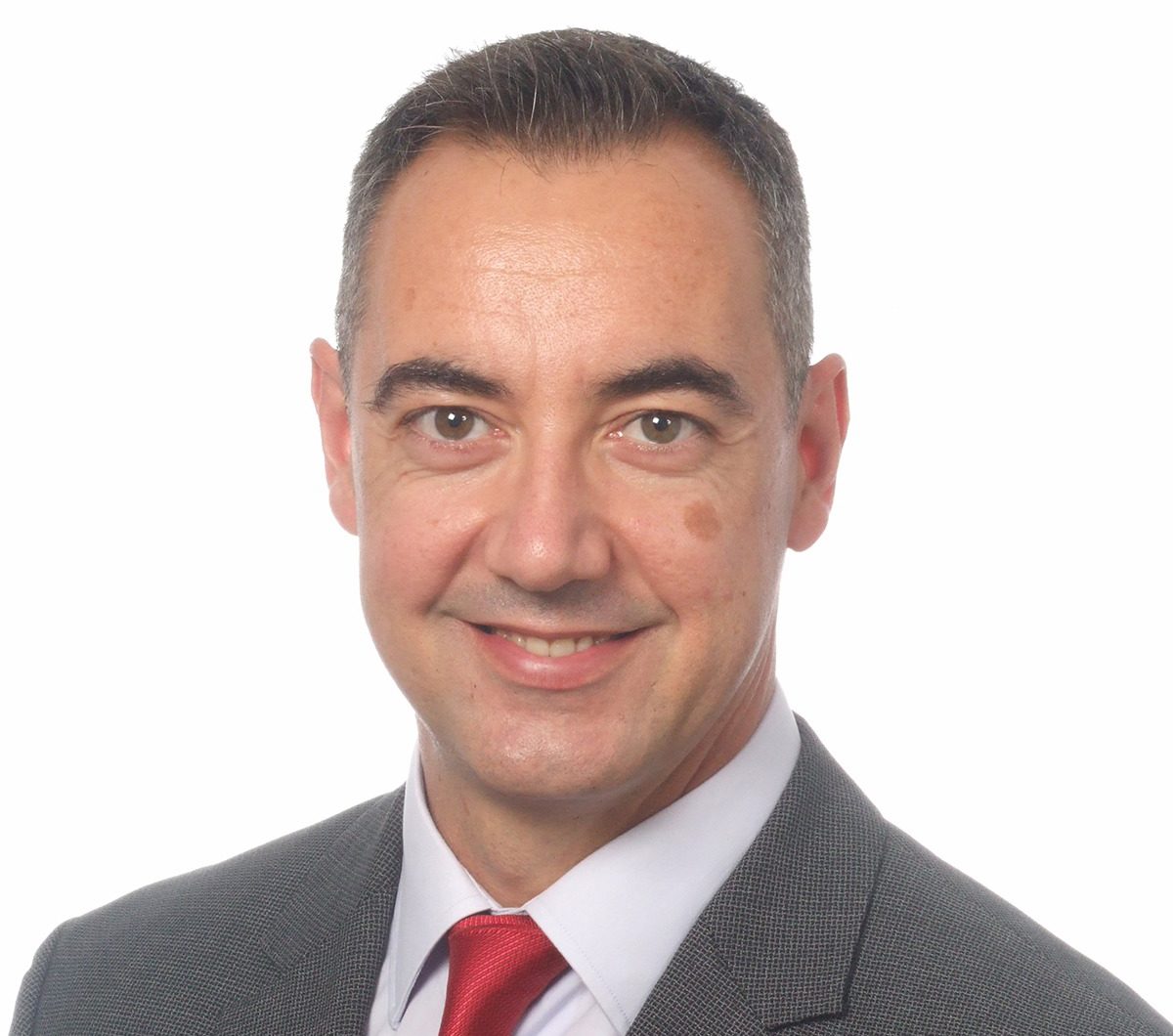
02 · The guest
David Carrion
Chief Strategy Officer, Gaming1
David Carrion calls himself a gambling rat from the age of 18. He started on the casino floor on Margarita Island, Venezuela in 1995, ran shifts at Casino Buenos Aires — one casino for a city of 21 million — launched Casino Asturias from zero in his Spanish hometown, and spent over a decade at PokerStars running live events across Latin America, including the PokerStars Caribbean Adventure, before moving into global digital marketing.
Today he is Chief Strategy Officer at Gaming1, the Belgian operator he helped take into four US states and is now building into a serious contender in Europe, backed by CVC Capital. As he puts it: if the job exists in gambling, he’s probably done it.
Follow David on LinkedIn →03 · Inside this episode
Moments worth queuing up
In their own words
“Launching USA was one of our biggest failures, and that’s why it’s one of my proudest moments.”
“There’s nothing more dangerous than a man that doesn’t know what he doesn’t know.”
“The higher you are, the harder it is to influence.”
“Growth is for sure on the other side of comfort.”
“There aren’t that many superheroes out there. There’s a lot of common sense and hard work.”
Key takeaways
What to take back to your desk
From doing to letting do. The moment you stop touching the chips, your resource is no longer your own skill — it’s your people. Know who is good at what, who is tired, who works well with whom, and productivity follows. People do a better job when they know they’re being looked after.
From knowing everything to knowing very little. Chips stuck in customs two days before a 1,000-player tournament taught David he didn’t have to know every specialist area. His job was to organise, orchestrate, and facilitate — and to remove the friction points permanently.
From argument to context. “What part of that is my problem and not your problem, David?” Arguing that something is important doesn’t move people. Understanding their friction — country by country, manager by manager — and solving the problems that matter to them does.
Ownership beats victimhood. The higher you go, the harder it is to influence — people have more opinions and take fewer yeses on authority alone. You can’t always solve it, but you almost always have more influence than you think.
A single, deadline-bound mission creates focus, pride, and muscle memory. Gaming1’s US launch put the whole organisation behind one thing — and each delivery like it makes the next commitment more credible. Being honest about your company’s real capabilities is one of the hardest disciplines.
Retreating can be a proud moment. Gaming1 exited the US when the maths stopped working — too much effort, not enough gain — and redeployed the learning into outperforming its European markets. Knowing when to stop is leadership too.
Full transcript
Read the full transcriptHide full transcript
David: It’s a rough industry. I’ve seen people shoot firearms in a casino. I’ve seen all kinds of fights. Latin America was wild at the time. Are we gonna run a great tournament or not? Are we gonna have players happy? Are we gonna do a really high-quality poker tournament? I was absolutely ignorant to all of this, and it was a very painful learning curve. I thought, okay, yeah, for sure this is gonna be the end of me. They will hire somebody more qualified. Somebody says, "Well, the chips aren’t here. They’re stuck in customs." I say, "Okay, do we have a plan B?" "No, we have no plan B. If they don’t get out of customs, we have no tournament." Two days before the tournament starts, Mark Scheinberg looked around and said, "It doesn’t look very crowded. Why are we not doing better?" And I say, "Well, Mark, it’s difficult. Not everybody’s behind the tournament, some of the countries struggle, it’s tough." He looked at me, like the room stopped, and he said, "And what part of that is my problem and not your problem, David?" At the end of the day, you have to make it work. You have to deliver. There is no space for not.
Leo: Hey, welcome to the iGaming Leader Podcast. I’m your host, Leo Judkins, founder of iGaming Leader Mastermind. And on this show, I sit down with some of the most inspirational and forward-thinking leaders in our industry, diving into the real challenges, high stakes decisions and lessons that shape our industry. If you are a VP, Director or an Executive in iGaming, this podcast is built for you. Before we dive in, a quick thank you to our sponsor Sumsub, the full cycle verification platform. Trusted by top iGaming operators worldwide, Sumsub helps onboard players quickly, stay compliant and prevent fraud, all without slowing growth. More information in the description.
Leo: Hey, everybody. Welcome to the iGaming Leader Podcast. My guest today calls himself a gambling rat from the age of 18. Started on the casino floor in Latin America in the late ’90s, was a shift manager at Casino Buenos Aires. By 2000, launched a casino from zero, ran the PokerStars Caribbean Adventure, which I’m super excited to talk about, and is now Chief Strategy Officer at Gaming1, where he’s taken them into four US states and made them a serious contender in Europe. As he puts it, if the job exists in gambling, he’s probably done it. Now nearly 30 years in, and the story we’re going to unpack today is how he went from knowing everything to knowing very little. David, welcome to the podcast. Great to have you.
David: Hi Leo, thanks for having me. Very excited to have a chat, get a few things out there, and look back at the past.
Leo: Yeah, man. I’m excited about it. Because, look, you’ve been in the industry for a very long time, starting at 18, like you said. You’re a gambling rat from the age of 18. What does the casino floor in the late ’90s teach you that kind of still shows up in your work today?
David: I started working in Venezuela in 1995. My dad worked in the industry, and we moved to Venezuela for his job. I was 18, and I wanted to start working while I was going to university, so I did a dealer training school, and after that I just never looked back. It’s been gambling since that day. Not really planned, it just happened. But it was a ton of fun at the time. The casino floor in a place like this — this was Margarita Island, this was pre-Chavez era, so this was booming. This is where everybody went for holidays in the country. There was a new law in Venezuela that shut down all the casinos in the country. This was the only one to reopen. It was built in resemblance of the Golden Nugget in Las Vegas. It was massive. It was a time where it was at the top of the wave, if you may. So it was a ton of fun. Now, I think that the retail and the land-based business — there are some codes there. There is some bonding with the people. You go through a lot of stuff. It’s a tough job, and you develop a way of caring for the people that you work with unlike anything I have seen. I’m sure other industries have that, for sure. But here it’s long hours. You live against the world, really. You wake up when everybody else goes to bed. You miss all the family occasions. It’s just the way it goes, so you have a second family in the job, and this develops a way of caring for others that maybe is not that natural in other industries. This is something I’ve carried with me always. And then perhaps because of the nature of the timing of it, or I don’t know, we were young, whatever it was — curiosity was a big deal when I started in retail. We were always thinking, "Why is this game rules like this? Why do they send that guy to that table when he’s a terrible dealer, but all of a sudden because the player is losing, they send him, and I’m so much better, and I can go faster, and I can go more accurate. But why can I not do anything to make anybody lose? Why is that important?" So I remember always talking with the guys. We were doing the training schools. We set up all the new games when they started. I remember the first time we saw Pai Gow Poker, it was like, "What the hell is this?" So the curiosity and the bond with the people — big-time things that have stuck with me since those days.
Leo: I remember being on Margarita in the early 2000s. It was amazing. When I asked you about your proudest moment, one of them that showed up was from 26 years ago — shift manager of Buenos Aires. Why did that still make your list?
David: This was a time where South America land-based was still developing and booming. I grew up in the north of Spain in a small town, Oviedo in Asturias. Never had any imagination I would ever leave there — I would live there forever. And then for life circumstances, my dad got a job and we moved out. Remember, this is almost pre-internet days. The world was smaller for us at the time. So my image of casinos was still very little formed. When I discovered the industry in Venezuela, all I knew was what I was seeing there. I took a trip to Vegas after a few years just before going to Buenos Aires, and for me that was like, okay, this is something else, right? And then I went to Buenos Aires, and the law passed in Buenos Aires and allowed this only casino in the city of Buenos Aires — not in the province, where there was already one in El Tigre, but really in the city. It was in the federal waters, which is why it passed, and it was a riverboat brought from Mississippi. You can imagine what this is. It’s one of the biggest cities in the world. You have 21 million people and one casino. At the beginning, people were showing how much money they had to decide if we allow them to go in or not. Imagine that. It’s crazy. That’s how busy it was. So the way to put this operation together was quite complex, and there were people from all around the world. There were people from the UK, from Argentina, from South Africa, from Macau. Wherever there was some form of proper gaming industry developed, there was somebody from there that came to Casino Buenos Aires to just get this thing going in time. So the amalgamation we had between pit bosses, shift managers, and so on was crazy. But it was good for me. It was like Disneyland. Everything was new. I had people I could talk about blackjack rules and games. I had people I could talk about drug lords and all the crazy stories of South Africa and this and that. It was amazing. But we’re talking about a property that had 2,000 employees. It was 24/7. It had over 2,000 slots, over 150 table games. It was very busy. So for me to find myself running this as a shift and in charge of the whole operation very early in my career was really a privilege and an opportunity that doesn’t often come around. At that time, I was young, but I could be trusted because my dad worked in the company as well. And this was as good as it gets, I think, from a professional career point of view — to be involved in something as dynamic and as close to the real thing as it gets without being in one of the real hubs of gaming. So for me, it still stands out as: how did I ever get in charge of that so early? It was like, okay, pinch yourself every day, but it was great.
Leo: Do you remember what it felt like, maybe the day that you were put in charge of it?
David: Because I started at the very bottom in casino retail, I’ve done every job in the casino. I’ve been in the cage, I’ve been in the slots, I’ve been in the tables, I’ve been on everything. It always felt quite natural and ready. I never had anxiety with the progression, because at the end of the day, as a shift manager, the buck stops with you during those eight hours that you’re there. But for the most part, you’ve seen what happens already. You just maybe didn’t have to make the final decision. You’ve seen people have arguments at tables because a dealer has made a mistake. You’ve seen a day being short of staff because some people didn’t show up, and you have to do wonders and ask people to stay over. You’ve seen days where you’re short of chips, and you have to maneuver around so tables don’t go to sleep. You’ve gone through all of that. The other advantage that for me was very natural at the time is I also knew everybody very well. So if you know how to delegate and you do it well, and you have a good team, it’s not that difficult. So it was more the excitement of saying, "Okay, I have an opportunity to influence a little bit the service I think we should be providing," than anything else. It wasn’t like you go from zero to 100 in one day. It was quite gradual in a way. It was just the scale was bigger, that’s all. Way more people, way more complexity.
Leo: Yeah, and more responsibility. Makes a lot of sense. So then 2004, with Casino Asturias, you launched that from zero. What did that teach you? Tell me a little bit more about that journey. That sounds awesome as well.
David: Not in a million years I would have thought that I would ever come back to Asturias, which is where I am from, to open a casino and be the manager of this thing. If you’d asked me when I was 15 years old, I would have said not in a million years there’s a chance that would ever happen. Yet, there we were. Through a friend that helped, a local group participated in the tender. They won the tender. They were looking for somebody, and they approached me because I was from there. So for me, it was exciting to be able to come back to Spain — even though I consider myself half Latin American and half Venezuelan — and live the dream that I was told. When I moved to South America, a lot of the casino managers were Spanish people because it was a Spanish company, CIRSA, and they were telling me all the big stories of when gambling was legalized in Spain in the late ’70s after Franco died. And I had this image of, oh, being a casino director in Spain is like, wow, amazing. So here we are with the opportunity to build this casino from zero — literally the construction, all the recruitment, the dealer school, the whole thing. Which we did. I was lucky to also have Sylvie, my wife, working with me during that. She was one of the pit bosses, so that was a lot of fun to do. And the biggest takeaway I take from this is that that was the first time I had an opportunity to create a culture from zero. Okay, it was a group that already had a culture, but this was a whole new vertical, a whole new dimension for them. And I was the expert, so everybody turned to me for guidance. So it was really the first time I could dictate what kind of attention to detail, what kind of discipline around certain parts of the business, what kind of culture with the people. And it’s funny that we had some friction at some points, because the culture of the group started to interact, and I had such a dominant role in the setup that the culture I wanted to put in place was overtaking other things. So I had to have some flexibility around that. But I would say the biggest takeaway was that — because I had done training schools before in multiple countries, and I had set up new rooms or expansions or things of that nature. That wasn’t that super difficult. But the opportunity to really create a culture… I mean, you take the people when they know nothing about the industry. You educate them for three, four, five months through the training school. You have such a great opportunity to really set the tone and the pace. So that was unique and not that common to have that opportunity.
Leo: Just to go a little bit deeper on that — what were some of the things that were important for you culture-wise to really make sure you landed? And perhaps things you still find important now in your career?
David: When I started in this industry, I was taught by people from Spain that were taught by people from the UK — the people that originally started retail gambling in Europe. So I was taught in a way that was very strict. The technical part was the priority, the technical excellence. Nobody told me you’re here to entertain a customer, this is a service industry. Nobody told me this is a mathematical business, we need volume, we need things to move along, we need flow. They told me if you don’t pick the card in such a way, you’re an idiot. It’s a little bit like the military kind of approach. And it did prepare me and others well to then face the challenges of being in front of the customers on the floor, when it’s a rough industry on many levels. So I can understand that you need to prepare people for roughness. But I think it was way too much and unnecessary. And believe me, I’ve seen people shoot firearms in a casino. I’ve seen all kinds of fights. Latin America was wild at the time. I’ve seen all these things. But in reality, nothing justifies that approach. It’s still a service industry, in my opinion. So for me, it was very important to teach people to understand and love the challenge of the job and being good at it — because it’s important that you’re good to provide quality service — but to really understand that this is a service industry, and that the customer is first and above everything else. It’s very easy in a retail casino to make a customer have a hard time. People come, they’re afraid. They don’t know what to do. They don’t know if they can ask change at a table in a certain way or another. They don’t know if what they’re gonna bet is too much or too little. They don’t know if they’re gonna look stupid. They don’t know if the person next to them is a millionaire or not. They’re intimidated. And the list goes on and on. So for me, it was super important that people understood that everybody counts. Because it’s so hierarchical in the land-based industry — or at least it was at the time — that a dealer would feel like, "Okay, I’m here. I’ll do what I have to do. That’s it. I question nothing. I value nothing. My contribution is very little." And it’s not true. At the end of the day, all the small moments of truth happen with a dealer. We used to always have the joke that — this is the dealer, this is the customer, and when you’re bored at a table, normally you’re looking that way, and as the customer is coming, you make sure you don’t make eye contact, because if you make eye contact, they’re gonna sit down, and now you have to work. It was that kind of mentality. And I was like, no, it’s the opposite. You should be inviting people to come to the table, and forget about the technical part, which is necessary, but… So it was about understanding that this is rough — people are gonna win, people are gonna lose, we’re gonna have bad nights — but this is a service industry done by people, and everybody counts, and every little touchpoint is super important, because by definition, it’s an intimidating environment.
Leo: Massively helps for retention and ultimately player lifetime value, which we all understand now, but maybe not so well back then. Then you managed the Caribbean Adventure tournament. Around the same time I was in poker as well, and I loved the whole setup. How was all of that?
David: That was different. That was a nice change, because coming from a purely casino industry, the customer is normally not very sophisticated. I think I never had a quality discussion with a customer about blackjack rules. They don’t care too much. They just want to be noticed and feel important and have someone to talk to and be appreciated. All of a sudden, I found myself in poker, which I played for a lot of years — and we started this in Latin America as well with the early live poker tables. And for multiple reasons, I ended up working for PokerStars and running live events in Latin America and eventually the PCA. This was a totally refreshing career change, because all of a sudden you have a customer that knows exactly what they want, that is very vocal about it, and you’re working for a company that puts the customer at the real center. So now it’s so much easier to know what the customer wants, so straightforward, that it’s a lot easier to do a good job. And because you’re in the middle — you’re just the organizer and facilitator — it was so much easier to align what we need to do and what the customer wants. To me, this was an amazing change. So PCA was, after the WSOP, the center of the universe of poker for 15 days every year in January. And for me, who was a fanboy of poker back in the days, being at the heart of it was amazing. We were really making a difference. If we decided to put something on the schedule, all of a sudden this could become a thing. I remember when we did the first Chinese poker live tournament — that never got anywhere, but we did it — or when we did the first 100K buy-in. This was a platform to really do things that had impact, and we were dealing with all the relevant poker players in the world at the time, because they were all coming. I think it’s a little bit overrated — all these big poker players. It’s nice to be around and you learn a lot, but they live out of the mass of the other poker players, the real losing players that make these tournaments succeed. So it was nice to be receiving both ends — the average Joe plus the professionals and the whole industry itself. And from an execution point of view, it was fantastic. This was really a ton of people. We spent about a month and ten days in the Bahamas every year, before and after the event, putting everything together. But a lot of very well-prepared people, and it ran really smooth, to be honest. We did it for 12 or 13 years in a row — with me, I think four years in a row — so it was already good when I got it, and it was just a continuation. It was all-you-can-eat poker. And it was also central for PokerStars during that period of the year, so you had all the support and all the attention of the rest of the company. It was TV production, the whole nine yards. One thing that many people don’t know is that we used to send people on a working holiday program to the PCA. Somewhere between 60 and 90 people would come to PCA and spend 15 days, of which they would work seven days and be on holiday seven days, paid by the company. So we had to produce this event with the majority of the core staff being different every year — people that never worked on the event before. But the culture in PokerStars was so strong around the customer and around poker that it worked really well. We had people running the players’ desk that was different every year. We had people doing registrations in the cage, different every year. People doing payouts and tournament stuff, different every year. Yet still, we managed every year to have the PokerStars touch, and people could really feel: okay, if I have a problem or if I need something, it’s aligned. We did this big approach where we really made sure that everybody understood that we were there to solve problems, and we took pride in whatever came up — who solved it the fastest. We had a daily board where we would say, "I had this problem yesterday, and I solved it like this." It was really cool.
Leo: Man, that’s amazing. I think back to it a lot — sitting in there in the middle of the night watching people play heads up, or going deep in a tournament. The guys being like legends, right? When I think about Stars as a business, the branding of it — that’s exactly how we as customers would perceive it as well. I was on the affiliate side, and even on the affiliate side, we would perceive it as such. The branding was phenomenal, the merch was phenomenal, customer support was phenomenal — everything. So where does that come from, you think, David? Because it’s a massive contrast from what you were saying earlier, where it’s all about the mechanics, the military operation. Here, it feels all about customer experience and player experience.
David: It was a testament to Isai and his approach to this. Isai and Mark both — I worked more with Mark than I did with Isai — and then the people they hired early on. When I talk about this with other people, it often comes to the same thing. This is the only company I have ever worked at, and probably will ever work at, that was absolutely clear about what the priority was. Whenever we had difficult meetings, it always ended up in the same value to resolve the decision: what is the best for the customer, what is the best from a poker point of view, period. No matter the cost, no matter the consequences. That was it. Now, a lot of people say, "Oh, it was easy. They had it easy because it was booming, and when the money is pouring through the door, it’s very easy to do." There is some of that, for sure. When you have a lot of success, it’s easier to hire the better person, even if it’s more expensive, or the better agency, or the better celebrity. Sure. But you still have to have the vision to go after it that way. If you look at the customer service — I lived in Costa Rica for a while, while I was doing the PCA in Latin America, and that’s where we had a big part of the customer service at the beginning. All these guys could talk about poker with anyone at any level for hours. So when you called in, when you had an issue, they knew what they were talking about. I came to PokerStars after a previous stage in CIRSA, having run Six Sigma programs and efficiencies. And I realized: okay, fine, you bring all of that. Great. We can do this cheaper. We can do this better. But at the end of the day, are we gonna run a great tournament or not? Are we gonna have players happy? Are we gonna do a really high-quality poker tournament? It’s so difficult to do that well. But they did manage it, because for a long period of time, you had to be a poker person to have a relevant role in PokerStars in some places, and this came through the entire culture. Of course, there were a lot of people hired who were very capable in every discipline of business — that was necessary — but somehow the majority had some affinity to poker. And this just came down. It was very, very strong.
Leo: I think you could see it everywhere, and that certainly wasn’t the case for many of the skins that were happening at the same time. I wanna talk a little bit about Stars and you moving into global marketing. From live events into global marketing — all of a sudden we’re talking about far higher pace, right? How did you make that move, and what surprised you the most in that transition from offline to online?
David: This was a bit of a gate opened by PCA, because PCA was so important and so central for PokerStars that I had to deal with everything. I had to deal with CRM, with poker room management, with the planning and execution of the satellites, with the TV teams, with public relations. At the end of the day, it forced you to deal with the entire company — in the planning, the execution, and the after. So this gave me great exposure to a ton of people. Obviously, it stretches you as well, and it’s a tough thing to do, but if you’re up for the challenge and you put your elbows down, you can get a lot out of it. So when it was sold, and when David Baazov and Amaya bought it and a bit of restructuring was done, I was offered to come over to headquarters — because of how long I had been in the company, because I knew the culture well, etcetera. And there was somebody running digital marketing at the time that was really good, but maybe from a leadership point of view could use some help, and that’s how it was presented to me. And I thought, okay, this is a great opportunity to get closer to the core business and really understand way better what things are about. And if common sense has taken me this far, I am sure it can probably take me farther. So here we go into the world of pixels and ROIs and Google and tracking and all that technical part of the business — which, I mean, I was absolutely ignorant to all of this in every sense, and it was a very painful learning curve. Very strong, because this person that was there left six months after I took on this role, and I was left alone. I thought, okay, yeah, for sure this is gonna be the end of me. They will hire somebody more qualified. And Rafi came and said, "You know what, David? It’s okay. Find someone to help you, and let’s build a good team under you, but stay and let’s continue." I was surprised at the time. We did that and we made it work, and we built the entire future of the digital marketing. At that time we launched BetStars, we launched Casino, so we built a team — SEO, PPC, affiliates, and so on. Unfortunately, very quickly after that, the whole cost-cutting and second stage of PokerStars started. So everything we had built, we had to stop. We stopped PokerStrategy, we stopped the deals with the majority of the affiliates, and we started trimming down all the communities we had built, the Team Pros and everything else. I was running the affiliates at the time we had to shut down the majority of it, so that wasn’t fun at all. But I think that sometimes growth is for sure on the other side of comfort, and you have to try. And it worked out for me, but it was tough. If you ask my wife, she will tell you this was one of the toughest parts of my career, because I had to learn so much in such a little time, and the expectation is that you’re gonna deliver and there is no time to wait. This was big budgets, big expectations. But I enjoyed it.
Leo: Man, that’s so funny how things come around. I was on the other side of that. I was at PokerStrategy at the time. I don’t know how many of the FTDs we did at Stars with PokerStrategy — I think something like six percent. And then that getting cut, and then Full Tilt dropping out, and then the iPoker skins — what a crazy time. On the other side of it, very stressful as well. But tell me more about that moment where that person left after six months. People react differently in moments of pressure. What was your response to being in that role, not having that same digital experience, feeling that this is gonna be the end of you?
David: First of all, there was already a decent team in place, so it’s not like if you lose this person, everything goes out. But from a strategic point of view, he was very strong and very capable. He went to Miniclip and did a great job there. I’ve always thought that there is something that comes with experience and formal education and proper preparation that allows you to do certain roles and certain things. Now, as I get older, I’ve come to think that it just shortens the curve to be effective. But a ton of what we do — there’s a lot of common sense in it. There’s a lot of leadership and delegation. So I thought, okay, let’s have an honest discussion around what we think needs to be done here — which is what I did have with Morten at the time, with Gino, and with Rafi — and said, "Okay, what is it that we’re trying to do here, and where is the gap, and where does the gap need to be filled? Before you panic on anything — is there really a real gap here or not? And if it is, okay, let’s see where we need resources to fill it." And I think the clear gap was more on the technical side. At the end of the day, it was not for me to solve that part. It was more for me to solve the organizational resources, the setup and the inspiration of the teams, ensuring that the ambition was stretched enough, understanding the complexity of the group and the need to deliver, prioritizing the spend and the resources. The person that was there before was filling that gap with their knowledge. As soon as we made sure we replaced that — no problem after that.
Leo: And especially something like Black Belt or Lean Six Sigma — all of those things will help you prepare for better processes, but it doesn’t fill the technical gap. You wrote about four specific transitions in your intake before we started recording, and I love them. They’re almost poetic. You talked about doing to letting do, knowing everything to knowing very little, argument to context, and smaller to bigger picture. Let’s talk about doing to letting do. What does that mean?
David: This was for me one of my first transitions or aha moments. I was a dealer. My job was doing. Nobody could do it for me. All I did was practice my hand skills, practice my calculation skills, practice my speed, my service, and just run that table the best way I could. And I really was good at it. I think about it now — I’d finish work, and I’d still practice at home. That’s how much I loved it, and that’s how good I wanted to be at it. So for me, it was a craft, and I devoted myself to it. That was 100% doing. You have a supervisor. You have a pit boss. I took pride in being faster than everyone, calculating things before they could keep up — that kind of competitiveness. And all of a sudden, I got my first pit boss job, and now I don’t touch a chip. I do nothing. They do everything, yet I’m responsible for how we perform on this pit tonight. That was the first big change. Before, my resources were my knowledge, my ability, and how I practiced. Now, my resource is the people I have here. I need to know everything about who’s good at what, who goes fast, who goes slow, who gets nervous on this type of table, who works well with whom, who has complex things at home and comes in tired. I wanted to get the most out of it, and because I had done that job before, it was very natural to say: I know I hate to be three hours in a row on a table without a break when we’re short of staff. I know I’m not good at blackjack and better at roulette. I know these customers like me, and these customers hate me. And you know that about everybody else, because you’ve been with everybody — either chipping on a roulette or being a supervisor. So I introduced new things in the way I thought we should do it. For example, because we had chairs at the time, when you were a supervisor, sometimes you could get stuck for three hours sitting on a chair looking at two roulettes. After 45 minutes, I would go to the chair, and I would send that person to replace another person on a table, and I would take that position for five minutes while they exchanged. Now they can go to the bathroom, come back. Now they can sit. And all of a sudden, the productivity went up dramatically. First of all, they know they’re being looked after, and you care about how they feel. Secondly, it’s easier for them to do a better job. So for me, this was my first real experience of going from doing to letting do. The feedback I got was instant — this is great, this works, things work better — and the productivity was there and followed through. That was my first big aha moment.
Leo: Love it. And it’s such a great example of also still being involved, right? I think that’s a leadership lesson through every single level of an organisation — being able to still do the job and people seeing that you’re still doing the job as well. Okay, so the second one you talked about is from knowing everything to knowing very little. I think every single person can relate to this. We believe we’re super knowledgeable, and then the more knowledge we have, the more we realise we actually know very little. When did you first realise that your operational expertise had become maybe a liability rather than an asset?
David: I think there is that saying that there’s nothing more dangerous than a man that doesn’t know what he doesn’t know. There have been many times, I’m sure like you and everyone else, where we’ve realised that. But there was a particular time when I joined PokerStars to take over the live events in Latin America. The first tournament was in Punta del Este in Uruguay. So okay, I arrive there, I’m meeting the team for the first time, and I arrive, I think, two days before the tournament starts. Some 1,000-and-something players are expected to come in. They’re coming, they’ve qualified, everything else. We’re having dinner, just catching up — I’m straight from the airport — and somebody says, "Well, the chips aren’t here." I say, "Okay, are they getting here tomorrow?" "We don’t know when they’re getting here, because they’re stuck in customs." I say, "Okay, and do we have a plan B?" "No, we have no plan B. If they don’t get out of customs, we have no tournament, no chips." This is two days before the tournament starts. So I say, "And why? What’s the problem?" "Well, we have one chip set, and we have to send it to every country, so we have to import it. It goes through a complicated importation process. It’s considered gambling equipment. Here, it got stuck. They want us to pay tax based on the face value of the chips." Now, in PokerStars at that time, that type of problem is: okay, the tournament has to happen. Pay whatever you have to pay. Get the chips there. Which is what we did in the end. But to me, that moment was the moment I realized: okay, there’s a ton of things that are gonna be happening here, because of the scale and the way this thing runs, that I have absolutely no idea about. I have no idea where we’re getting the merchandise, how it’s imported, what needs to be sent. I have no idea how the money from players’ accounts is transferring to the property and out of the property, and money laundering requirements, this and that. I have no idea about the media arrangements. There were so many specialist areas that I had absolutely no clue about. But I realized that I didn’t have to know either. What I needed to do was organize, orchestrate, and facilitate for people. So what was the first thing I did about the chips? I found a solution to never have to import chips again, so we don’t have that complexity in place. We made a deal with Copag at the time — a card and chip manufacturer from Brazil — they became a sponsor, gave us one chip set in every country. It stayed in the country, never had to leave, no importation, no shipping. We saved money. The list would be quite long on things of that nature. So it was mostly saying to everyone, "Okay, where are your friction points?" and just having the determination to say, "This should be better. Let’s make it better." Focus on facilitating, organizing, and using the skill the team has. I remember Jeffrey Haas, who was my boss at the time — one day at PCA we were talking, and he had a BlackBerry, 2010 I think this was. I picked it up because he forgot it on the table, and it had 517-whatever — a big number on the emails. And I say, "Jeffrey, this is crazy." And he says, "David, there’s a time in your career where you’re always gonna be behind from that moment on, so you gotta learn to deal with that." And for me, this LAPT transition — this not knowing everything and always being behind — that’s when it got real for me.
Leo: Such a good example. Good old BlackBerry. The third transition we’re talking about was influence through argument to influence through context. We all love arguing, we all love being right when we’re younger, and then later on we understand that’s probably not really how we’re gonna win somebody over. So how did that work for you? Give me an example of when an argument failed and context worked.
David: I had a big realization slap in the face on this. There was the 10th year anniversary of PCA, and we had made a big deal out of this, and we wanted to break 10,000 players in the main event. I had found a ton of difficulty. That was my first year really in charge of the whole event, running CRM and running the satellites. It was very difficult. I had to deal with every country manager telling me why they don’t wanna send players to PCA from Greece or from Finland — because they’re sending money out of the liquidity, they’re using media money, they have to send their journalists, this and that. So Mark arrived, and we walked the floor together — Mark Scheinberg — and we were in the middle of the room, and Mark looked around and said, "It doesn’t look very crowded." And I said, "Yeah, I think we’re gonna just about make the 10,000." He said, "Why are we not doing better?" And I say, "Well, Mark, it’s difficult. Not everybody’s behind the tournament. Some of the countries struggle with doing this and that. It’s tough." And that was one of the hardest moments for me. He looked at me like the room stopped, and he said, "And what part of that is my problem and not your problem, David?" And I was like, wow, this guy just put the whole weight of this thing being successful on my shoulders, because I’m running it. And I thought, you know what? He’s damn right. I did not manage to convince all these people of how important this is for us to make it more successful, and if I don’t do it, then who’s gonna do it? Maybe it didn’t happen in that second — maybe it happened a little later that day — but when I reflected on it, I thought, wow, okay, he’s right. And from that moment on, I decided: okay, what’s the problem here? Just arguing that the PCA was important, just arguing that the media eyes are on it — it’s just not enough. For some people, it didn’t really solve the friction and the problems that mattered to them. And that’s where for me the context was important. So from that point on, I made a list, country by country, country manager by country manager. I tried to understand: okay, what’s the problem here? Why do people in Finland not care about the PCA? How can we find a way to make this relevant? What segment of customers could be interested, and how can doing that help create some liquidity for other things? How can I get some other country to help with something? It’s a whole different approach. And it did get a lot better after that. And ever since, that stayed with me. It’s probably one of the hardest things in leadership. I always thought the higher you are, the easier it’s gonna be, but it’s not. The higher you are, the harder it is to influence — because the more senior you are, the more opinion people have, the less they’re going to take a yes just because you say so. And more often than not, you’ll be wrong, and they’ll be right. So yeah, that moment at PCA was really life-changing for me.
Leo: I think the other thing about leadership is all of the weight of those decisions on your shoulders. Maybe that moment meant a lot because it takes you from being at the receiving end — almost being the victim of not having a filled-out room — to actually taking control and taking ownership of it. So many people that never make it into leadership are the victim of everything happening around them, instead of taking ownership even though you don’t fully control the situation.
David: Absolutely. I think I still work on that every day. The natural behavior is to be a bit cynical sometimes, because it’s the easiest thing to do. "Well, how can you not see this? I’ve told you twenty times. Of course this is important." Or, "We’re never gonna be better as long as this and this is in place." And I think it’s a game of concessions. Nothing is perfect. You always have to give and take a little bit. It’s like a relationship to a certain degree. But it’s true that there have been parts for myself where I have been too lenient as well. Because I’m more of a people person, and I like to get along with everyone, I sometimes give up on things I strongly believe in just to preserve the relationship, to not escalate. And I’ve struggled over time with really separating what’s important from relationships, and understanding that it’s not really going to hurt the relationship. People appreciate you for who you are and how you behave, not necessarily whether you think differently about something the business should do. But it took me time to do that, and it still is something I have to pay attention to once in a while — because it’s super easy, especially with the big topics, to just blame something else and complain: "Well, what can I do?" There’s always more we can do. I don’t think you can always solve it, but a lot of the time you can have a ton more influence than you think, for sure.
Leo: And I think that example of that comment — "which part of this is my problem" — goes to show that it doesn’t break the relationship with him. In fact, it does the opposite. It puts rocket fuel into you: "I’m not gonna let this happen again. I’m gonna make damn sure that comment’s not gonna get made again."
David: I think that’s a great transition to the next point, which is more around the bigger picture and the smaller picture. Because for Mark, he was the owner. For him, it was about the end means of this. Why are we doing this? It has to be meaningful. So everything else that has to happen along the way is for you to do so that happens, and you will have to do whatever you have to do to set it up so it works. He was that type of leader, and that’s part of also why PokerStars had the success that it had. Whatever support you needed was there, but the accountability was strong, and everybody was expected to deliver what they had to deliver.
Leo: Yeah. Makes a lot of sense. So you’ve had a great career working all the way through, both offline and online, through different transitions. Who did you lean on in all of those transitions? Was there anybody that could help you figure it out, that you could talk to in moments of doubt? Or was it just you powering through and figuring it all out yourself?
David: There have been a few people here and there at times. I figured out a lot of it, or tried to figure out a lot of it for myself, but there have been a few people that called me out at times, and that helped a lot. Mark was one of them in this particular case. I worked with someone that’s become a very close friend when I was in CIRSA, in retail in two states, and with whom I spent a fair amount of time in Casino Buenos Aires. This was someone that had good experience and was very higher-management oriented. We talked a lot about the math of the business and the real productivity kind of approach — how do you really make an operation better? How do you make more money? Capacity, maximization, ROIs, things of this nature. It’s somebody I’ve kept a relationship with and talk about the business a lot — more from a technical and operational point of view than a leadership point of view, but also somebody I looked up to. And then I was quite lucky to work at CIRSA at a stage when Joaquim Agut was there — who is the president now, was the CEO back in the day. He came from General Electric, and I used to be part of the direction committees there once a month. It was a brutal full day that we used to have, but it was very educational, because it was incredible. We had so many hundreds of operations, and no matter what we did, this guy always found a way to put the finger where it hurt and always keep us honest and accountable. The relentless discipline with which this guy was about achieving results was incredible. It was a great bouncing board to have every so often, to see that at the end of the day, you have to make it work. You have to deliver. There is no space for not. It shaped a lot of the way in which I see things these days.
Leo: With Gaming1, you recently launched in the USA in four different states, and most recently made it a serious contender in Europe. You mentioned those as really proud moments for you as well. Why were those such proud moments?
David: I’ve been at Gaming1 now six years. I was running the entire interactive operation until a few months ago, and now I’m moving to a more strategic role, looking at the future. And launching USA was one of our biggest failures, and that’s why it’s one of my proudest moments. First of all, because for a relatively small company in our industry, from Belgium, to be able to be on the early wave of the United States being regulated, launching in four states — I thought that was something to be extremely proud of. I wasn’t the one that made the deal and the partnership in USA. Somebody else did, and they did a great job on that. I was only playing a part in launching. But we worked extremely hard. Technically, the stretch that this was for Gaming1 — to be ready to compete in the USA and launch in time with a quality sports product, with a bet builder we didn’t have at the time, with player props that didn’t exist so much in Europe at the time, and so on. It feels like ages ago, but this was only three years ago. The endless nights… We launched Ohio or Tennessee on the 1st of January, so there was no New Year’s Eve for anyone. Then we launched another state in August, so no summer holiday. This was really, really intense. And talk about an organization on its knees on every element of it — from compliance to legal, to product, to marketing, to everything. This was it. So to actually do it in time — eventually we exited, like a lot of other companies have had to do, because it’s really as competitive as it gets. We took a lot from it. We learned a lot from it. For me, it was truly the strongest stretch of leadership I have ever went through, because everything came together here — the pressure, the knowing what you don’t know. Everything we’ve talked about came together there. And at points, it took the worst out of me, because you just want things to work, and you push, and it’s hard to have patience and delegate when things are not going and you’re pressured against time. But we did it, and we went live, and things succeeded. And eventually, we decided: okay, too much effort, not enough gain. We can use all of this learning for other things. We did retreat, and it’s worked out really well. And that’s part of the pride also — realizing that and saying, you know what? It’s time to do something else and do what we do really well, better, and focus on this. And now we have private equity that came with us five years ago, CVC Capital — they’re almost on their fifth year now. We’re doing really, really well. We’re outperforming all the markets where we are, and it’s been a strong transformation of Gaming1 into what is really gonna be a force in Europe in the years to come. So it’s been quite a journey.
Leo: It’s funny, isn’t it? The US launch you’re talking about — state by state. I think it’s so interesting, that focus on a single mission — having a whole business focused behind one specific deadline and one specific topic. That creates that feeling of pride and belonging, everybody putting their shoulders behind the same thing. There’s a lesson in that as well: how can we create more of that in our businesses? It doesn’t have to be a US state launch. Ultimately, that’s what mission and vision are all about, just on a timescale.
David: It’s interesting you bring this up. I was having a conversation with Christopher, our CTO, not too long ago, where we were talking about this — that when we have a clear commitment to something, we often execute well on it. It’s the challenge to get that commitment and everybody behind it, and normally it has to do with a deadline, right? When we have to do a migration, when a license needs to be renewed — there is no alternative, because the consequence is too bad. Now during the summer, for example, we released collectible cards and some very cool stuff during the World Cup that we needed to do before the World Cup started. It started with a strong vision from someone that this is gonna be transformational, this is really gonna be a step forward, and you can inspire and rally the people behind it. You have that in common, and it’s big enough that it moves the needle, so you have that commitment from everybody else. And when you do it and it succeeds, it creates a muscle. It starts to develop a muscle memory. The more of those you can have, the more effective and credible you become when you’re saying this is the direction for product, this is the direction for whatever expansion. There is a risk there, because you don’t always get it right. But when you do, and if you get a few of them in a row, you can get a strong snowball momentum, and then it’s easier. But I would not underestimate the importance of focus. It’s so easy to get distracted, and to overestimate the impact of things. Being honest about the capabilities we have in our companies is one of the hardest things I find.
Leo: Yeah, we all have a tendency to overestimate. That makes sense. Very last question, David. If you could go back and meet that 18-year-old on the casino floor today, what would you tell him not to change?
David: I’d like to think I haven’t actually changed what I would tell him. I’d say remain curious, because there aren’t that many superheroes out there. There’s a lot of common sense and hard work. Be curious and care about the people. These are the two things I would say to keep. Because I deeply care about the people from the beginning — I came from the bottom. I worked with the people, and I developed that bond from early on. So everybody was someone to me as I grew up, and I just kept that with me. That has served me well. And I was very curious from day one. All the good things that have happened in my trajectory, in my career, are somehow related to the fact that I was curious about something at some point. And then a time came where that came to be a factor. So I haven’t lost that, because I think that’s just something innate in me. But it’s easy to suppress that at points. So I would say: just keep curious and keep caring about people.
Leo: Thank you very much, David. Great podcast. Thanks for taking the time today.
David: Thank you, Leo. I hope it’s helpful for people. I really enjoyed it, and it’s nice to do a little deed for the great work you do and the community that we have. I think it’s very nice to have these opportunities to learn from each other and to have spaces to communicate like this. Leadership, like everything, is very lonely, and in our industry, it’s nice to have opportunities like this. So thanks.
Thank you for listening to the iGaming Leader Podcast. If you are a VP, a director, founder, or an executive in iGaming making the biggest decisions alone, that's exactly what I've built The iGaming Leader Mastermind for. Small inner circles of vetted senior executives, weekly hot seats, and accountability from people who understand the effects of the decisions that you need to make. Find out more and apply at igamingleader.com. And a final thanks to our sponsor, Sumsub, the full cycle verification platform for iGaming operators. Player onboarding, AML, fraud prevention, all in one place. More at sumsub.com/gambling. See you next week.
This episode is sponsored by


The AI platform for marketing automation used by leading iGaming operators. Turn player data into real-time engagement to deliver timely, relevant experiences and strengthen retention and loyalty across every touchpoint.