
01 · Watch the episode
The full conversation
Watch on YouTube ↗ — if the embed above says restricted, it's a block on your network/Google Workspace account, not this page.
Or listen on:SpotifyApple Podcasts
02 · The guest
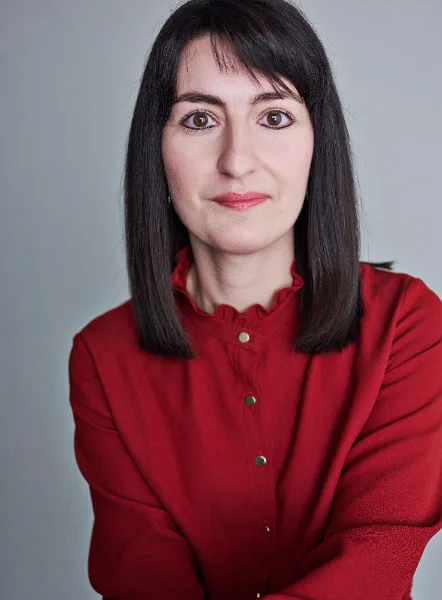
Grainne Hurst
CEO, Betting and Gaming Council
Grainne Hurst has been Chief Executive of the Betting and Gaming Council since September 2024, the first woman to hold the role. Before the BGC she spent almost a decade in corporate and regulatory affairs at Ladbrokes, GVC and Entain, latterly as Group Corporate Affairs Director, where she built the Changing for the Bettor safer gambling strategy. She began her career in Westminster, including as a special adviser at the Department for Work and Pensions, and is a board member of Global Gaming Women.
03 · Inside this episode
Moments worth queuing up
In their own words
“There's no such thing as a work-life balance.”
“Continue to hold your head up high, continue to do your best work.”
“You have to pick yourself back up, put on a brave face, move onward and upward.”
“The biggest issue and challenges for me were actually surviving then repositioning myself each time.”
“Being a straight player means sometimes being too direct, but it's better than playing political games.”
“Accept the principle, but let's work together on how we actually get there in practice.”
Full transcript
Read the full transcriptHide full transcript
I absolutely love politics, but I despise internal politics. So, I tried to minimize that at all costs, personally, but also within my team. I suddenly realized with a massive crash that some journeys aren't actually linear. And you know, sometimes you go up, you have to come down to kind of rebuild and then go up again. Work to live or live to work. And there was a realization for me that I actually live to work. And actually, I should be working to live. Welcome to the i Gaming Leader podcast where we uncover the human side of some of the most inspirational leaders in our industry. I'm
your host, Leo Judkins. And as an ex eye gaming director turned performance coach, I've worked with over 200 leaders from companies like Entain, bet365, Flutter, and many more to help them build the habits to achieve sustainable high performance. In these episodes, we share exactly what it takes for you to achieve the same. So, with that being said, let's dive in. [Music] Hey everybody, welcome to the I Gaming Leader podcast. I am here today with Gro, somebody that I've been looking forward to for so long to interview because um GR, we were talking about it before. I think you've got such a challenging job to manage. You've
got such a brilliant and interesting career that you've gone through. Um I think you're the example of resilience and I'd love to uh just setting the bar. Um so I'm really looking forward to to talking to you today. Thank you for joining on the podcast. Likewise, Leo. Thanks for having me. I want to start big straight away if that's okay. You've you mentioned that you had this really particular you know difficult period at when you were at insane when you've returned from from maternity leave um come back you've come back early from maternity leave and suddenly you have this big upheaval and you know you
actually got a promotion. Can you tell us a little bit more about that specific situation? how you got back and what happened afterwards instead of me actually explaining all of it. Yeah, sure. So, I came back early from my second maternity leave into a promoted role at I think it was GBC at the time. um obviously now in tain and absolutely loved the role was doing it for probably 6 to 9 months and then there was a change of CEO and restructure and then were a couple of us that were restructured off of the executive committee. It obviously wasn't positioned at the time as a
demotion. Uh but for me it felt like a very personal demotion. Um I was given additional responsibilities in another area of the business. Um but it was a very difficult challenge for me to manage because that was probably the first time in my career where things hadn't necessarily gone to plan. Not that I had a plan, but I was moving along a kind of linear journey. Um, and then I suddenly realized with a massive crash that some journeys aren't actually linear. And you know, sometimes you go up, you have to come down to kind of rebuild and then go up again. Um, which is fine
now with the benefit of hindsight, but at the time it was pretty painful and pretty personal. Um, and I think as humans we just generally think the worst. you know, when something happens, you don't think, oh, well, you know, it's not me. It's just a restructure. You think, oh god, what have I done wrong? I then started to wonder if I'd made the right decision to come back early. Um, looking back, I definitely did make the right decision. And it probably was actually the right decision that my role was changed because I've managed to expand my remit in other ways, which I've actually enjoyed more. But
yeah, it taught me to be resilient. It doesn't happen overnight, but you obviously have to pick yourself back up, put on a brave face, move onwards and upwards. Uh, which I think is pretty good standing for any kind of corporate professional life. Just I wasn't expecting it. So, it's a bit of a shock when it came. I can totally I can I can solely relate to that and I can so can imagine how when I was reading it and when I was when I first heard about the story I thought oh my god that must have been so difficult because you already come back right
from I think you described it as you felt some mum guilt already as well coming back right and you step into this role there's obviously you feel anxiety right you're going oh you're going back into work like What what was that like? What was that moment like when you actually how did that how did that happen? Was it did that happen slowly over one period? Did you find out on a specific at a specific on a specific day at a specific time? What did what did the moment look like? Yeah. So it was still in the period of co um not actual full lockdown co
but it was when most people were working from home. Um, so I got a phone call the night before to say that this was going to be announced in the next 24 48 hours. Um, so courtesy call to let me know. Obviously have time to process it, ask any questions. Um, so it was all done very amicably and sensibly and thoughtfully, but still when you have that conversation, I'm sure everybody who has had similar conversations, it hits you like a bus. and I wasn't expecting. Yeah. And I wasn't quite sure what to say. So thankfully I kind of took some time, you know, didn't kind
of respond automatically there and then just said, "Thanks for letting me know. Let me just kind of process it overnight, give you a call back in the morning, and then obviously spent some time mailing it over, talked to my husband about it." Um, and then went back the next day and had a bit more of a fuller conversation about what the ramifications of that looked like and the rationale behind the decision. uh but I would say characterized by total shock at the time and then you go through the roller coaster of emotions after that of kind of questioning why it's happened questioning what you do, how
you handle it. Um so yeah, it was tough but a good learning curve. Yeah. Yeah. I can I can so I can imagine it must have been so hard because it's just it's the public view, right? It's the visibility of it. It's your own. It's your selfworth. It's all of that. It's such a It's such a recipe of emo like it's this mix of emotions that all happens at the same time. So I can't even Yeah. Can't even imagine how how um so so when you look back at it now then growing you what's like I often say that our biggest challenges actually are our
biggest lessons. they often become our drivers for the things that we learn and provide the fuel for, you know, maybe making the changes that we want in in our careers or in our personal lives. So, so how has that specific challenge helped you um afterwards and in your future career? Yeah, I think so. I think what it taught me is that these decisions aren't personal. you know, although I felt like I had done something wrong, it was a restructure and particular roles didn't necessarily have the same weight on the executive committee that they might have done previously because one of the constant things in our
industry Leo as you know is change. So whilst you might have been integral to a part of the business for a partic period of time or a particular project, things move on and people move on and priorities change. So what I've learned is that change that comes in the industry is never normally personal. It's normally in the best interest of the business. It just sometimes can feel quite personal. But you almost need to subtract that element from it and think yes that's not great for me personally but actually let's look at the positives and actually it helps you to build resilience and also it helps
you to plan for if that were to happen to you again. or know how you might react if that happens to you again. And also, I think it makes you a better leader because I now understand how that felt if I then have to deliver that similar message to somebody else. I've been on the other on the receiving end of it. So, I'd like to think that I know how to manage those kind of difficult conversations better having been through it and, you know, witnessed it, experienced it, all of those roller coaster of emotions. So, I actually think it was worthwhile and it was the
right thing to do. And in a weird way, it's made me a better leader and probably put me on a better path than I might have been on, you know, coasting along Marilene with nothing ever really going wrong. So, yeah, it it builds you as a person. Yeah. Yeah, that that's so true. And it's just impossible to see when you're right in the middle of it, right? It's aure because Yes. It's it takes a lot of time and uh I also think yeah it definitely isn't personal but like you said it feels personal and then it's it's very difficult to let I think it's actually
impossible to let that go in the in the moment but yeah taking the lessons from it is is is really powerful. Um I want to go back to the if you yeah could you go back to all the way to the start of your kind of how you started out and how you then moved into gaming. I'd love to kind of go back to maybe your research days even and talk a little bit about kind of how you progressed through your career and how you ended up where you are today. Yeah, sure. So, I had absolutely no plan. Um would probably be the first thing
to say. Uh I went to university, studied a course that I really enjoyed, had no idea what I wanted to do. I didn't genuinely didn't actually know what a lobbyist was until I actually started working in parliament. So, I didn't know that my role now existed when I was at university looking for my first job. Um, but on my university course, quite a few of the people on it were interning in parliament and I thought, "Oh, that sounds quite interesting. Maybe I'll give that a go." Um, sent off a few application forms. Um, obviously had quite a few rejections as everybody does starting out in
their career. and then finally landed a jur with Sir Philip Davis who was the MP for Shipley in West Yorkshire. And and I vividly remember my interview because um I'd obviously been to uni and I put all this stuff about you know my academic rigor and my researching abilities and I sat down in the interview and Philillip said tell me about your time working at Mark Spencers on a Saturday and I thought what why but his background had been in customer service and he made a really good point that obviously to be a good MP you have to provide a really good service to his
constituents. So he looks for that quality in people that he employs even on his research side of the house. So got the job thanks to my Saturday job at Marks and Spencers. Um spent a wonderful couple of years there learning the ropes about life in politics and the parliamentary process and that's actually where I was introduced professionally to the gambling industry. So, previously had been using the products myself, you know, recreationally as we call it. Um, but was introduced to the kind of legal side, the regulatory side, working in parliament and really loved the kind of broad range of issues that betting gaming span, the
pace of constant change within the industry. Everybody that I engaged with seemed really intelligent and strategic, but also quite down to earth and really good fun and didn't necessarily think at that moment in time, this is an industry that I'm going to work in for definite, but really enjoyed learning about it and then kind of left parliament, joined an agency, didn't really think any more about it until I'd done a few more jobs and I was a special adviser for Eston when she was in the department for work from pensions. She sadly lost her seat in the 2015 German election. And then I was looking
for work and I saw the Lab Brooks job was being advertised and I thought, "Oh, I've got some gaming knowledge from working in Parliament way back when. I like using the product. Maybe I could combine the two." Um and then I have been in and around the industry for the best part of 10 years ever since mainly at LabRox Coral GBC and tain in their various mergers and acquisitions and then joined the betting gaming council about nine months ago. Such a turbulent time, right? you've been through so much turbulence especially 10 or GBC or Lrogs and like the amount of CEOs you must have gone
through and and the the changes um like maybe let's go back to to that time if that's okay what were um yeah what were some of the biggest challenges you've you've experienced during your time through all those mergers and acquisitions and all those changes that have happened in that business during your time there? No, probably surviving. It's one of the biggest challenges cuz obviously when there is a change at the top either in CEO or mergers and acquisitions, there is a question mark effectively over everybody's head. you know, if you have a counterpart in the other business which you've merged with who does the same
job, you obviously have to go headtohead and you know, may the best person win. Um, so there's a lot of kind of just surviving and continuing in your current role if you're enjoying it obviously, which I was. Um, so lots of change. And then I guess the big challenge is obviously kind of tweaking and resetting your goals, your priorities, your strategies, your vision for the incoming new leadership. You know, and with every new CEO, there's not necessarily a revolution, but there's a kind of repositioning of certain priorities that come kind of further up down the agenda. So, one thing I learned quite quickly was to
try and position myself as a kind of niche expert in my particular area. And there are lots of people that did what I did and do what I do. Um, but one of my benefits when GBC acquired Labros and Coral was that GBC had very little exposure to the UK market prior to acquiring Labros and Coral. So there was nobody doing my sort of role because they didn't need it. And then GBC acquired Nabrook Brooks and Coral and thought, "Holy days, what do I do with this UK regulatory world that I've walked into?" And it was right at the heart of the fixed ops betting
terminals debate at the time. So huge UK exposure, huge regulatory issues which for me helpfully kind of propelled my role and remit and what I do higher up the agenda internally because they needed somebody to educate them on what they do and how they should do it and what were the opportunities and what the challenges. So for me being in the right place at the right time being the expert on particular issues I think set me up for success internally because once you're a trusted colleague and have shown that you're able to you know navigate difficult issues they're then more willing to kind of trust
you with other issues and broaden your remit. So I think to go back to your question, the biggest issue and challenges for me were actually surviving and then repositioning myself each time to be, you know, important in the role I was in for the business. Yeah, it makes a lot of sense. I think um that's one of the things, isn't it, Grant? you have such different cultures as well. Um, there's a merger or there's an acquisition. A lot of one of the big things that happens in most places is that there's a lot of there's a lot of survival happening as well, right? There's people
that are lashing out and playing crazy games and trying to make sure that they they keep their position. Um, how did you how did you navigate that? Did you struggle with those kind of things? I know lots of people find it really difficult to then stay authentic, stay themselves. How how did that go for you? Yeah. So, I didn't find it that I didn't personally find it difficult. Um I've always been quite a straight player. So, um I mean you probably need to ask people who've worked with me rather than me cuz everybody likes to write their own reviews. Um, but I've always liked to
just be authentic. And so I've never I don't think I've ever pretended to be something that I'm not or someone I'm not, which then later down the line people get disappointed about. It's almost the opposite in that I can sometimes be maybe a bit too direct in, you know, people what I think or how I see it or how I feel, which sometimes might get me in trouble rather than playing political games. I absolutely love politics, but I despise internal politics. So I try to minimize that at all cost personally but also within my team because you're right it gets toxic you know people trying
to you know josts for position and it's just not good. Um, I also want to talk a little bit about the mum guilt we were talking about earlier and be actually before we started talking we talked about work life balance and how that's just impossible and and is unattainable for most is not a thing. Um, so I'd love to hear your experience with that. how you how that perhaps has formed over time because like I've got two kids just like you and I know in the beginning I had this certain image in my head of what that should look like right as a as a
good parent but also somebody that's focused on their career and then that clashed and didn't work out so and then it you know I kind of redefined it. How did that go for you? Yeah. So it's constant I think is what I would say. Um actually maybe it's not constant maybe it comes in waves. Um, but what I've learned or what I think is that there's no such thing as a work life balance. As we were saying earlier, Leo, I think that that concept is actually quite problematic because it makes people think that there is this great panacea and you can have it all and
everything's equal and you can do your work and then in your free time you can be a mom. when actually the two worlds constantly collide. And I'm fine with that. You know, my kids are my priority, but sometimes my work has to be my priority. But I accept that. I'm proud of it. You know, I want my kids to be proud of me. Uh but equally, it's not for everybody. So, one of my big things is not judging one another. You know, we shouldn't we shouldn't look at somebody who works full-time and has kids and think they're doing a great job. And equally, we shouldn't
look at stay-at-home parents and think they're doing a good job. It's whatever works for you. And that's so true, right? It's not it's it's it's unattainable. And and also, it's okay, right? If if that's what you want to do. If you want to work fewer hours, that's great. If you want to be a careerist, that's also great. It's not there's not um I think that's probably one of the big problems that we have when we think everything needs to be done in a certain way and we almost we almost box ourselves in and it's about figuring that out. Um how how's that for you now? What's
what does that look like for you now? It's is it up and down depending on kind of what works looks like for the week, for the month, what seasons you go through? What what does that look like now? On a Sunday night, my husband and I will sit down and basically plan the week, which is, you know, where am I on a Monday, where is he on a Monday, where am I on a Tuesday, where is he on a Tuesday? So, every week is different. Uh, but we're really lucky. Uh, we have grandparents who help, you know, our kids school are really good with after
school clubs and morning clubs. Um, so I'm not quite sure how we make it work is my honest answer, but we make it work from week to week, day to day. Um, and yeah, I hope my kids have a happy life. It's just a bit hectic sometimes. Yeah. Um, that's just the way it is and that's totally okay. Um, I also wanted to talk a little bit about uh before we dive into your current role, I wanted to talk a little bit about um global gaming women if that's okay. you uh you mentioned so so Julia Vigans actually suggested you for the the podcast. She's
one of one of members on our on our mastermind. Ah yeah amazing. Um she's on a mastermind and she like I know how much great work you you do. Um one of the things that I saw you saying is that you called it almost like your personal board of dire your personal advisory board. Um, I'd love to hear a little bit more about that because I'd imagine in your position the like the higher you get the thinner the air gets. There's very few people to talk to and just having people to talk to that understand the challenges that you're in I think is really crucial. So, can
you share a little bit more about what you mean with that personal advisory board and how important uh environment is for you? Yeah. So, it's hugely important. I think not. Sometimes it's professional and they can give you advice, but sometimes it's just a chat. You know, if you've had a good day and you want to share it or you've had a bad day and you want to moan about it, yes, you can do that with your family or your friends outside of work. But having people that have a some knowledge of the industry is really important. Um I find anyway because you don't have to
necessarily explain the issues to get them up to speed to understand what it is your gripe is or your you know successes. You can kind of just cut straight to it. So um really proud of the work that we're doing with Global Game Women. I would encourage everybody to if they haven't already to sign up. It's free of charge to join and we run amazing networks of women from all levels within the industry and now across the globe who can share their experiences both uh personally and professionally. Um and it's just a really great sounding board for people to go to for advice or for
solace. Um and also friendship. You know, I have loads of friends outside of work. Uh, but I've also made some of the best friends through my global gaming women network. You know, we we volunteer together outside of hours. You know, we meet up in the holidays. We meet up for drinks, for dinner, for coffee. You know, it's not just a professional board of directors. They're also genuinely now my friends and we celebrate birthdays together. Um, and it just I think helps keep you sane in, you know, a busy world where everything's currently changing. Um, yeah. So, it's great. I highly recommend it to anybody who
hasn't already checked it out. Love it. I think that's such an important insight because I think it's it's yeah people people people struggle to understand how fast-paced the industry is but I also like especially in your role you're we were talking about it beforehand where you know you're talking to operators and you're kind of you're in a in a position now with with BGC right where that's very different from being at how have you found that transition and moving into into your current position and holding yeah being the the you know speaking to to operators in that capacity. Yeah, very different. I have been used
to being almost the backroom support, you know, working for Entain. Um, agreeing obviously helping to deliver the Entain strategy. Um, obviously, you know, being the face of Entain in certain elements, but also kind of deferring to other folks within Entain. And I only really had one course of action, which was the Entain way. So again, in hindsight, life was a lot easier before because I had one strategy to deliver. Um, now obviously I have one strategy at the BGC, but I have a lot of members that we engage with, we listen to, we negotiate, you know, we try where possible to present the consensus view
and speak with one voice. But, you know, I'd be disingenuous, Leo, if I was sat here saying that that's easy to achieve on every issue because it's definitely not. And that wasn't something that I was necessarily exposed to at Entain. You know, you have your kind of internal uh negotiating, but you're all under the same banner. Whereas here I'm trying to bring together lots of different ideas, concepts, positions, commercial interests um to get to a place which is a better or greater good for the industry and that is easier on some aspects than it is on others. Depends what the issue is. The industry I'm
now proud to say does speak with one voice. Um, but I probably hadn't planned for the process of getting to that point internally, you know, behind the scenes. Uh, which again is why for me the personal board of directors is really important as a sounding board because I'm not necessarily well I'm definitely not a marketing guru, you know. So if I need some marketing advice or assistance, yes, I can get it internally at the BGC. Yes, I can go to members, but equally I can go and get an independent view from my personal board of directors, some of whom are marketing experts. You know, same
with product development. It just completely broadens your horizons and gives you a whole other world of expertise and knowledge and advice which you don't get directly at work and you don't get at home if your you know family aren't in the industry and it's an expert but independent layer which yeah it's literally priceless for me in in navigating my new role. Love that. I love that. I you know and I can so imagine that because something like uh changing for the better and tain right you get everybody behind it and then the like you said everybody's under the same banner and everybody moves toward that
same same goal positioned you guys as an industry leader on on safer gambling and but I also imagine that the white paper implementation now or with um affordability checks there's such different there's not there's such different opinions ions on how on implementation on kind of what that means for you know for the business itself. So how do you how do you manage such high stakes and and complex challenges with with those partners? Yeah. So I would actually say on most issues the members are aligned. So if we look at the white paper, the BGC was supportive of or calling for most of the issues that
are within the white paper. So that's that's a really good starting point. Um but it's not just the members that we obviously have to communicate with and negotiate with. um we are I would say aligned but we then have to make sure that we're talking to the government and we're talking to the regulator and we're talking to the media and they're not necessarily always aligned on you know our our our path or our course of action. So the best way I found to navigate it is to really be an expert in the particular subject. So you're talking from a position of evidence and knowledge. you
know, you're not going into conversations and negotiations with a position with nothing to back it up with. Um, and also being kind of understanding of the I wouldn't say opposition, but the other person's position. So, you know, we're at point A and they're at point B. Is there a middle ground in between which helps our position and helps their position? So nobody is coming out of it feeling like they haven't necessarily got out what they were trying to get out of it because we all genuinely agree that things like affordability are the right thing to do for the industry. We just need to make sure
that we deliver it in the right way. So we accept the premise and we accept the principle but let's work together on how we actually get there in practice. And you know we test and trial it. If it's not working we revisit. we test and trial it again until we make sure we get it right. I think it's about being collaborative and consily rather than, you know, trying to railroad people into your way of thinking. Yeah, it's um Yeah, it makes sense. and and and it's so easy to it's also so easy to make the wrong decisions on on on kind of either side of
that on going too going too restrictive or going or not being restrictive like all of that is is such a difficult balance because there is no one answer there is no you know there is of course there is of course research and there is of course but but in the end it's all opinions on how how to implement and this will be very different between different operators. So, how do you um what do you find what what do you find most challenging in in your role today in in those conversations that you're having and in in the day-to-day interactions that you have? Yeah. So, I
think there's always going to be a debate. You know, when you have opposite sides of an argument or something, there's always going to be a debate. I think one of the things that I find most challenging, it's not necessarily on affordability, but one of the things I find most challenging is how skewed the debate can sometimes get. Um, so the media debate, you know, the kind of public debate about betting and gaming can often be very one-sided and often isn't founded on evidence. it's opinions or it's, you know, preconceived ideas, it's not actually grounded in the reality or the figures or the facts or the
numbers. And so one of the key focus areas for me at the BGC is to set BGC up to be the evidence-led body which has access to industry data and can almost bust some of the myths that are out there in order so we have a kind of true reflection of what's going on and the debate isn't skewed one way or another. So I'd say that's probably my biggest challenge and it's also my biggest frustration. you know, when I read things that just simply aren't true and it's the role of the standards body to really challenge that, which is what we're doing. Yeah. Love it. Uh
such a great point because uh yes, very often it's anecdotal or very often it's opinionled and and completely it needs to be uh needs to be data data. Uh so I love that really I really think that's a that's a great point. Um, some final questions, Groia, if you go back to to that person that had to rebuild herself, you know, after after um after he came back from maternity and after that demotion and like there's so many other people that will even listeners that will will go through that same situation, might be in that same situation perhaps through a merger or perhaps for a
reorganization. Uh they find themselves in very uncertain waters. If you would go back to that person those years all those years ago, what would you what would you tell her to help her with um managing those challenges? Great question. I would tell her to stay strong. Um but it will get better. Even though it didn't necessar or doesn't feel like it at the time, it will get better. I would say, you know, continue to hold your head up high. Continue to do your best work. It's only a blip. You know, trust your instincts and basically you will be able to build back better from it. You
know, kind of uh I won't swear. Uh but don't let them get you down is probably what I would say to my younger self. Love that. Okay. And um my very last one. So for anybody that's on the other side of it, so for anybody feeling isolated at the top perhaps because they they've progressed very quickly, um high level position, their partner doesn't want to hear about work anymore, their friends don't understand because they're not in the industry and perhaps they can't talk to their team because the team would freak out if they knew what was really going up going on inside. What would you
say to them? What are some of the things that have helped you most to kind of manage the isolation that we all sometimes feel in? Yeah, and know I get that. So, it can be very lonely um in whatever position you're in. If you're going through a difficult time, it I mean it sounds a bit like a plug again for global gaming women. But if you're a female in the industry, I would say try and build up a personal board of directors, whatever you call it, in whatever shape or form that takes. doesn't have to be via Global Gaming Women. You know, if you just
have a network of women that you find you can talk to that might be able to help, then go for it. Um, just as long as you have that network, I think that's really important. Um, the network doesn't just have to be women, I would also say. So, I've I've had and have some really good male mentors that I speak to, you know, about female issues, but non-female issues. So, I think having a diverse support network in whatever it looks like is really important. Um, and I would say find some time for yourself again in whatever shape or form that looks like. Um, so I'm
no athlete, but I like to go running because I find that it kind of clears my mind. Um, you know, it doesn't have to be exercise, could be reading a book, could be learning a language, you know, don't just fixate on work. And the reason I say that and think that is because a few years ago somebody said to me in a similar kind of setting to this, do you work to live or live to work? And there was the realization for me that I actually live to work and actually I should be working to live. Um, which was a kind of rebalancing point for
me in my life. You know, work is important but it's not the be all and end all. We are more rounded beings than that. So yeah, take time for yourself. That's what I would also say. Love it. Thank you very much, Gro, for being so open and honest and coming on to the podcast today. Really enjoyed the conversation. Yeah, I've loved it. Thank you for joining me on the i Gaming Leader podcast. If you enjoyed today's episode, head over to iamingleer.com for more conversations and insights. Don't forget to subscribe to this podcast. I'm your host, Leo Judkins, and I hope to see you next week. [Music]
This episode is sponsored by


The AI platform for marketing automation used by leading iGaming operators. Turn player data into real-time engagement to deliver timely, relevant experiences and strengthen retention and loyalty across every touchpoint.
Related episodes