
01 · Watch the episode
The full conversation
Watch on YouTube ↗ — if the embed above says restricted, it's a block on your network/Google Workspace account, not this page.
Or listen on:SpotifyApple Podcasts
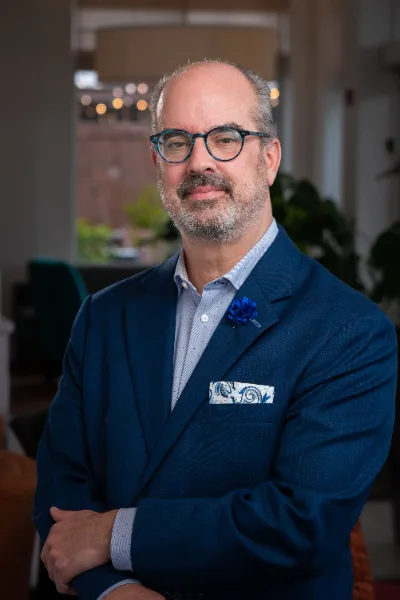
02 · The guest
William J. Pascrell III
Partner, Princeton Public Affairs Group
Bill Pascrell, III, Partner, Princeton Public Affairs Group, Inc. With a prominent career in state, federal, and global public affairs, William J. Pascrell, III, more commonly known as BPIII, is a lobbyist with PPAG. His extensive work in a broad array of industries, particularly gambling and cannabis, has made an impact on the success of PPAG’s clients and the firm as a whole. Gaming In the gaming sector, BPIII has been a lawyer, strategic advisor and consultant throughout the U.S., Canada, Israel, Europe, South America and Australia. He has become the nation’s top expert with regards to internet gaming, lottery, horse racing, poker, esports and sports betting. BPIII led the successful 10 year campaign to legalize sports betting in the US culminating with the repeal of PASPA by the US Supreme Court in 2018. BPIII lead a successful multi-year campaign to pass the first in the Nation On Line Gaming Act in NJ. He worked to develop the regulatory regime put in force prior to launch. BPIII continues to advise state governments across the Nation on issues involving the gaming industry. He serves in a broad variety of roles, including: • Member of the Board, Entain Foundation US • Founder, Board Member and Faculty of the Seton Hall University Law School’s Gaming, Compliance & Integrity Bootcamp • Member of the Supervisory Board of Directors of Betegy, LLC • Advisory Board Member, Gamban • Member and advisor of the ICE Ampersand Assembly and GiGSE, Global Internet Gaming and Sports Experts • Executive Director, AI2G American Institute for i-Gaming • Member, IMGL • Member of the Advisory Board of Wagr Score • Member of Advisory Board of Give Beter • Member of Advisory Board of eSports company Most Vicious Players • Member of Advisory Board of AEU, Amateur eSports Union • Member of the iGaming Next Board of Advisors • President, North America, A Game Above Strategic Advisory BPIII served as a Member of the Murphy for Governor Finance Committee and Counsel to NJ Governor Murphy Transition Team. BPIII served as an adviser to John Kerry’s National Presidential campaign, an esteemed advisor to US Senator and Governor Jon Corzine, US Senator Frank Lautenberg, US Senator Robert Menendez, Congressman Robert Roe, Herb Klein, Albio Sires, and Governor James McGreevey. Passaic County Counsel BPIII served as the Passaic County Counsel from 1998 to 2019, starting with his unanimous appointment by the Passaic County Freeholder Board. Nonprofit and Board Involvement BPIII serves on the Board of Directors for the NJ Community Development Corporation, Habitat for Humanity, Juvenile Diabetes Research Foundation, the United Way of Passaic County. BPIII is also a founder and member of the Board of Directors of Freedom Bank, a federally and state charted NJ Bank. He served as President of North Jersey Country Club from 2016 to 2019. Education BPIII commenced his undergraduate career at Rutgers University, graduating Cum Laude from the Eagleton Institute of Politics and Public Administration. Attending Seton Hall Law School prepared him for Harvard University’s Kennedy School of Government Senior Executives in State Government Program. BPIII is a member of the bar in Washington, D.C. and New Jersey, and is admitted to practice before the United States Supreme Court.
Follow William on LinkedIn →03 · Inside this episode
Moments worth queuing up
In their own words
“I have the scars and the bruises to show I was a small gladiator in this fight.”
“Give me 10% of 40 million and I'll get this done in two years. And we did.”
“I could have treated my adversaries more as a happy warrior than as an angry gladiator.”
“Titles come and go. What matters is how we treat each other.”
Full transcript
Read the full transcriptHide full transcript
I have the scars and the bruises to show that I was a small gladiator in this fight cuz I was up against some powerful interest. I lost a lot of business. I work hard. I'm not the brightest ship in the port, but nobody's going to work harder than me. I didn't get the courtesy of any of those casino mogul calling me and talking it through. When they found out I was on boarding poker stars to bring I gaming to America, I lost them all. And I really thought that I was going to lose my job. But Eastside Shawnberg said to me, "Bill, I need you
focused on the value proposition of being I gaming. I don't need you focused on how you're going to pay your mortgage." So Eastside took care of me. He was spending $40 million a year in lobbyists in Washington to get a bill passed in Congress. And I said to him, "You're never going to get a bill passed in Congress. Congress doesn't regulate gaming. These people are taking your money. You've been doing it year over year. You haven't even gotten a committee hearing. I said, "Give me 10% of that money. One time, not annually, one time. 10% of $40 million and I'll get this done in 2
years." And we did. I had a migraine headache, a really bad headache. And my mom takes me to the hospital and I hear the doctor take my parents out of the room, shut the door and he said to my mom and dad, I think your son has spinal menitis and if he does, this is going to be a big problem, life-threatening. I was in a coma for 45 days. I lost half my body mass. I developed diabetes, juvenile diabetes from that. Seven spinal taps in the course of 45 days trying to monitor it. That summer, seven teachers died from spinal menagitis. That changed my life
forever. He has to go on a congressional trip abroad. And my dad said, "Billy, would you like to come?" So, I went with him to Israel. I had to pay my own way. So, we stayed at the King David Hotel. He says, "We got to go out tonight. I don't want to go to this dinner. It's a formal dinner or whatever and it'll be okay. But there's two special agents outside with long guns that are there to protect us. They're not going to let us go wander. So, this is what you're going to do. You're going to go to the end of the hallway. They're
going to follow you. I'm going to sneak down the staircase cuz if I take the elevator, they'll hear it. I said, "Dad, hold on. Hold on." But then what am I going to do? Because you figure it out. You find a way to get there. my adversaries, the NFL, all their lobbyists, the brick andmortar casinos that were against us. I think I could have treated them more as a happy warrior than as an angry gladiator. I felt very angry at the way I was being treated, disrespected. It was me versus the world, so I had to be really tough. And had I knew the outcome, I
might have been more gentlemanly along the way. Welcome to the i Gaming Leader podcast where we uncover the human side of some of the most inspirational leaders in our industry. I'm your host Leo Jutkins and as an ex eye gaming director turned performance coach, I've worked with over 200 leaders from companies like Entain, bet365, Flutter and many more to help them build the habits to achieve sustainable high performance. In these episodes, we share exactly what it takes for you to achieve the same. So, with that being said, let's dive in. Hey everybody, welcome to the I Gaming Leader podcast. I am here with Bill Bascal
the third. Amazing guest who Bill we've met in uh in Lisbon. Julia introduced us. Really cool. Bill has quarterbacked a 10-year legal battle bringing sports betting to America. In that journey, lost every single major client he had taken on. He's endured consecutive legal defeats and actually won a few as well. And just uh unfortunately just over we were just talking about it over just over a year ago he lost his his dad uh who was his best friend has gone through so many ups and downs uh Bill that uh yeah we're going to talk about what leadership actually looks like when nobody's watching. I'm really
excited to talk to you today Bill. Thank you for being on the podcast. >> Leo, thank you for having me. I'm very excited about this. It was a pleasure to meet you just a few short weeks ago in Lisbon and you're a dynamic personality and I had a great vibe when I first met you and that's all that matters. >> Thank you very much. Say hi you taking the time Bill. I I wanted to start with um this kind of this yeah this this thing that you're called right the architect of American sports betting which I absolutely love. When when you hear that do you
feel that that's accurate? What does that mean to you and how, you know, how do you feel when you hear that? >> You know, Leo, um, I'm 61 years old. I'm an old man and I've lived a a decent life, but it hasn't been an easy life, but, uh, the way I was raised and brought up in the humble town of Patterson, New Jersey, which is very, it's sort of like Liverpool, okay, Patterson, it's got a lot of history. My dad was the mayor there. But that experience and you know my brothers and I felt Leo growing up. We felt jealous of a lot of
our friends because we went to Catholic high school and grammar school because they had money and and they had privilege and you know when they turned 16 they got a car. We didn't couldn't afford it. That was the best gift my parents could give me. Now my parents provided for us paid for our college or law school. We had food on the table. uh we had clothes on our backs, but you know, if you're if you're born with privilege, you're really not given the full opportunity of appreciating what the most of the world has to go through every day. So, it's a nice very nice
characterization to say I was the architect of something. I have the the the scars and the bruises to show that I was a a small gladiator in this fight. I call it David versus Goliath because I was up against some powerful interests. I lost a lot of business, but nobody's going to cry a tear for me because I work hard. I'm not the brightest ship in the port, but nobody's going to work harder than me. I mean, I I think early, I go late. I'm not a 9-to-f5 guy. And the most important thing I will tell you is I love a challenge. I don't like
just to have clients who hire me that have easy stuff. And I have a lot of stories to tell about the challenges. My best ever experience was meeting a guy by the name of Joe Brennan who's an American. He used to work for Google and he formed an organization called IMEGA, the Interactive Media Entertainment Gaming Association. Joe's well known in the industry is great and smart, far smarter than me, but he's never been able to monetize his intellect. And so, I've tried to help him a little bit. He's finally launched his sports book and that's going well. And I'm all about this stage of my
life, relationships. I love meeting people that I like and do work with them. And I'm at a stage, you know, 30 years ago, 35 years ago, if I met you and I didn't like you, I would still work for you because I was desperate. Now, I'm I'm privileged to be able to pick and choose my projects. And um one of the greatest honors in life was being able to bring I gaming to America through Joe Brennan and East Shinberg, the founder of Poker Stars, and to also do the 10-year campaign to repeal PASPA. I wanted to um dive into something that you said earlier about
privilege and growing up through challenge and actually appreciating the hard work and what's required. So tell me a little bit more about that. Why was that the biggest gift that your parents could have given you? I mean if when you look at others that perhaps haven't grown up that way, what do you what's the difference between what you see with them and what you like how you operate dayto-day? I grew up in a house that my mom and well my mom still owns. We won't let her live there because it's in a very challenged neighborhood. When we grew up, we grew up on a block
9th Avenue in Patterson, New Jersey. Patterson, New Jersey is the third largest city in the state. It's about 175,000 people. There's a lot of history in that town. I don't know if you ever heard of Lou Castello from Abbott Castello. Lucella was born and raised in Patterson and went to Hollywood from Patterson, New Jersey. He had the same experience, challenges, very blue collar. I wouldn't say poverty, but you know, low on the middle class scale. And uh I grew up about 10 blocks from where he grew up. And so the on the block, I could name everybody on the block. We were the only white
family. We had predominantly African-Americans and Latinos at that time. Puerto Ricans and then Colombians and Dominicans came in and like we never thought anything of it. So, we never had this view that, oh, I'm a white man and I'm better than everybody else. We always viewed people whe however they cooked their food or worshiped their god or not. Um, respect, right? That's the end of the day. But those experiences, having to walk to school, not having dad and mom be able to drive you to school, having to bring lunch to school cuz we couldn't afford paying whatever it was to get the lunch out to
school and then you're frowned upon, right? Cuz you're looked at as, you know, lower class. That's okay. At the time it was tough, but I never realized. And my dad, who was a college professor, not a lawyer, before he got into politics, he never preached to us. He led by example, right? And so there are different things that my mom and dad did for us that we'll never forget. And each day as we grow on in years, we appreciate more. So I feel at a competitive disadvantage to others who grew up with what I'm calling a more comfortable environment. It privilege might be too strong
of a word, but like when you're born into wealth, what have you done to contribute to that? And now all you have to do is maintain that or grow it. You don't have to start from ground zero. >> I actually think it's a it's an advantage, right? Like at least when it comes to how you operate day-to-day, you will have seen so much more challenge. You have you've you will have had you will have have so much more resilience than anybody else. You will power through harder, right? When you go through challenges and hardships and I think uh we often talk about this in the
mastermind is that it's always our biggest challenges where we grow the most, right? They they are our most pivotal moments. The ones that we are really ashamed of or where we really fail or where we get burnt down. Those are the moments where that's the fuel that we sometimes need to create the change that we want. >> Absolutely. >> How's that been for you, Bill? Like where where has that been true for you that you know those kind of specific pivotal moments in your life where you felt something's happened here and I need to change things. I need to change how I operate, what I
do. Um, in fourth grade, I'm going to get a bit emotional, but I had a a dear friend, Tommy Blackburn. And, um, Tommy and I did a lot of great stuff together as kids, riding bikes and playing stick ball and all those things. And I came to school on a Monday morning, uh, whatever year it was, fourth grade, and the teacher announced, and I didn't know this because I I didn't see Tommy on Sunday because we would go to church. Tommy would do his own thing. Tommy lived right around the corner from me about a block away. Tommy uh went with a bunch of boys
Sunday afternoon and hopped fences and he and and he hopped the fence, fell into a swimming pool and drowned. He he couldn't swim. That was a lifecher for me because it was my first experience with death. Not of a family member, but of a good mate. And that changed me a bit because I looked at life a little differently. Uh maybe I'm not going to live forever where you think you are when you're, you know, 10 years old, right? You think you're going to live forever. And and looking at life just a little differently. It was hard. The grief was painful, but it it it
built and grew me. And I think I became a better person for that. About 6 years later, I'm going to Donbasco Tech High School, which is a Catholic high school, predominantly technical, right? You're going to do auto parts or carpentry or electronics. I was going to college cuz my dad, it was just that was the given. You're going to college. So, when I was 16 and a half years old in the summer, I'm a lifeguard at a local swimming pool. Like, we never had a pool. We had to go to the community pool. So, I was a lifeguard there and I was a not a
waiter. I was a bus boy cleaning tables at a restaurant, a local Italian restaurant that my mom or dad would pick me up when I was done with work. And this was cross town. So, that was a lot on them. And um I had done lifeguard duty during the day, went home for an hour or two, and then went to the restaurant. It was called Latrateria. And um my dad picks me up probably around 10 10:30 at night, something like that on a week night. And I had a migraine headache, a really bad headache, which I had never had. And I was complaining in the
car. My dad said, "Well, you're working so hard. Go home, relax." So I went home, went to bed. It was summer. It wasn't a school night. And I woke up with like real massive head pain. And my brothers called my mom who was working. She was uh in a doctor's office, not a nurse, but administrator. And my mom had the wherewithal to think there's something bad here. She comes home, takes me to the hospital. The next thing I know, I'm in a fog, and I hear the doctor take my parents out of the room where he was examining. Touched the back of my neck. They
did some blood work, feeling the skull, taking the vitals, and I It's funny because I was out of it. I couldn't see great. It was foggy. They were in the doorway. They didn't shut the door. And he said to my mom and dad, "I will get confirmation of this in another 15, 20 minutes, but I think your son has spenitis, and if he does, this is going to be a big problem. Life-threatening. It's the last thing I remember. I did have spinal menitis. It travels up the spine into the cavity of the brain. My mom saved my life because had she given me aspirin or
something or waited a day, it would have got into the cavity of the brain. And my dad always convinces us, I think some of it got in there, son. So, obviously, I survived, but I was in a coma for 45 days. I went from 140 pounds, I don't know, kilo conversion, but down to 70. I lost half my body mass. I developed diabetes, juvenile diabetes from that. But my mom and dad tells the story that that night when they moved me into the hospital cuz of course my mom took me there in the morning. They did a spinal tap where they go into your spine
to get the fluid. And he said, "Bill, you had seven spinal taps in the course of 45 days trying to monitor it." There is a medical journal called the New England Journal of Medicine. It's put out by Harvard. I am in that because I was able to survive. They had to shut down the restaurant. They had to shut down the swimming pool to test to make sure nobody else got it. Fortunately, no one else got it. But that summer, seven teachers died. They were older than obviously from spome menagitis. That changed my life forever. So that, you know, fortunately I've lived a good life. 61
years old. I've had, you know, uh, diabetes for 45 years, uh, 46 years, and I'm relatively healthy. I didn't shut my life down in terms of like, you know, drinking and carrying on and and stuff like that, but I became far more focused. I was going I was striving to be a professional baseball player, and I was good. I was a center fielder for my high school team and I was a leadoff hitter. I wasn't a power hitter, but I was fast and I could get on base and I had the chance to get a scholarship to college. When I when I came out of
the hospital, I was too frail and the doctor said, "You're not you're not going to be playing baseball for a while." So that that ship sailed and I through my my mom and dad through my belief in God and and and that my brothers I powered through fought on went to a good college and university then went to Harvard for my masters then went to Satan Hall Law School and I wasn't a nerdy student guy right but then I realized I'm not going to make a living playing ball I better find another way that changed changed my life forever. And my my poor parents, I
mean, they explained to me what they went through and my brothers told me they they were just torn, you know, but thankfully everything worked out. >> Unbelievable story. That must be so hard, right, as family sitting there not being able to do anything. And I know your father meant a lot to you. He sadly passed away last year. You called them every morning. What were some of the things that, you know, you would talk about? What were perhaps some of those things that you would get out of those conversations that you wouldn't be able to get anywhere else? >> So, my dad played professional baseball, not
in the majors. He played for the DA Philadelphia Phillies after college. He he went to form university. He was a catcher. He was a good ball player. And because of his catching, he always had problems with his knees later in life. But his parents, both from Italy, both off the boat. Okay. At a very young age during the war wanted their son to be a lawyer. My dad graduated college to university and then went on for his masters and then got into teaching. My grandparents, God rest their souls. William J. Pascrell senior and Rafie Pascal, my my grandma, not that they weren't proud of him, but
they were really disappointed in become a lawyer. I felt that pressure even though my dad never put that pressure on me. I felt like maybe there's some way I could make them happen. Sure enough, they were still alive when I became a lawyer. My dad through inspiration and example motivated me. Not through being didactic or lecturing or preaching. He led by example. Billy, I'm disappointed you did this. Maybe there's another way. Things like that. You know, we were we were scared to death of my dad. Not because it was going to be a physical thing because my dad wasn't really physical with us and most
of my friends parents were very physical with the wooden spoon and stuff like that on the butt. But he was just a great man. And although he was very educated and and very smart, he didn't wear it on his sleeve. He didn't talk down to people. He connected with people. He loved bonding with people. He's a congressman for four years. He has to go on what's called a Kodell, a congressional uh trip abroad, which is paid for by the Congress. Six Democrats, six Republicans went to Israel. And my dad said, "Billy, would you like to come?" It was essentially one of my first trips abroad. So, I
went with him to Israel. I had to pay my own way cuz I was an adult. So, we stayed at the King David Hotel and at the time, as there is now, there's always strife there and and war. So, we had significant protection. To save money, my dad said, "Don't get your own hotel room. We'll get a a two beds. Stay with me." And I remember after the first day of activities, we go back to the room at around 5 6:00. There's a ball game on back in America, the Yankees, and we're both Yankee fans. So, Dad said, "Billy, let's let you know, we got
beers in the fridge here. Let's have a beer. We'll watch a game for a little bit." As we're watching the game, and the Yankees are doing well. He says, "We got to go out tonight." I go, "What do you mean?" He goes, "I don't want to go to this dinner. it's a formal dinner or whatever and it'll be okay, but take this ice bucket, walk outside the room, and go to the end of the hallway and go get some ice." I said, "Dad, what's going on?" He said, "Well, you know, there's two special agents outside with long guns that are there to protect us. They're
not going to let us go wander. So, this is what you're going to do. You're going to go to the end of the hallway. They're going to follow you. I'm going to open the door as they have their backs to the door and they're following you. I'm going to sneak down the staircase cuz if I take the elevator, they'll hear it. And we were on like the 20some floor. I said, "Dad, hold on. Hold on. Then what am I going to do?" He goes, "You figure it out. You find a way to get." He goes all the way down to the bottom, goes out the
the pushth through door outside, not into the lobby because there's security in the lobby. No, it's like he's almost a fugitive, right? So, they came down the hallway. I got the ice and I was smiling and they started walking down the hallway and the further they got, as you know, in most hotels at each end of the hallway there's staircases. So, I was like, you went down that staircase. I put the ice bucket down. I gently opened the door and I ran down the staircase. I saw that outside. He's like, "You did it. I knew you would do it." So now those security guards are
wondering what the hell happened to him. So my dad and I went out on the town. Now we had never been to Israel before. We're wandering the streets of Jerusalem getting a coffee. We had a little bite to eat. And my dad says to me, "You go have a smoke, son. I'm I'm going to just check these little joints out here." So, I have a smoke and I I saw him wander into this one, I don't know if it was a pub or a cafe, whatever it was. I walk into the place and he's playing dominoes with total strangers and he's having the time of
his life. He's drinking whatever the little shot of whiskey and uh we we spent a few hours there, but it's moments like that we never forget. My dad stayed friendly with those guys till the day he died. But you know his um we spoke every single morning. If I was traveling 6:00 a.m. Eastern time, right, uh New York time. If I was traveling and he called me and I didn't pick up, he would just keep calling. He wouldn't leave a phone until I picked up. And so it became hard after he passed not having that connection. But, you know, I grieved really hard for about
a month and a half, two months. And then I realized like we're all gonna die someday. It's natural. It's the part of life. It's the cycle of life. And I just I became at peace with myself. I mean, there's time I miss him every day. But I think because of what happened to me when I was in fourth grade with Tommy Blackburn, I think I I handled grief a little better this time. And so, you know, my my closing comments at his funeral before 2,000 people in the church and 5,000 outside on jumbotron screens watching. and his funeral was broadcast live on CBS News, which
was which was a great tribute uh to a humble man. I said to everybody as I was done with my eulogy, it was about 10 minutes. I said, "Please pardon me for a moment. I need to talk to dad." And I said, "Dad, it's not goodbye. I'll talk to you in the morning." And like the place went crazy, you know, >> he was my best friend, period. Full stop. And I lost my best friend. And um I'm trying to find my next best friend. And I think it's my son. >> I love that. Thank you for sharing that. How How do you feel now, Bill? Are
you are you lonely now that you don't have those conversations anymore and want >> No, I'm not lonely because everyone in my life, my family and friends and business partners gave me room, gave me respect, but didn't abandon me like they like I've also learned because of this death that when somebody loses a very significant other, you know, mother, father, brother, sister, wife, husband, you got to stay connected. They won't ask for it. They need it. I needed it. And so I don't feel lonely at all. Like I was telling you before we started filming, I was at my beach house. My dad could never
afford a beach house. He always wanted one. And he could never afford to rent a beach house. One of his bosses in life had a beach house and he would give it to my dad for a week. So we were able to go have a vacation at the Jersey Shore. But when I bought this house 5 years ago during CO, my dad was so proud to come down there, go on the roof, have a beer, see the ocean. We're right on the beach. And my dad doesn't have any idea what I paid for it cuz he, you know, I mean, I just I wasn't going
to tell him either, but we enjoyed it for for four years together. And he had the experience. So, we have a bedroom in the house that's dedicated to my mom and dad. My mom still comes. Uh, we have all his stuff up in the room. It's the It's the Bill Pascal Jr. room, sort of. But, you know, I walk into that room sometimes, there's stuff in there that brings back great memories. Like, I have a lot of stuff on the walls here from him. I don't feel lonely. I feel blessed. >> At his funeral, you said something um about it's now up to us to
have the courage to follow in his in his example. Right. I love that. Especially that word courage. So, what does that what does that mean for you and how does that show up for you? >> He was a teacher. Then he worked for a mayor as his policy director. Then he started running for office, state legislature, chairman of the party, mayor for eight years of my hometown and then Congress for 30 years. What it says to me is like his example of sacrifice and public service for others. You know, most people have struggles in life that that they're not always able to overcome. And so, is
it really all is life all about just grabbing and making as much as you can? I don't think that's what life's about. But I'm not preaching to anyone. I just think his example was giving back, public service, helping others. And so we're in the process of forming the Bill Pascal Jr. Public Service Institute. We're using his campaign contributions, which my brothers and I could have easily pocketed in our money. He had 1.5 million in a bank. We're starting an institute to teach younger folks and inspire them to get into public service. We need young people to want to get involved in government and politics because
we've had some challenges particularly in my country with the way that the country's been divided. We need people to bring people together that building bridges etc. So that's what I mean by that. >> I think it also goes to one of these quotes that I read from also your dad right that's said that titles come and go and in the end they don't matter. What matters are how we treat each other. I think that's so true. So, so in treating each other with respect and courtesy and you know and being able to disagree with each other, you've gone through so many challenges with the world
must have felt like the world was against you, you know, and you were fighting that fight like how it must have been difficult to always show up with respect and courtesy and perhaps humility and all of that, right? So, how how has that been for you? >> I didn't do anything great. It was in my bone marrow what dad taught us. It It just became a It was just natural. It wasn't like I did anything special. I don't think it's special to respect each other. I don't think it's special to be able to disagree but do it in a you know in a respectful harmonious
way without being adversarial. I I'll tell you one thing which is remarkable to this day. I cannot tell you how many people I've bumped into since dad's passed that I didn't know. Um the guy putting in a sprinkler system in my house sends his workers out. I'm making my way home and my wife says, "You won't believe this. This guy Willie started crying." He said, "Your last name is Pascal. Are you related to Congressman Pascal?" He said, "I had a real challenge getting my green card." And I went to go see Congressman Pascrow. I thought he'd never see me. Not only did he see me, he
he didn't he said, "Don't talk to me over the phone. Come to my office." I had an espresso with him. My dad always had the espresso machine because he's Italian. He said he got me my green card. I would have been, you know, deported or whatever. And it's stories like that. But the other thing is I told you in Lisbon my first gaming cl was Donald Trump and his three casinos in Atlantic City. I don't hate Donald Trump and I have lots of friends who are Republicans. I am a Democrat, but I'm not a left-wing Democrat. I'm a moderate Democrat. My dad did despise Donald
Trump. He did not like him. A lot of people where where I live here, where he was congressman, are really conservatives. A lot of Italian Americans, they would vote for dad, but they were also big supporters of Trump. And I could never figure out how you could vote for Trump and vote for my dad, but they did. And that was out of respect because they knew that guy was going to fight for them for what their needs were uh both locally and nationally. And so what it means to me is you got to treat everybody as you climb up the ladder of life and start
to succeed. You have to treat everybody with respect and courtesy. So whether it's the waiter or waitress or the porter in your hotel or the guy that parks your car uh or the garbage man, treat them with respect. The other thing is it makes for a more harmonious environment for everybody because you know in life there's been many examples of this in revolutions when those who are underprivileged feel disrespected. Forget about being poor but being poor and disrespected. That's when they rise up and that's when chaos gets created. So there's also in addition to the moral proposition, there's also a practical reason for it for
a more harmonious community. >> I want to kind of go back to that moment in 2010, how you lost all of your clients, which was a major sacrifice, a huge financial burden. Tell us a little bit more about that whole process, the feats that you had, and how you dealt with that emotionally as you as you were going through those those periods. I represented all the casinos in Atlantic City, Connecticut, and their mother ships in Vegas, and I would go to all those three locations frequently. I never talked to any of them about online gaming ever. Never brought up, never mentioned. I don't even think
they really knew what it was. Joe Brennan's call to bring me in to help with sports betting and online gaming was a remarkable start, and that was in uh November 2009. And then he introduced me to Isai Shinberg, the founder of Poker Stars. I um didn't get the courtesy of any of those casino moguls calling me and talking it through. When they found out I was on boarding poker stars to bring I gaming to America, they just fired sumearily one by one. And it was quite a bit of money. And what I also explained to you, Leo, and you're great. You you do your homework. Uh, I'm
not sure I I could ever do what you do, but you do it in a way with uh empathy and and compassion, which I respect and appreciate. I lost them all and and I really thought that I was going to lose my job, but Eastside Shawnberg said to me, "No, Bill, Bill, I need you focused on the value proposition of being I gaming. I don't need you focused on how you're gonna pay your mortgage." So, Eastside took care of me and I I hit big when I got the bill signed and we launched because that was the proposition I gave him. Remember I told you, Leo, he
was spending $40 million a year in lobbyists in Washington to get a bill passed in Congress. And I said to him, Esi, I found out wanted to sponsor your bill as my father. He wouldn't know what I gaming is if it hit him over the head. I mean, what? He goes, "Yeah, your dad's well respected, dog. We thought" I said, "Yeah, I get it. He always wants to help, but you're never going to get a bill passed in Congress. Congress doesn't regulate gaming. What are you do?" Like, these people are taking your money. You've been doing it year over year. You haven't even gotten a
committee hearing. I said, "Give me 10% of that money. One time, not annually. One time. 10% of $40 million and I'll get this done in two years. And we did. And I've been more than made whole. Yeah. It was a struggle for a bit because my partners were nervous about losing these clients and where are they going to go? They're all back. They're all back. You know, we launched uh we got the bill passed in 201 uh 13 in February and we launched November 2013 the first online gaming platforms. It's been extremely successful. Unfortunately, we've only been able to get it done in seven other
states and hopefully we'll scale that better. There's there's a lot of reasons for that, but you know, that two years of struggle was worth every single sacrifice. It made me better. Uh it it it it gave me some I I I don't know about international but definitely national recognition and it put me at a different level and and really I'm one of the few lobbyists in the country that represents clients across the globe in matters like this getting passer repealed bringing online gaming exchange wagering. I got that done. Recently, fixed odds horse racing, which it was never done in America and we got it done
in three states right now. We're about to get our fourth. And then also bringing lottery courier. Those are all new and those are disruptors, right? Because people get get upset about those things that have their own, you know, platform they don't want anybody touching. I go back and thank Joe Brennan for it. I I mean, if I hadn't met Joe, I would have just been a casino lobbyist. Yeah, making a decent living but not anything of consequence. >> In that 2-year period, were there any moments where you really doubted if you had made the right decisions where you felt this is just not going to
work. I I you know this is all going to go wrong >> every day. I'll just give you a couple quick ones, Leo. I was in uh Las Vegas with Joe Brennan and when I would go there, we would go meet with the sports books to educate me on on real I mean I was always a bit of a sport better but really didn't know much about it cuz none of the casinos were really able to do it other than Nevada. So we went out to Red Rock to a casino just outside of Vegas about a you know 45minute ride, half hour ride. Joe Brennan
says to me as we're walking through the hallway he's not a drinker or a smoker. He said, "Bill, when you go outside to have a cigarette, I'm coming with you." I go, "Why?" He goes, "Bill, we're being followed." He believed that both he and I were in harm's way with the NFL cuz they were a thousand% against sports betting expansion. They were really trying to shut this down. And so my dad used to kits and say to me, "Son, when you order soup in a restaurant, make sure somebody else tastes it first and don't start your car in the morning, do remote start." Thanks, Dad. >> Unbelievable. >> Kind
of closing off, uh, Bill, and there's so much more I wanted to discuss, but, uh, it's it's been really great talking to you. I I I want to talk a little bit more about um going back 2009 2010 like with this kind of retrospective view and knowing everything you know now the good and the bad and all the changes and where the industry has gone is there anything he would have done differently back then going to sound a bit maybe not what you're looking for but it's the truth I think I could have treated my adversaries the NFL all their lobbyists the brick and mortar
casinos that were against us. I think I could have treated them more as a happy warrior than as an angry gladiator. Meaning I felt it was me versus the world. So I had to be really tough. And um had I knew the outcome, I might have been more gentlemanly along the way. But I was very angry at the way I was being treated, disrespected. But that doesn't give me the privilege to return the favor. And that that's the one regret I have. That's more of a sleep at night type of thing. It's not like, well, if I had done things differently, I would have been
more successful cuz I'm very happy with where I'm at. >> I actually love that answer because so so tell me a little bit more about that. Why Why is that important to you? Why not be the angry man who is crushed by the big ones? Why instead be the the gentleman who just goes about his days? >> I'll take it to uh my back to my dad. I ran many of dad's campaigns and it was hard. He was in some very very hard races. He always won. But when my dad ran for reelection for mayor of Patterson, he was mayor. He was not supposed to
win. A lot of the entrenched powers were against him and he won. But when he ran for reelection, he had a very a couple but one very obnoxious opponent who was going at my dad in a despicable way. I'm running the campaign and I said, "Dad, do you know how much dirt we have on this guy? Do you know what we can do? I'm happy to get it." And my father said something to me I had never heard out of his mouth. He said, "Bill, we're not doing that because after we win, I have to govern and I have to govern everybody. And if I
have to win by ruining somebody's life, now he was tough in the campaign, but what I wanted him to do, he was not willing to do." That says a lot about the character of a human being, and that's why I feel the way I do, where I could have maybe been more of a happy warrior than an angry gladiator. I think it's such a good advice especially in our industry which is small you know it's a big like monetary wise it's a big industry but in terms of people we always work with the same people one day there are competitors the next day there our
colleagues you know um my very last question Bill for anybody listening here so typically seale execs VPs directors typically in eye gaming you've met so many people along the way what is like if you would look at a leadership quality that you see in some of the most successful people in that segment of the industry that is maybe unseen or people don't really talk about enough. What what would that be for you? >> This is uh a a very important question. I'm going to be in Miami as I told you for that leader summit talking about this very topic. I don't think most people in
this industry fully appreciate the importance of people. They understand the importance of their license, of money, of success, of technology, of AI, but not of people. Okay, what do I mean by that? There's a gentleman I met 6 years ago in Barcelona. He's from Australia. He's the CEO of a public company in our industry. And I was speaking one year anniversary of the repeal of PASPA and sports betting growing in America on a panel and the room was packed and I was really at my heyday. Got online gaming done now sports betting done and I'm like you know I'm doing my celebratory dance as we
say. I come off the stage and he comes up to me says, "Hey mate, my name's Todd Buckingham. I'm the CEO of Bet Makers." And as he's chatting to me, he says,"I flew here not to come to this conference. I flew here to meet you. Several people told me I had to meet you." Bet makers is a public company traded on the Aussie NASDAQ, the SX. He founded the company and his family, him and his mom and some other relatives, grown it into a nice organization. But he said to me a few years later, "Bill, this isn't about the money. This is about the challenge
and how we work together and make like I bonded with this guy. He flew me to Australia a year later for his 50th birthday, right on their dime. Got now I've been to Australia about a half dozen times. He has a gift because he inspires. He doesn't lecture. He motivates. He doesn't treat everybody like candy canes, right? He He puts pressure, but he motivates and he inspires and he leads by example. That's what this industry needs more of. >> Bill, thank you so much for your time and all your stories. Really enjoyed talking to you so much. It has been a fantastic episode. Thank you. >> Thank
you. It's a privilege and a pleasure. I'm so happy I did it. >> Thank you for joining me on the i Gaming Leader podcast. If you enjoyed today's episode, head over to iamingleer.com for more conversations and insights. Don't forget to subscribe to this podcast. I'm your host, Leo Judkins, and I hope to see you next week.
This episode is sponsored by


The AI platform for marketing automation used by leading iGaming operators. Turn player data into real-time engagement to deliver timely, relevant experiences and strengthen retention and loyalty across every touchpoint.
Related episodes
Important links